How can velocity be negative, and what does a negative velocity indicate in physics?
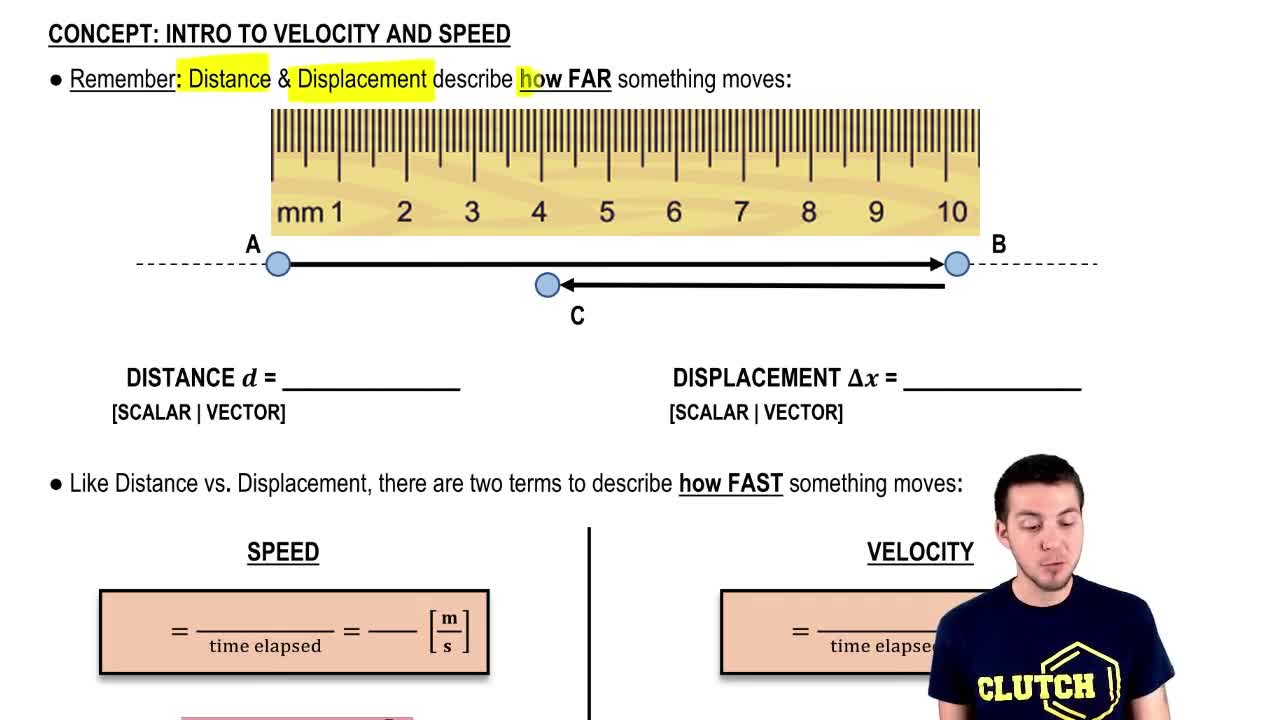
Velocity can be negative when the displacement is in the direction opposite to the defined positive direction. A negative velocity indicates motion in the opposite direction to what is considered positive in the problem.
What is the main difference between speed and velocity in terms of the quantities they use?
Speed uses distance, which is a scalar, while velocity uses displacement, which is a vector. This means speed has no direction, but velocity does.
Why is speed always non-negative while velocity can be negative?
Speed is based on total distance, which cannot be negative, while velocity depends on displacement, which can be positive, negative, or zero. The sign of velocity indicates direction.
How does the position equation X = X0 + V * Delta T relate to the velocity formula?
The position equation is derived from the velocity formula by solving for final position. It expresses final position as initial position plus velocity times elapsed time.
In a multi-segment motion problem, what is the recommended method for organizing variables?
You should label each segment's velocity, displacement, and time with subscripts or letters corresponding to each interval. This helps keep track of which values belong to which part of the motion.
What does the average velocity represent when an object’s speed varies during a trip?
Average velocity represents the constant velocity that would result in the same overall displacement in the same total time. It smooths out all variations in speed for calculation purposes.
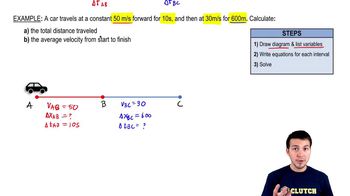
How do you calculate the total distance traveled in a journey with multiple constant velocity segments?
Add the distances covered in each segment together. Each segment's distance is found using its velocity and time or directly if given.
What is the process for finding the total time in a multi-interval motion problem?
Sum the time intervals for each segment of the journey. This gives the total time from start to finish.
How do you determine the time for a segment if you know its displacement and velocity?
Divide the displacement of the segment by its velocity. This gives the time taken for that segment.
Why is it important to pay attention to the sign of velocity when using the position equation?
The sign of velocity indicates direction, which affects the calculation of final or initial positions. Using the wrong sign can lead to incorrect results for position.