Resistors in AC Circuits definitions Flashcards

Resistors in AC Circuits definitions
Control buttons has been changed to "navigation" mode.
1/12
  • Resistor
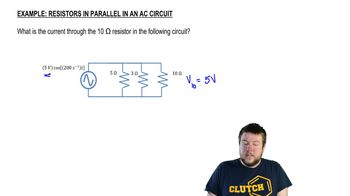
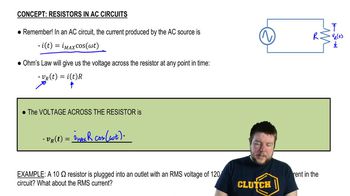
    A component that opposes the flow of electric current, causing a voltage drop.
  • AC Circuit
    An electrical circuit powered by an alternating current, where the current changes direction periodically.
  • Sinusoidal
    A waveform that describes a smooth periodic oscillation, typical of AC current.
  • Ohm's Law
    A principle stating that the current through a conductor is directly proportional to the voltage across it.
  • Voltage
    The electrical potential difference between two points, driving current through a circuit.
  • Current
    The flow of electric charge in a circuit, measured in amperes.
  • Resistance
    A measure of the opposition to current flow in an electrical circuit, measured in ohms.
  • RMS Voltage
    The root mean square value of voltage, representing the effective value of a varying voltage.
  • RMS Current
    The root mean square value of current, representing the effective value of a varying current.
  • Maximum Current
    The peak value of current in an AC circuit, calculated as RMS current times the square root of two.
  • Equivalent Resistor
    A single resistor that can replace a combination of resistors in a circuit without changing the current.
  • Omega
    The angular frequency of a sinusoidal waveform, representing how fast the waveform oscillates.