What is the effect on resistance if the radius of a vessel is halved?
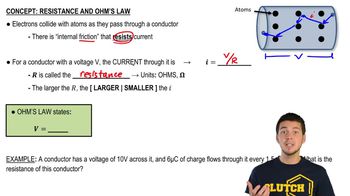
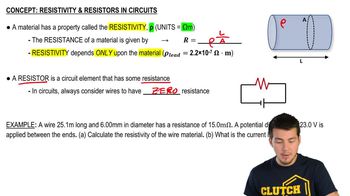
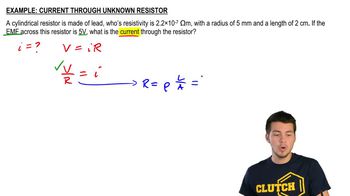
The resistance of a conductor is inversely proportional to its cross-sectional area (A), which is related to the radius (r) by the formula A = πr². If the radius is halved, the cross-sectional area becomes one-fourth of its original value. Since resistance (R) is inversely proportional to the area (R = ρL/A), halving the radius results in the resistance increasing by a factor of four.
 Back
Back
 02:33
02:33