Specific Heat & Temperature Changes definitions Flashcards
Specific Heat & Temperature Changes definitions
1 student found this helpful You can tap to flip the card.
Control buttons has been changed to "navigation" mode.
1/15
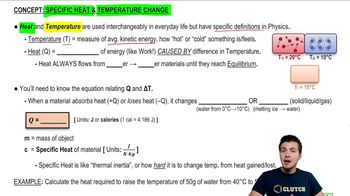
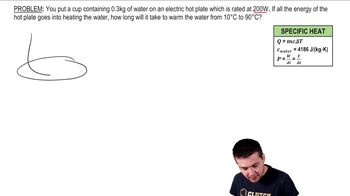
TemperatureA measure of the kinetic energy of molecules in a substance, indicating how hot or cold it feels.HeatThe transfer of energy between two materials due to a temperature difference, flowing from hotter to colder.Specific HeatA property of a material indicating its thermal inertia, or how much heat is needed to change its temperature.Thermal EquilibriumThe state reached when two substances have exchanged heat until they are at the same temperature.Kinetic EnergyThe energy possessed by molecules due to their motion, influencing the temperature of a substance.PhaseThe state of matter of a substance, such as solid, liquid, or gas, which can change with energy input.MCAT EquationThe formula Q = mCΔT, relating heat transfer to mass, specific heat, and temperature change.Thermal InertiaThe resistance of a material to changes in temperature when heat is gained or lost.JoulesThe unit of energy used to quantify the amount of heat transferred in a process.CelsiusA temperature scale where water freezes at 0 degrees and boils at 100 degrees under standard conditions.KelvinA temperature scale used in science where 0 Kelvin is absolute zero, the point where molecular motion stops.MassThe quantity of matter in an object, influencing the amount of heat needed to change its temperature.Delta TThe change in temperature of a substance, used in calculations of heat transfer.CopperA metal with a relatively low specific heat, meaning it heats up quickly with energy input.WaterA substance with a high specific heat, requiring more energy to change its temperature compared to metals.