Back
BackGuided Study for Prealgebra, Beginning Algebra, & Intermediate Algebra (with Relevant Images)
Study Guide - Smart Notes
 Tailored notes based on your materials, expanded with key definitions, examples, and context.
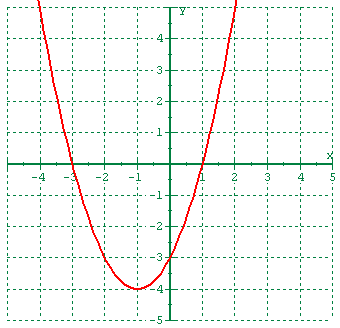
Q1. Of the following relations, circle those that represent functions:
(a)
(b)
(c) \{(1,1), (1,2)\}
(d) \{(1,1), (2,1)\}
(e)
Background
Topic: Functions and Relations
This question tests your understanding of what makes a relation a function. A function is a relation in which each input (usually ) is paired with exactly one output (usually ).
Key Terms and Concepts:
Relation: A set of ordered pairs.
Function: A relation where each input has exactly one output.
Vertical Line Test: A graph represents a function if no vertical line intersects the graph at more than one point.
Step-by-Step Guidance
For each option, determine if any input value (for or ) is paired with more than one output.
For equations, try solving for in terms of (or vice versa) and see if each $x$ gives only one $y$.
For sets of ordered pairs, check if any value is repeated with a different value.
For graphs, imagine the vertical line test: would a vertical line ever cross the graph more than once?
Decide which options meet the definition of a function, but do not circle them yet—think through each one carefully.
Try solving on your own before revealing the answer!
Final Answer:
The relations that represent functions are:
(b) (each gives only one )
(d) \{(1,1), (2,1)\} (no value repeats with a different )
Explanation: In (a) and (e), a single value can correspond to more than one value. In (c), the $x$ value 1 is paired with both 1 and 2, so it is not a function.