Back
BackApplications of Trigonometry: Laws, Complex Numbers, Polar Coordinates, and Vectors
Study Guide - Smart Notes
 Tailored notes based on your materials, expanded with key definitions, examples, and context.
Applications of Trigonometry
The Law of Sines
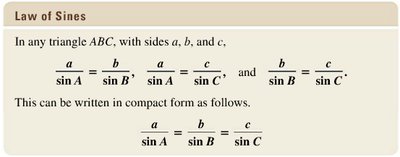
The Law of Sines is a fundamental relationship in any triangle, relating the lengths of the sides to the sines of their opposite angles. It is especially useful for solving oblique triangles (triangles that are not right triangles).
Formula:
Application: Used when you know either two angles and one side (AAS or ASA), or two sides and an angle opposite one of them (SSA).
Solving Triangles: Cases and Methods
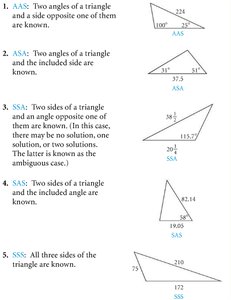
To solve a triangle means to find all side lengths and angle measures. There are five main cases based on the information given:
AAS: Two angles and a side opposite one of them are known.
ASA: Two angles and the included side are known.
SSA: Two sides and an angle opposite one side are known (ambiguous case).
SAS: Two sides and the included angle are known.
SSS: All three sides are known.
Example: Solving an Oblique Triangle
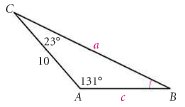
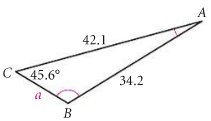
Given triangle with sides and angles, use the Law of Sines to find unknowns.
Ambiguous Case (SSA): Number of Solutions
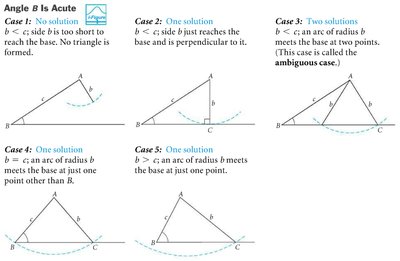
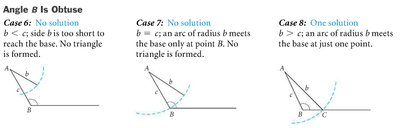
When given two sides and an angle opposite one of them (SSA), there may be zero, one, or two solutions. The outcome depends on the relationship between the sides and the angle.
If sin C > 1: No solution.
If sin C < 1: One or two solutions, depending on whether both possible angles are valid.
Additional Examples
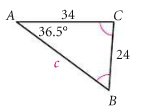
Practice solving triangles using the Law of Sines in various cases.
Applications: Real-World Problems
Trigonometry can be used to solve practical problems, such as navigation and area calculation.
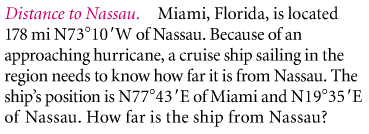
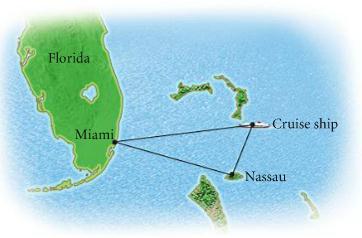
Distance to Nassau: Use the Law of Sines to determine the distance between a ship and Nassau, given bearings and distances.
The Area of a Triangle
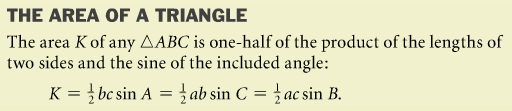
The area of any triangle can be found using the formula involving two sides and the sine of the included angle:
Formula:
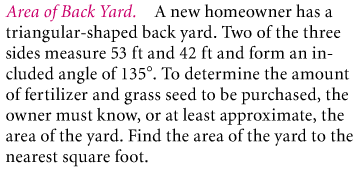
Application Example: Area of a Back Yard
Calculate the area of a triangular-shaped yard using the area formula.
The Law of Cosines
Law of Cosines: Definition and Application
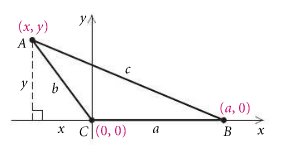
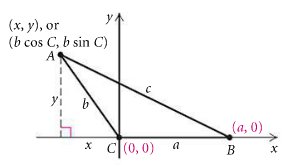
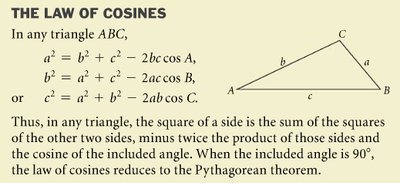
The Law of Cosines generalizes the Pythagorean theorem for any triangle, relating the sides and the cosine of the included angle. It is used for SAS and SSS cases.
Formulas:
Application: Used when you know two sides and the included angle (SAS), or all three sides (SSS).
Complex Numbers: Trigonometric Notation
Trigonometric Form of Complex Numbers
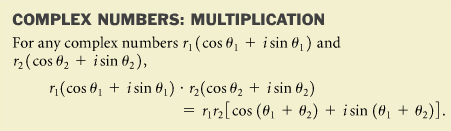
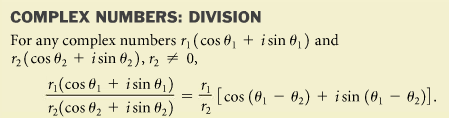
Complex numbers can be represented in trigonometric form, which is useful for multiplication, division, and finding roots.
Trigonometric Form:
Absolute Value:
Multiplication and Division
Multiplication:
Division:
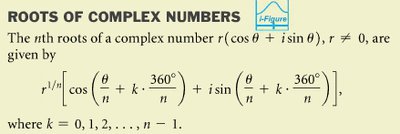
Roots of Complex Numbers
Formula: for
Polar Coordinates and Graphs
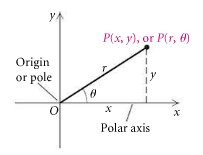
Polar vs. Rectangular Coordinates
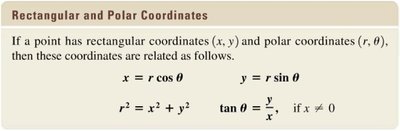
Polar coordinates describe a point by its distance from the origin and its angle from the x-axis. Rectangular coordinates use (x, y) pairs.
Conversion Formulas:
(if )
Vectors and Applications
Definition and Properties of Vectors
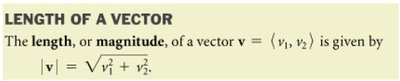
A vector is a directed line segment defined by its magnitude (length) and direction. Vectors are often written in component form as .
Component Form:
Magnitude:
Equivalent Vectors: Two vectors are equivalent if their components are equal.


Vector Operations
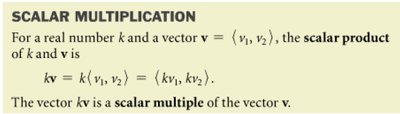
Scalar Multiplication:
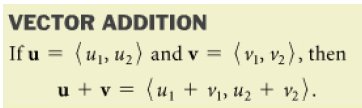
Vector Addition:
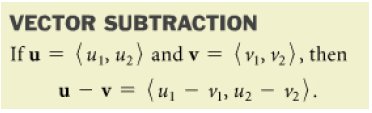
Vector Subtraction:
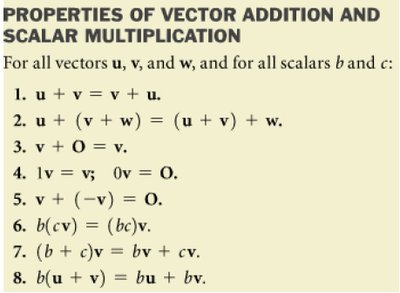
Properties of Vector Addition and Scalar Multiplication
Commutative, associative, distributive, and identity properties apply.
Unit Vectors and Linear Combinations
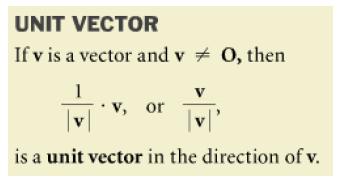
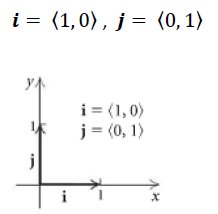
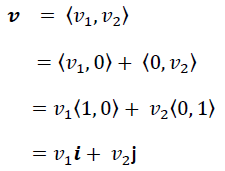
A unit vector has a magnitude of 1 and points in a specific direction. Any vector can be written as a linear combination of unit vectors i and j.
Unit Vector Formula:
Standard Unit Vectors: ,
Linear Combination:
Dot Product and Angle Between Vectors
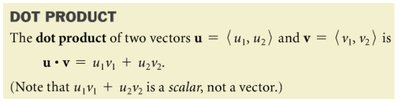
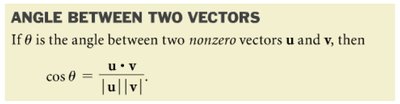
The dot product of two vectors is a scalar and is useful for finding the angle between vectors and checking perpendicularity.
Dot Product:
Angle Formula: