 Back
Function Transformations: Shifts, Reflections, and Stretches
Study Guide - Smart Notes
 Tailored notes based on your materials, expanded with key definitions, examples, and context.
Graphs and Functions
Transformations of Functions
Transformations are operations that alter the position or shape of a function's graph. Understanding these transformations is essential for analyzing and graphing functions efficiently. The main types of transformations include vertical and horizontal shifts, reflections, and stretches/compressions.
Vertical Shift
A vertical shift moves the graph of a function up or down without changing its shape.
If , the graph of shifts up by units when .
If , the graph of shifts down by units when .
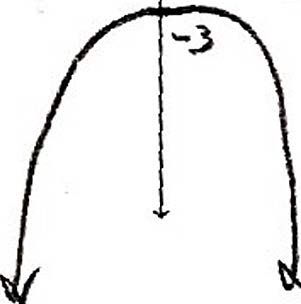
Example: For , shifts the parabola down by 3 units.
Horizontal Shift
A horizontal shift moves the graph left or right.
If , the graph shifts right by units when .
If , the graph shifts left by units when .
Caution: The sign inside the function may feel reversed; shifts right, shifts left.
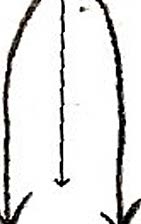
Example: shifts right by 3 units.
Reflection Across the x-Axis
A reflection across the x-axis flips the graph upside down.
If , every point on becomes on .
Example: If , then is a downward-opening parabola.
Reflection Across the y-Axis
A reflection across the y-axis mirrors the graph over the y-axis.
If , every point on becomes on .
Example: For even functions like , the graph remains unchanged; for odd functions, the graph is reflected.
Vertical Stretch and Compression
A vertical stretch or compression changes the steepness of the graph.
If and , the graph is stretched vertically by a factor of .
If , the graph is compressed vertically by a factor of .
Vertical stretches/compressions do not affect the x-intercepts.
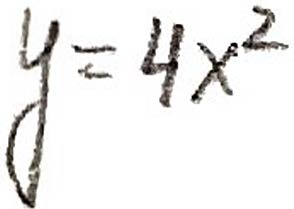
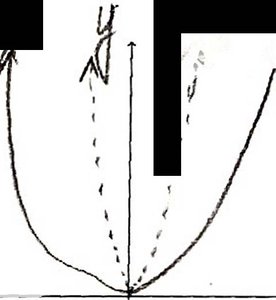
Example: becomes when stretched by a factor of 4.
Horizontal Stretch and Compression
A horizontal stretch or compression alters the width of the graph.
If and , the graph is stretched horizontally by a factor of .
If and , the graph is compressed horizontally by a factor of .
Horizontal stretches/compressions do not affect the y-intercept.
Example: becomes when compressed horizontally by a factor of 2.
Order and Equivalence of Transformations
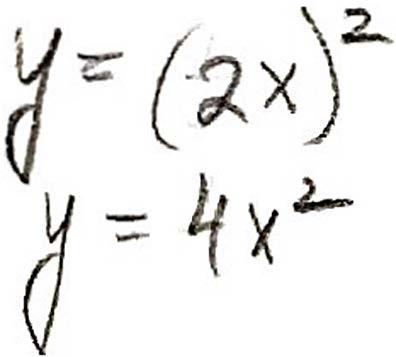
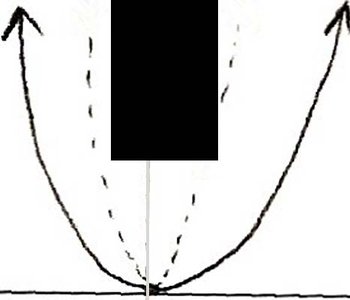
The order in which transformations are applied can affect the final graph. However, some transformations are equivalent and result in the same graph, even if performed differently. For example, vertically stretching by 4 and horizontally compressing by 2 both yield .
Equivalent transformations can be verified by simplifying the resulting equations.
Always check for algebraic equivalence when comparing transformed functions.
