 Back
Fundamental Concepts of Algebra: Real Numbers and Their Properties
Study Guide - Smart Notes
 Tailored notes based on your materials, expanded with key definitions, examples, and context.
Fundamental Concepts of Algebra
Sets and Elements
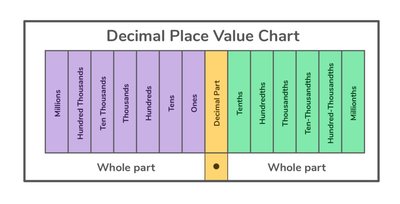
In mathematics, a set is a collection of distinct objects, called elements. Sets are fundamental to understanding number systems and algebraic structures. Sets are denoted using braces, for example, {1, 2, 3}.
Finite Set: Contains a limited number of elements, e.g., A = {10, 23, 45, 70}.
Infinite Set: Contains an unlimited number of elements, e.g., B = {1, 2, 3, ...}.
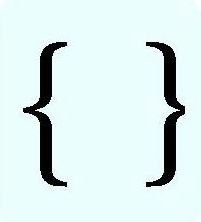
Null Set: Contains no elements, denoted as { }.
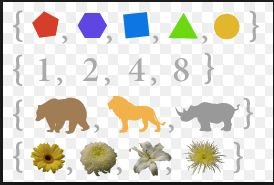
Example: C = {10, 25, 30, 45, 100} is a finite set. The elements are 10, 25, 30, 45, and 100. Odd elements: 25, 45. Elements divisible by 10: 10, 30, 100. Elements divisible by 5: 25, 45, 100.
Classification of Numbers
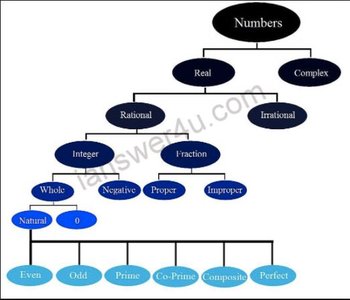
Numbers can be classified into various sets based on their properties. Understanding these classifications is essential for algebra and precalculus.
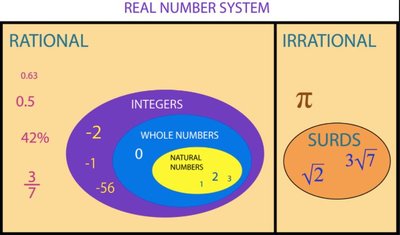
Natural Numbers (\mathbb{N}): Counting numbers starting from 1 (1, 2, 3, ...).
Whole Numbers: Natural numbers including 0 (0, 1, 2, 3, ...).
Integers (\mathbb{Z}): Whole numbers and their negatives (..., -3, -2, -1, 0, 1, 2, 3, ...).
Rational Numbers (\mathbb{Q}): Numbers that can be written as a fraction \( \frac{a}{b} \), where a and b are integers and b ≠ 0.
Irrational Numbers: Numbers that cannot be written as a fraction; their decimal expansions are non-terminating and non-repeating.
Real Numbers: All rational and irrational numbers.
Complex Numbers: Numbers of the form \( a + bi \), where a and b are real numbers and i is the imaginary unit.
Example: From set Q = {12, -4, 5.5, 1/3, -1006, π, 81, 13}:
Rational numbers: 12, -4, 5.5, 1/3, -1006, 81, 13
Prime numbers: 13
Integers: 12, -4, -1006, 81, 13
Natural numbers: 12, 81, 13
Natural, Whole, and Integer Numbers
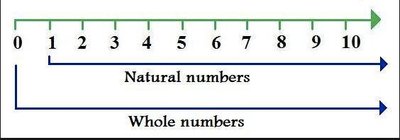
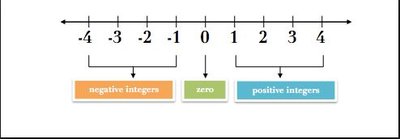
Natural numbers are the basic counting numbers. Whole numbers include all natural numbers plus zero. Integers expand this set to include negative numbers.


Rational Numbers
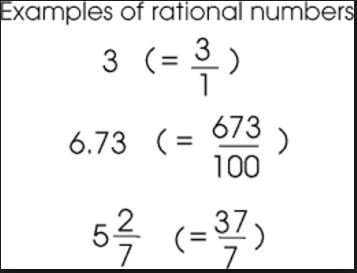
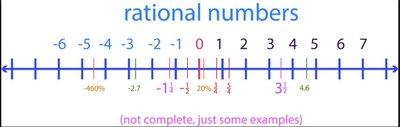
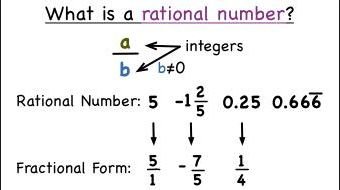
Rational numbers are numbers that can be expressed as a ratio of two integers. Their decimal representations either terminate or repeat.
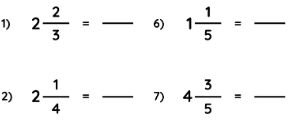
Examples: \( 3 = \frac{3}{1} \), \( 6.73 = \frac{673}{100} \), \( 5\frac{2}{7} = \frac{37}{7} \)
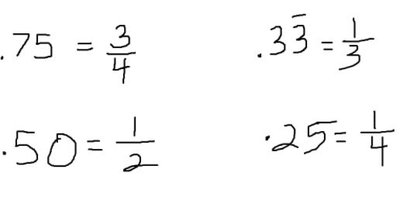
Repeating decimals are rational, e.g., \( 0.333... = \frac{1}{3} \)

Irrational Numbers
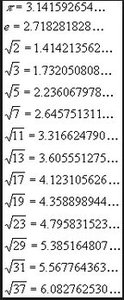
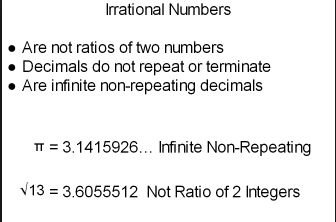
Irrational numbers cannot be written as a ratio of two integers. Their decimal expansions are infinite and non-repeating.
Examples: \( \pi \), \( e \), \( \sqrt{2} \), \( \sqrt{3} \), etc.
Properties: Not ratios, decimals do not repeat or terminate.
Real Number System Overview
The real number system includes both rational and irrational numbers. Rational numbers can be represented as fractions, while irrational numbers cannot.
Converting Fractions and Decimals
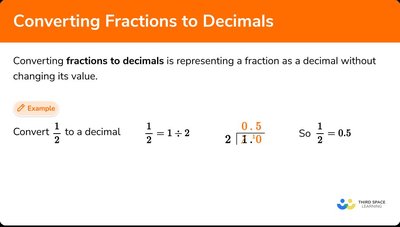
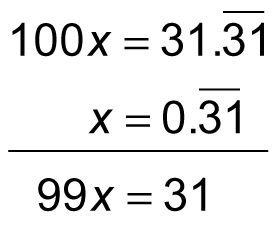
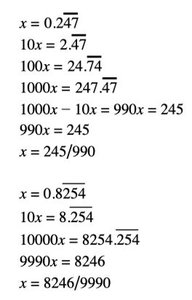
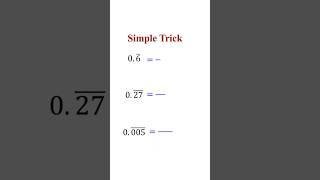
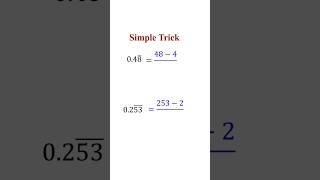
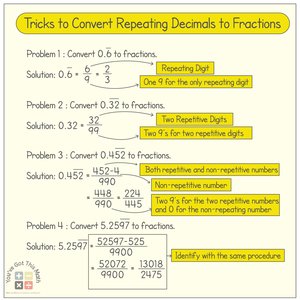
Fractions can be converted to decimals by division. Repeating decimals can be converted to fractions using algebraic methods.
To convert \( \frac{1}{2} \) to a decimal: \( 1 \div 2 = 0.5 \)
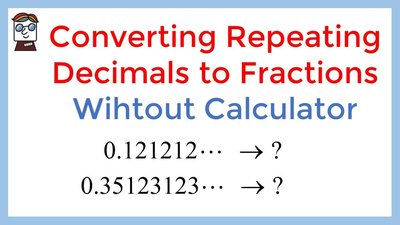
Repeating decimals: \( x = 0.31\overline{31} \) leads to \( 100x = 31.31\overline{31} \), so \( 99x = 31 \), \( x = \frac{31}{99} \)
Union and Intersection of Sets
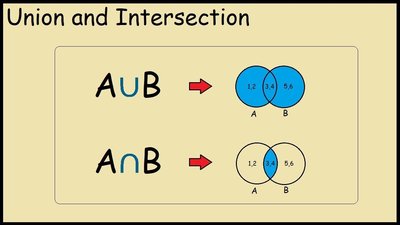
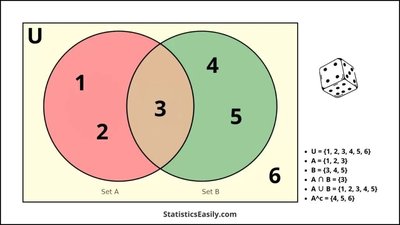
Sets can be combined or compared using union and intersection operations.
Union (A ∪ B): All elements in either set A or set B.
Intersection (A ∩ B): Elements common to both sets A and B.

Properties of Real Numbers
Real numbers follow several important algebraic properties:
Commutative Property: \( a + b = b + a \), \( ab = ba \)
Associative Property: \( a + (b + c) = (a + b) + c \), \( a \cdot (b \cdot c) = (a \cdot b) \cdot c \)
Distributive Property: \( a(b + c) = ab + ac \)
Identity Property: Additive: \( a + 0 = a \); Multiplicative: \( a \cdot 1 = a \)
Properties of Equality: Reflexive, Symmetric, Transitive, Addition, Subtraction, Multiplication, Division, Substitution
Example: For the distributive property, \( 2(3 + 4) = 2 \cdot 3 + 2 \cdot 4 = 6 + 8 = 14 \).
*Additional info: The notes cover foundational concepts for Precalculus, including sets, classification of numbers, rational and irrational numbers, and algebraic properties. These are essential for understanding equations, functions, and higher-level mathematics.*
