 Back
BackGraphs of Equations in Two Variables: Intercepts and Symmetry
Study Guide - Smart Notes
 Tailored notes based on your materials, expanded with key definitions, examples, and context.
Chapter 1: Graphs
Section 1.2: Graphs of Equations in Two Variables; Intercepts; Symmetry
This section introduces the fundamental concepts of graphing equations in two variables, identifying intercepts, and analyzing symmetry. These skills are essential for understanding the behavior of functions and their graphs in precalculus.
Graphing Equations by Plotting Points
An equation in two variables (such as x and y) is a statement where two expressions involving x and y are equal. The expressions are called the sides of the equation. Any values of x and y that make the equation true are said to satisfy the equation.
Graph of an Equation: The set of points (x, y) in the xy-plane that satisfy the equation.
Plotting Points: Choose values for one variable, solve for the other, and plot the resulting ordered pairs.
Example: To graph y = 2x + 1, select values for x, compute corresponding y values, and plot the points.
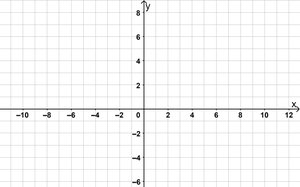
Important: When graphing, show enough of the graph so the viewer can see its continuation. This is called a representative portion of the graph.
Finding Intercepts from a Graph
The intercepts of a graph are the points where it crosses or touches the coordinate axes.
x-intercept: The x-coordinate where the graph crosses or touches the x-axis (y = 0).
y-intercept: The y-coordinate where the graph crosses or touches the y-axis (x = 0).
Intercepts as Points: Intercepts are written as ordered pairs, but the x-intercept or y-intercept is the number itself.
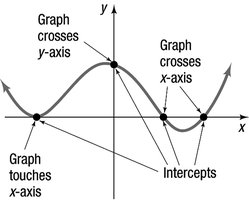
Example: Finding Intercepts from a Graph
Identify where the graph crosses the axes.
Record the coordinates of these points.
Finding Intercepts from an Equation
To find intercepts algebraically:
x-intercept(s): Set y = 0 in the equation and solve for x.
y-intercept(s): Set x = 0 in the equation and solve for y.
Example: For :
Find x-intercepts: Set y = 0, solve .
Find y-intercept: Set x = 0, solve .
Symmetry of Graphs
Symmetry helps identify patterns and properties of graphs. There are three main types:
Symmetry with respect to the x-axis: If (x, y) is on the graph, then (x, -y) is also on the graph.
Symmetry with respect to the y-axis: If (x, y) is on the graph, then (-x, y) is also on the graph.
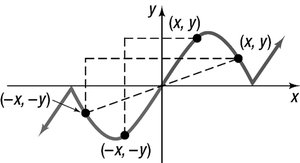
Symmetry with respect to the origin: If (x, y) is on the graph, then (-x, -y) is also on the graph.
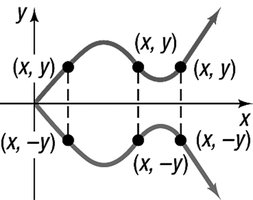
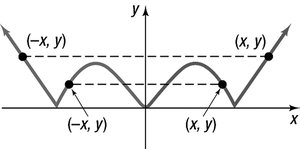
Testing for Symmetry
x-axis: Replace y with -y in the equation and simplify. If the equation is unchanged, the graph is symmetric with respect to the x-axis.
y-axis: Replace x with -x in the equation and simplify. If the equation is unchanged, the graph is symmetric with respect to the y-axis.
Origin: Replace x with -x and y with -y in the equation and simplify. If the equation is unchanged, the graph is symmetric with respect to the origin.
Graphing Key Equations
Understanding the graphs of key equations is essential. Intercepts, symmetry, and plotting points are used to graph these equations.
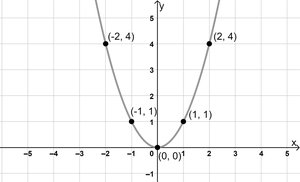
Example: The graph of is U-shaped and opens upward. Key points include (-2, 4), (-1, 1), (0, 0), (1, 1), and (2, 4).
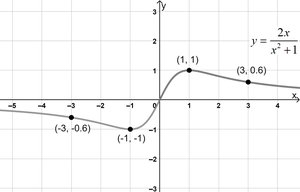
Example: The graph of shows intercepts and symmetry. Key points include (-3, -0.6), (-1, -1), (1, 1), (3, 0.6).
Summary Table: Types of Symmetry
Type of Symmetry | Test | Result |
|---|---|---|
x-axis | Replace y with -y | If unchanged, symmetric about x-axis |
y-axis | Replace x with -x | If unchanged, symmetric about y-axis |
Origin | Replace x with -x and y with -y | If unchanged, symmetric about origin |
Additional info: The notes expand on the process of graphing by plotting points, finding intercepts, and testing for symmetry, which are foundational skills for analyzing functions in precalculus.
