 Back
BackPrecalculus Midterm Study Guide – Step-by-Step Guidance
Study Guide - Smart Notes
 Tailored notes based on your materials, expanded with key definitions, examples, and context.
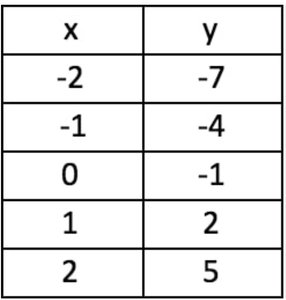
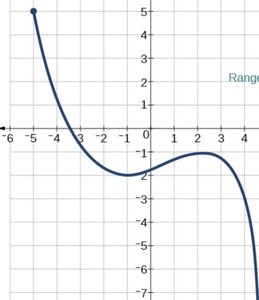
Q4. Find the average rate of change of each function on the interval [−1, 2]
Background
Topic: Average Rate of Change
This question is testing your understanding of how to calculate the average rate of change of a function over a given interval. This is a foundational concept in precalculus and calculus, closely related to the concept of the slope of a secant line between two points on a graph.
Key Terms and Formula:
Average Rate of Change: The change in the value of a function over a specified interval, divided by the change in the input (x-values).
The formula for the average rate of change of a function from to is:
Step-by-Step Guidance
Identify the function and the interval. For each part (A, B, C), you will use the given representation (table, equation, or graph) to find the values of the function at and .
For the table (A), locate the -values that correspond to and .
For the equation (B), substitute and into the function to find and .
For the graph (C), estimate or read off the -values at and as accurately as possible.
Apply the average rate of change formula for each function using the values you found:
Try solving on your own before revealing the answer!
