 Back
Transformations of Functions: Precalculus Study Guide
Study Guide - Smart Notes
 Tailored notes based on your materials, expanded with key definitions, examples, and context.
Functions and Graphs
Transformations of Functions
Transformations are operations that alter the appearance of a function's graph without changing its fundamental nature. Understanding these transformations is essential for graphing and analyzing functions in Precalculus.
Rigid Transformations: These include vertical shifts, horizontal shifts, and reflections. They do not change the shape of the graph, only its position or orientation.
Non-rigid Transformations: These include vertical stretching/shrinking and horizontal stretching/shrinking. They alter the shape of the graph by changing its size.
Graphs of Common Functions
Common functions such as linear, quadratic, absolute value, and piecewise functions serve as the basis for understanding transformations. Their graphs are often used as reference points for applying transformations.
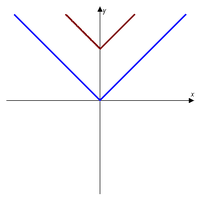
Example: The absolute value function is a V-shaped graph centered at the origin.

Vertical Shifts
A vertical shift moves the graph of a function up or down. If is a function, then shifts the graph upward by units, and shifts it downward by units.
Formula:
Example: Shifting up by 2 units gives .
Horizontal Shifts
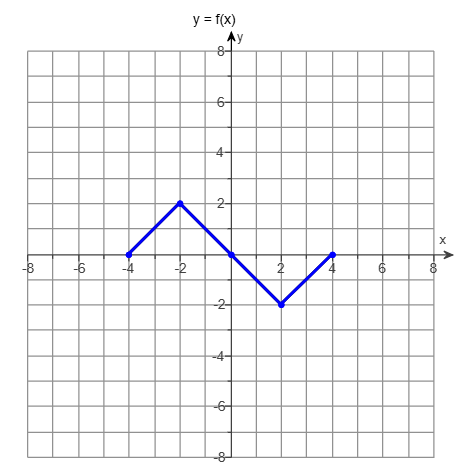
A horizontal shift moves the graph left or right. If is a function, then shifts the graph left by units, and shifts it right by units.
Formula:
Example: Shifting right by 3 units gives .
Reflections of Graphs
Reflections flip the graph over a specified axis.
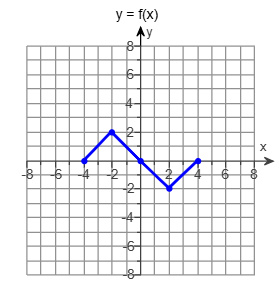
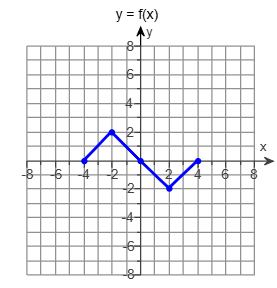
Reflection about the x-axis: reflects the graph over the x-axis.
Reflection about the y-axis: reflects the graph over the y-axis.
Example: Reflecting over the x-axis gives ; reflecting over the y-axis gives (for absolute value).
Vertically Stretching and Shrinking Graphs
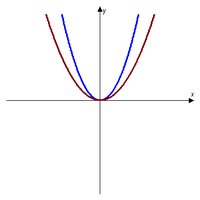
Vertical stretching and shrinking change the height of the graph. If , stretches the graph vertically; if , it shrinks the graph vertically.
Formula:
Example: doubles the y-values; halves them.
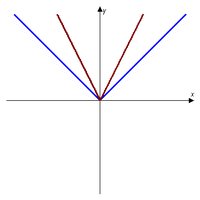
Horizontally Stretching and Shrinking Graphs
Horizontal stretching and shrinking change the width of the graph. If , shrinks the graph horizontally; if , it stretches the graph horizontally.
Formula:
Example: compresses the graph; expands it.
Graphing with Multiple Transformations
When a function involves several transformations, the order in which they are applied is important. The recommended sequence is:
Horizontal shifting
Stretching or shrinking
Reflecting
Vertical shifting
Example: To graph , first horizontally stretch by a factor of 2, then vertically stretch by a factor of 2.
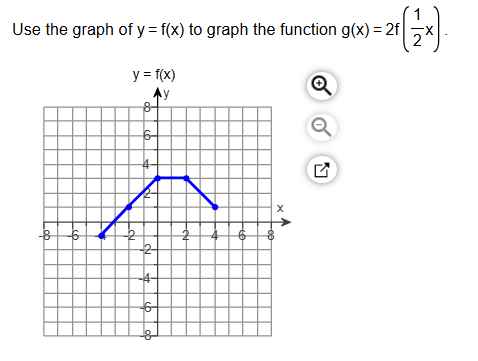
Sequence of Transformations: Example
Applying a sequence of transformations to a function can be visualized step-by-step. For instance, starting with , you might shift, stretch, reflect, and then shift again.
Practice: Fill in the Blanks and Graphing
Practice problems often ask you to apply transformations to a given function and graph the result. Use the properties of stretching, shrinking, shifting, and reflecting to complete these exercises.
Summary Table: Types of Transformations
Transformation | Formula | Effect |
|---|---|---|
Vertical Shift | Up/down by units | |
Horizontal Shift | Right/left by units | |
Reflection (x-axis) | Flip over x-axis | |
Reflection (y-axis) | Flip over y-axis | |
Vertical Stretch/Shrink | Stretch if , shrink if | |
Horizontal Stretch/Shrink | Shrink if , stretch if |
