What is an example of a self-serving bias in attribution?
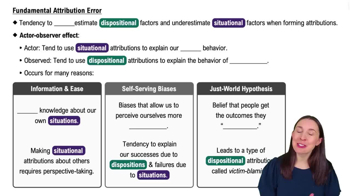
A self-serving bias occurs when someone attributes their successes to internal factors (like their own ability) and their failures to external factors (like bad luck or unfair circumstances).
What is an example of an external attribution?
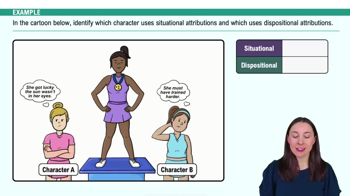
An external attribution is when someone explains behavior as being caused by situational factors outside the person, such as luck, other people, or the environment.
What is an example of the fundamental attribution error?
An example of the fundamental attribution error is assuming someone is rude because of their personality, rather than considering they might be having a bad day.
What happens when individuals commit the fundamental attribution error?
When individuals commit the fundamental attribution error, they overemphasize personal traits and underestimate situational factors when explaining others' behavior.
When might you prejudge a situation in the context of attribution?
You might prejudge a situation when you make assumptions about someone's behavior based on your expectations or stereotypes, rather than considering all possible causes.
In what context is the fundamental attribution error most likely to occur?
The fundamental attribution error is most likely to occur when observing the behavior of others, especially in unfamiliar or ambiguous situations.
What is the term for taking more personal responsibility for success than for failure?
The term is self-serving bias.
In which situation might you have committed the self-serving bias?
You might have committed the self-serving bias if you credited your good exam grade to your intelligence but blamed a poor grade on unfair questions.
What is a difference between a halo error and a horns error in attribution?
A halo error occurs when a positive impression in one area leads to positive judgments in other areas, while a horns error is when a negative impression in one area leads to negative judgments in other areas.
What is a difference between internal and external attributions?
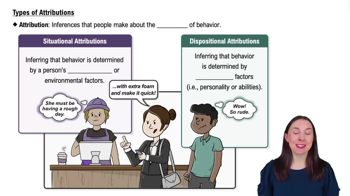
Internal attributions assign the cause of behavior to personal traits or abilities, while external attributions assign the cause to situational or environmental factors.
What is true about attribution in psychology?
Attribution is the process by which people explain the causes of behavior and events, either their own or others'.
What is true about attributions?
Attributions can be internal (dispositional) or external (situational), and they influence how we perceive and react to others' behavior.
What is the best demonstration of the fundamental attribution error?
The best demonstration is attributing someone's negative behavior to their character rather than considering situational influences.
What is true about the self-serving bias?
The self-serving bias leads people to attribute successes to themselves and failures to external factors.
What is the best example of the fundamental attribution error?
Assuming someone is late because they are irresponsible, rather than considering external circumstances like traffic.
What term describes internalized predicted models of external actors and actions in attribution?
These are called schemas or mental models.
What is the fundamental attribution error?
The fundamental attribution error is the tendency to overestimate the influence of personal traits and underestimate situational factors when explaining others' behavior.
Why do we tend to make attributional mistakes?
We make attributional mistakes because we often focus on the person rather than the situation, leading to biases like the fundamental attribution error.
Who is most clearly demonstrating an internal attribution?
A student who explains their good grade by saying they are smart is demonstrating an internal attribution.
What is the tendency to take credit for our successes and deny responsibility for our failures called?
This tendency is called the self-serving bias.
What is the mental process of inferring the causes of people's behavior, including one's own, called?
This process is called attribution.
Which statement reflects the fundamental attribution error?
A statement that blames someone's actions on their personality rather than considering situational factors reflects the fundamental attribution error.
Why do we use attribution in psychology?
We use attribution to explain and understand the causes of behavior.
In which cultures is the fundamental attribution error more apparent?
The fundamental attribution error is more apparent in individualistic cultures than in collectivist cultures.
What is the mental process of inferring the causes of people's behavior called?
It is called attribution.
When does the fundamental attribution error occur?
It occurs when people overemphasize personal traits and underestimate situational factors in explaining others' behavior.
What tendency defines the fundamental attribution error?
The tendency to attribute others' behavior to their character rather than to situational factors.
What is the mental process of inferring the causes of people's behavior, including one's own, called?
This process is called attribution.
What is an example of an external attribution?
Blaming a poor test score on the difficulty of the test is an example of an external attribution.
What does the fundamental attribution error refer to?
It refers to our tendency to overestimate the influence of personality and underestimate the influence of situations when explaining others' behavior.
What should a family avoid if they want to improve a child's self-esteem?
A family should avoid attributing the child's failures to internal, unchangeable traits.
Which situation involves an external attribution?
Explaining someone's lateness by citing heavy traffic is an external attribution.
What does attribution theory examine?
Attribution theory examines the causes that people assign to behaviors.
What do people develop when they generate explanations for their own or others' behavior?
People develop attributions.
What is an example of a dispositional attribution in social thinking?
Assuming someone is helpful because they are a kind person is a dispositional attribution.
When are people least likely to make the fundamental attribution error?
People are least likely to make the fundamental attribution error when explaining their own behavior or when they have detailed knowledge of the situation.
What is the mental process people use to explain their behavior and the behavior of others called?
This process is called attribution.
What is it called when behavior is attributed to a person's environment?
This is called an external or situational attribution.
What is an example of the fundamental attribution error?
Assuming a person is unfriendly because they did not say hello, without considering they might be preoccupied.
In which cultures does the fundamental attribution error occur more often?
 Back
Back
 01:01
01:01