 Back
Chapter 4
 01:06

Terms in this set (28)
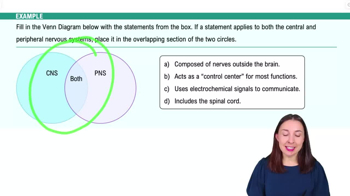
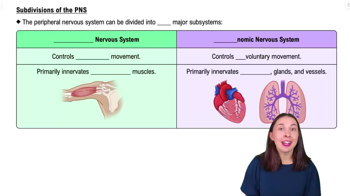
The central nervous system (CNS) consists of the brain and spinal cord, processing information. The peripheral nervous system (PNS) connects the CNS to the rest of the body, transmitting signals.
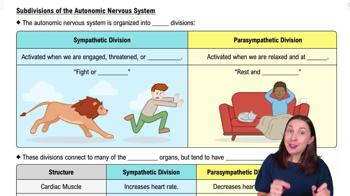
The fight or flight response prepares the body to react to threats by increasing heart rate, blood flow, and energy availability for quick action.
Dendrites receive signals, the cell body processes them, the axon transmits impulses, and axon terminals send signals to other neurons.
Neurons either fire a full action potential or none at all; the signal strength does not vary, ensuring clear communication.
Excitatory responses increase the chance a neuron will fire, while inhibitory responses decrease that chance.
A neurotransmitter is a chemical messenger that transmits signals across synapses between neurons.
Neurotransmitters differ in function: e.g., dopamine affects reward, serotonin mood, acetylcholine muscle action, GABA inhibition, glutamate excitation, and norepinephrine arousal.
A neuromodulator alters neuron activity more broadly and slowly than neurotransmitters, modulating multiple neurons' responses.
Endorphins reduce pain and increase pleasure, helping survival by enabling endurance and stress relief.
A hormone is a chemical messenger released into the bloodstream that affects distant organs and tissues.
Hormones vary by function and target, e.g., adrenaline triggers arousal, oxytocin influences bonding, and testosterone affects development and behavior.
Methods include lesion studies, brain stimulation, and neuroimaging to study brain function and behavior.
Behavioral manipulations combined with brain imaging (e.g., fMRI) help link behavior changes to brain activity.
Key structures: cerebrum, cerebellum, brainstem. The cerebellum coordinates movement and balance.
The thalamus acts as a relay station, directing sensory information to the appropriate brain areas.
The hypothalamus regulates body functions and links to the pituitary gland, which controls hormone release.
The amygdala processes emotions, especially fear and aggression.
Molaison's brain surgery damaged his hippocampus, revealing its critical role in forming new memories.
The cerebrum has left and right hemispheres connected by the corpus callosum, which enables communication between them.
Frontal: decision-making; parietal: sensory info; temporal: hearing and memory; occipital: vision.
Gage's accident damaged his prefrontal cortex, showing its role in personality and decision-making.
Language is a system of symbols and rules used for communication.
Chomsky proposed the universal grammar theory, suggesting innate language structures in the brain.
Milestones include babbling, first words (~1 year), two-word phrases (~2 years), and complex sentences by age 6.
Split brain studies show the left hemisphere specializes in language, the right in spatial and creative tasks.
The left hemisphere is dominant for language and logic; the right hemisphere for spatial and emotional processing.
Plasticity is the brain's ability to change and adapt through experience and learning.
Gender brain differences exist but are complex; critical thinking is needed to avoid stereotypes and overgeneralizations.