Skip to main content
Introduction to Psychology
My Course
Learn
Exam Prep
AI Tutor
Study Guides
Flashcards
Explore
Try the app
My Course
Learn
Exam Prep
AI Tutor
Study Guides
Flashcards
Explore
Try the app
Back
Introduction to Psychology: Biology and Psychology Basics
You can tap to flip the card.
What is the scientific method in psychology?
You can tap to flip the card.
👆
What is the scientific method in psychology?
A systematic process
of asking questions, gathering evidence, drawing conclusions, and developing or modifying theories.
Track progress
Control buttons has been changed to "navigation" mode.
1/20
Recommended videos
Guided course
01:06
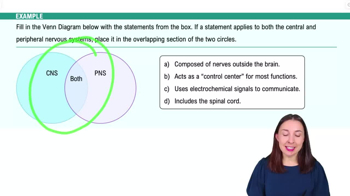
Organization of the Nervous System Example 1
1142
views
18
rank
Guided course
01:46
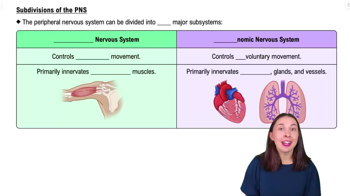
Subdivisions of the PNS
1054
views
16
rank
Guided course
04:32
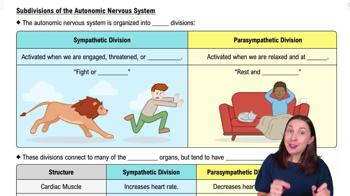
Subdivisions of the Autonomic Nervous System
1064
views
13
rank
Terms in this set (20)
Hide definitions
What is the scientific method in psychology?
A systematic process
of asking questions, gathering evidence, drawing conclusions, and developing or modifying theories.
Why is research on treatment outcomes important in psychology?
It allows psychologists to determine whether treatments are
supported by evidence
.
What does a negative correlation between two variables mean?
When one variable increases, the other
decreases
.
What is it called when there is no relationship between two variables?
The variables are said to be
uncorrelated
.
What is the numerical representation of the strength of a correlation?
It is called the
correlation coefficient
.
What does 'Two-Eyed Seeing' refer to in research?
Using both Indigenous ways of knowing and Western scientific approaches together, valuing the strengths of both.
What is Community-Based Participatory Research (CBPR)?
A research approach where the researcher works
collaboratively with community members
throughout the process.
What is a major criticism of historical research with Indigenous peoples?
Research was often done
on Indigenous people rather than with them
.
Which research approach best addresses historical criticisms in Indigenous research?
Developing research questions, methods, and interpretation
in collaboration with the community
.
What are the two main divisions of the nervous system?
The
Central Nervous System (CNS)
and the
Peripheral Nervous System (PNS)
.
What does the Peripheral Nervous System include?
The
somatic system
(voluntary movement) and the
autonomic system
(involuntary movement).
What are the two parts of the autonomic nervous system?
The
sympathetic system
(fight or flight) and the
parasympathetic system
(rest and digest).
What is the role of the limbic system?
It regulates
memory, learning, motivation, rewards, homeostasis, and emotional responses
.
How can understanding the brain help healthcare professionals?
It can reduce
shame and stigma
and improve
coping strategies
.
What are the three layers of the brain commonly described as?
Cortex
(primate brain),
subcortical
(mouse brain), and
brain stem/cerebellum
(reptilian brain).
What is brain plasticity?
The brain's ability to
adapt and change
throughout the lifespan.
Give an example of brain plasticity in humans.
Taxi drivers have a
larger hippocampus
compared to non-taxi drivers due to spatial navigation experience.
What did Hebb (1949) propose about learning and the brain?
Information is stored in the
synapse
, which strengthens with repeated stimulation.
What are maladaptive effects of neuroplasticity?
Repeated exposure to
chronic stress, trauma, or addictive substances
can cause harmful brain changes.
What nervous system activates the 'fight or flight' response?
The
sympathetic nervous system
.
 BackBack
 01:06