Skip to main content
Introduction to Psychology
My Course
Learn
Exam Prep
AI Tutor
Study Guides
Flashcards
Explore
Try the app
My Course
Learn
Exam Prep
AI Tutor
Study Guides
Flashcards
Explore
Try the app
Back
Introduction to Psychology: Memory and Learning Strategies
You can tap to flip the card.
What is memory?
You can tap to flip the card.
👆
What is memory?
Memory
is the process by which information is encoded, stored, and retrieved.
Track progress
Control buttons has been changed to "navigation" mode.
1/20
Recommended videos
Guided course
01:26
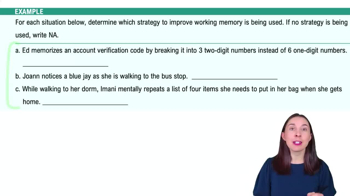
Storage - The Three Box Model of Memory Example 3
793
views
5
rank
Guided course
03:00
Short-Term And Working Memory
930
views
10
rank
Guided course
01:22
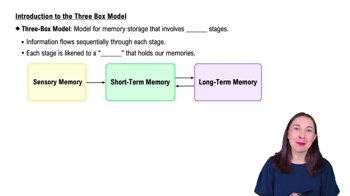
Introduction to the Three Box Model
1192
views
12
rank
Terms in this set (20)
Hide definitions
What is memory?
Memory
is the process by which information is encoded, stored, and retrieved.
What did Ebbinghaus contribute to memory research?
Ebbinghaus experimentally studied memory and is known for the
Forgetting Curve
and the
Spacing Effect
.
What does the Forgetting Curve show?
The Forgetting Curve shows how retention of information decreases over time without review.
What is the Serial Position Effect?
When recalling a list, people tend to remember the
first (primacy effect)
and
last items (recency effect)
better than middle items.
How does attention influence memory?
Attention, influenced by physical state, emotion, and experience, affects how well information is encoded into memory.
What is the Spacing Effect?
Distributed practice over time improves memory retention compared to massed practice (cramming).
What is Retrieval Practice?
Retrieval Practice involves actively recalling information from memory to strengthen future recall.
What is Chunking in memory?
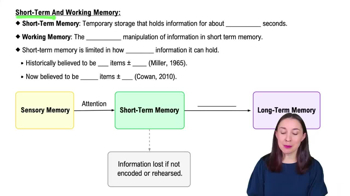
Chunking is grouping smaller units of information into larger, meaningful units to bypass working memory limits.
Why is chunking effective for memory?
Chunking reduces cognitive load by organizing information into manageable pieces, aiding storage in long-term memory.
What is Metacognition?
Metacognition is the ability to monitor and control one’s own learning and memory processes.
What are the two types of metacognitive monitoring?
Experienced-based judgments (feeling of ease) and theory-based judgments (understanding of memory principles).
How does elaboration improve learning?
Elaboration involves asking how and why questions to create meaningful connections between ideas.
What is interleaving in study strategies?
Interleaving mixes practice of related but different content to help compare, contrast, and distinguish information.
What role does sleep play in memory?
Sleep supports memory consolidation and improves retention of learned information.
What is the primary function of retrieval cues?
Retrieval cues trigger memory by associating a stimulus (like a photo or place) with stored information.
How can the forgetting curve be interrupted?
Reviewing material soon after learning strengthens neural connections and slows forgetting.
What is the difference between short-term and long-term memory?
Short-term memory holds information briefly (less than 30 seconds), while long-term memory stores information for extended periods.
What is the tip-of-the-tongue phenomenon?
A temporary inability to retrieve a word or information despite feeling that recall is imminent.
How can you apply spaced practice for exams?
Plan study sessions over weeks or months to review material multiple times, avoiding last-minute cramming.
Why is it important to understand the big picture before details?
Understanding the overall context helps chunk information and improves meaningful learning and retention.
 BackBack
 01:26