 Back
BackAdolescent Development: Substance Use, Eating Disorders, Depression, and Cognitive Changes
Study Guide - Smart Notes
 Tailored notes based on your materials, expanded with key definitions, examples, and context.
Trends in Illicit Drug Use
Patterns and Prevalence
Illicit drug use among adolescents has declined compared to previous generations, with a notable decrease in approval of drug use and increased awareness of negative consequences. However, substance use remains a significant concern due to inherent risks.
Alcohol is the most commonly used substance among teens; in 2021, over 39% reported being drunk in the past 30 days.
Non-medical use of prescription drugs is also reported among adolescents.
Peer Influence
Peer attitudes and behaviors significantly affect adolescent substance use. The decline in peer approval of smoking has contributed to reduced rates of tobacco use, while awareness of health risks has increased.
During COVID-19 school closures, adolescent substance use declined dramatically.
Despite declines, 20% of teens reported vaping nicotine, prompting public health campaigns about vaping risks.
Sensation Seeking and Substance Use
Sensation seeking is a personality trait associated with a higher likelihood of substance use. Adolescents with high sensation seeking tendencies are more prone to experiment with drugs and alcohol.
Measures of sensation seeking in childhood can predict later substance use.
Authoritative parenting and participation in after-school activities are protective factors.
Teens who spend significant time alone are at increased risk for substance abuse.
Eating Disorders
Characteristics and Prevalence
Eating disorders are mental health conditions characterized by distorted body image and unhealthy eating behaviors. They often emerge during adolescence and are more common among females, as well as sexual minority youth.
High rates of dieting and body dissatisfaction are reported among adolescents.
Eating disorders can be fatal and often require medical intervention.
Anorexia Nervosa
Anorexia nervosa involves extreme dieting, intense fear of weight gain, and obsessive exercise, leading to severe weight loss and physical symptoms of starvation.
Symptoms include sleep disturbance, cessation of menstruation, hair loss, and low blood pressure.
Individuals with anorexia often have a more distorted body image than those with other eating disorders.
Bulimia Nervosa
Bulimia nervosa is characterized by cycles of binge eating followed by purging, intense concern about weight, and feelings of shame and depression.
Physical consequences include tooth decay, stomach irritation, and disturbances in body temperature.
Individuals are not typically underweight but are preoccupied with body image.
Explaining Eating Disorders
The causes of eating disorders are multifactorial, involving cultural, psychological, and biological factors.
Western cultural emphasis on thinness contributes to body image concerns.
Disruptions in brain development, particularly white matter, have been observed in teens with anorexia.
Obsessive-compulsive personality disorder (OCPD) is prevalent among those with eating disorders, leading to difficulty controlling thoughts.
Treatment of Eating Disorders
Treatment is challenging and often requires hospitalization for severe cases. Cognitive and emotion-focused therapies are used, but relapse rates remain high.
Psychologists help patients accept bodily changes and address distorted thinking.
30–40% of treated individuals exhibit disordered eating within 18 months post-treatment.
Depression and Suicide in Adolescents
Prevalence and Risk Factors
Depression is a common mental health issue among adolescents, with higher rates in females. Risk factors include genetic predisposition, family stressors, and peer victimization.
6% of adolescents experience enduring depression at any given time.
Sex differences in depression rates persist into adulthood and are observed globally.
Causes of Depression
Both biological and psychosocial factors contribute to adolescent depression. Family history, stressful environments, and temperamental traits are significant predictors.
Brain structure and function may play a role, but cannot be used for diagnosis.
Family stress correlates with poor self-control and increased parent-teen conflict, leading to depressive symptoms.
Cognitive and Psychosocial Effects
Depression impairs academic performance and social cognition. History of maltreatment increases risk, especially when combined with other disorders.
Depression can lead to non-suicidal self-injury and defensive behaviors when confronted about changes.
Suicide
Suicide is a serious risk associated with adolescent depression. While more females attempt suicide, males are more likely to die by suicide due to the use of more lethal methods.
16% of high school students have seriously considered suicide; 9% have attempted it.
Risk factors include triggering events, altered mental states, and opportunity.
Disruptions in social relationships increase suicide risk at any age.
Mental health professionals use various intervention strategies to prevent suicide.
Changes in Thinking and Memory
Piaget’s Formal Operational Stage
According to Piaget, adolescents (ages 12–16) enter the formal operational stage, marked by the ability to reason logically about abstract concepts and engage in systematic problem solving.
Systematic problem solving involves methodically searching for solutions to complex problems.
Adolescents use more organized strategies compared to children, marking the shift from concrete to formal operations.
Logic and Hypothetico-Deductive Reasoning
Adolescents develop the ability to derive logical conclusions from hypothetical premises, a process known as hypothetico-deductive reasoning. This cognitive advance enables them to understand and use abstract logical relationships.
Some adolescents exhibit naive idealism, becoming involved in causes or organizations based on idealistic beliefs.
Adolescent Egocentrism
David Elkind described adolescent egocentrism as the belief in the uniqueness of one's thoughts and experiences. This includes the personal fable (belief in a unique life story) and the imaginary audience (belief that others are constantly watching and judging).
These cognitive patterns can lead to exaggerated perceptions of others' reactions and unrealistic future expectations.
Research shows that some aspects of egocentrism are present in children, but are more pronounced in adolescents.
Direct Tests of Piaget’s View
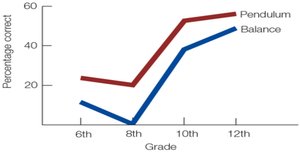
Research indicates that not all adolescents reach the formal operational stage as predicted by Piaget. The development of formal operational thinking is influenced by schooling and educational experiences.
Rates of formal operational thinking in high school students have remained consistent over time.
Piaget may have underestimated the role of education in cognitive development.
Emergent Cognitive Abilities and the Dual Process Model
Adolescents demonstrate advances in information-processing abilities, including faster processing speed, more efficient use of cognitive resources, and improved metacognition (awareness of their own memory processes).
These abilities enable adolescents to acquire and organize knowledge more effectively than children.
