 Back
BackAttention: Models, Theories, and Consequences in Cognitive Psychology
Study Guide - Smart Notes
 Tailored notes based on your materials, expanded with key definitions, examples, and context.
Attention
Defining Attention
Attention is a fundamental cognitive process that allows individuals to selectively focus on certain aspects of their environment while ignoring others. It is often described using metaphors such as 'attention coins,' which represent the allocation of mental resources to specific objects or tasks.
Selective Attention: The ability to focus on one particular stimulus and ignore others.
Divided Attention: The ability to process multiple stimuli or tasks simultaneously.
History of Selective Attention
The study of attention has evolved from philosophical discussions to empirical research. Early thinkers like Aristotle and Augustine considered the nature of attention, while William James provided the first modern treatment. The field advanced with Cherry's dichotic listening paradigm and the shadowing task.
Aristotle (350 BC): Proposed that attention has a single focus.
Augustine (400 AD): Noted involuntary capture of attention by sudden events.
William James (1890): Defined attention as the mind's possession of one object or thought among many.
Cherry (1952): Developed the dichotic listening paradigm.
The Shadowing Task
Cherry's shadowing task involved presenting different messages to each ear and asking subjects to repeat one. Findings showed that while physical properties of unattended messages could be reported, their meaning was not processed.
Moray (1959): Repeated words in the unattended ear were often not recognized, supporting the idea of perceptual limitations.
Broadbent's Model of Attention (1957)
Broadbent proposed the first formal model of attention, suggesting a single central channel that imposes serial processing on incoming sensory information. This model introduced the concept of a bottleneck, where the rate of input exceeds the rate of output, necessitating a filter to prioritize information.
Filter: Blocks irrelevant sensory information and allows important information through for recognition.
Attentional 'Flap': Selects the most important information for further processing.
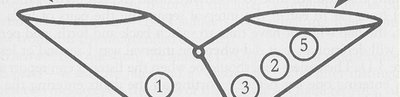
Example: In dichotic listening tasks, subjects recall digits from one ear before switching to the other, minimizing attentional movements.
The Information Processing Model (Broadbent, 1958)
This model conceptualized attention as a series of processing stages, from sensory input to behavioral output, with memory systems involved.
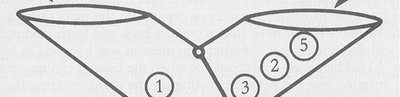
Early vs Late Selection Theories
Debate exists regarding when the attentional filter operates. Early selection theory posits filtering occurs before recognition, while late selection theory suggests filtering happens after recognition.
Early Selection: Filtering based on perceptual features.
Late Selection: Filtering based on recognized objects.
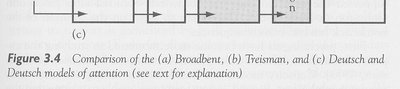
Evidence for Early Selection Theory
Cherry (1953) & Moray (1959): Subjects could not recall or recognize information from the unattended ear.
Broadbent (1958): Subjects used physical cues to filter information.
Neisser & Becklen (1975): People can attend to only one action at a time in a composite video.




Evidence for Late Selection Theory
Moray (1959): Subjects recognized their own name in the unattended ear (cocktail party effect).
Gray & Wedderburn (1960): Subjects grouped stimuli by meaning, not by ear, suggesting recognition before filtering.
Stroop Task (Stroop, 1935): Naming the color of incongruent color-word pairs takes longer, indicating automatic recognition of meaning.
Treisman's Attenuation Model (1960)
Treisman proposed a compromise theory, suggesting that unattended information is not completely filtered out but attenuated. Recognition depends on the strength of the signal and the recognition threshold of the pattern.
Attenuation: Weakens unattended signals, making them less likely to be recognized unless they have a low threshold (e.g., one's own name).


Resource Theory (Kahneman, 1973)
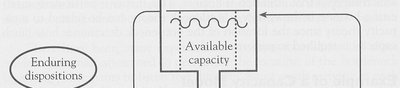
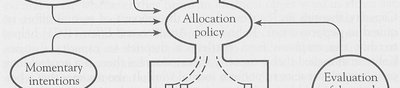
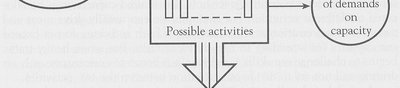
Kahneman's resource theory explains why processing bottlenecks exist, positing a limited amount of attention that can be allocated to tasks. Performance decreases when attention is divided.
Assumption 1: Limited attentional resources.
Assumption 2: More attention allocated to a task improves performance.

Consequences of Attention
Filtering information through attention can lead to failures in awareness, such as inattentional blindness and change blindness.
Inattentional Blindness: Failure to perceive an object or event due to attention being directed elsewhere.
Change Blindness: Failure to notice salient changes between two views of a scene.







Driving and Cell Phones
Divided attention while driving, such as talking or texting on the phone, significantly increases the risk of accidents. Studies show slower reaction times and higher likelihood of missing critical events.
Strayer & Johnston (2001): Drivers are slower to brake and more likely to miss red lights when using cell phones.
Redelmeier & Tibshirani (1997): Four times more likely to have an accident while on the phone.




Summary Table: Models of Attention
Model | Key Feature | Filtering Stage | Evidence |
|---|---|---|---|
Broadbent (Early Selection) | Serial processing, filter before recognition | Before pattern recognition | Dichotic listening, shadowing tasks |
Treisman (Attenuation) | Attenuation of unattended signals | Before recognition, but not complete filtering | Recognition threshold, cocktail party effect |
Deutsch & Deutsch (Late Selection) | Filtering after recognition | After pattern recognition | Stroop task, meaning-based reporting |
Kahneman (Resource Theory) | Limited attentional resources | Resource allocation | Dual-task performance, driving studies |
Additional info: Academic context was added to clarify the models, theories, and experimental evidence. Images were included only when directly relevant to the explanation of each paragraph.
