 Back
BackAttitudes, Behavior, and Rationalization: Social Psychology Study Notes
Study Guide - Smart Notes
 Tailored notes based on your materials, expanded with key definitions, examples, and context.
Attitudes, Behavior, and Rationalization
Components and Measurement of Attitudes
Attitudes are evaluations of objects, people, or ideas in a positive or negative fashion. They are central to social psychology and influence behavior, though not always directly. Attitudes are composed of three main components and can be measured in several ways.
Affect: Emotional response toward the attitude object (e.g., fear, liking).
Cognition: Beliefs or thoughts about the attitude object (e.g., facts, knowledge).
Behavior: Actions or observable responses toward the attitude object.
Measuring Attitudes:
Self-Report Measures: Such as the Likert scale, where participants rate their agreement with statements on a numerical scale.
Response Latency: The time it takes to respond to an attitude question, indicating attitude strength.
Implicit Measures: Indirect assessments like the Implicit Association Test (IAT) that reveal unconscious attitudes.
Nonverbal Measures: Observing physical proximity or body language as indicators of attitudes.
Physiological Measures: Monitoring bodily responses (e.g., heart rate, sweating) to attitude objects.
Predicting Behavior from Attitudes
Although attitudes are important, they are often poor predictors of behavior due to the influence of other factors such as social norms and situational variables. Classic studies, such as LaPiere's research on anti-Chinese prejudice, demonstrate this disconnect.
Attitude-Behavior Inconsistency: People may express attitudes that do not align with their actions due to external pressures or conflicting motivations.
Specificity Principle: Specific attitudes toward specific behaviors are better predictors of action than general attitudes.
Introspection: Reflecting on reasons for attitudes can sometimes lead to less accurate predictions of behavior, especially when attitudes are affectively based.
Predicting Attitudes from Behavior
While attitudes do not always predict behavior, behaviors can shape attitudes. People often adjust their attitudes to align with their actions, especially when inconsistencies arise.
Cognitive Dissonance Theory
Cognitive dissonance theory explains how people strive for internal consistency. When there is a mismatch between attitudes, beliefs, and behaviors, it creates psychological discomfort (dissonance), motivating individuals to reduce the inconsistency.
Cognitive Consistency Theories: Suggest that people are motivated to justify or rationalize their behavior to minimize inconsistencies.
Cognitive Dissonance: The aversive emotional state resulting from conflicting thoughts, feelings, or actions.
Reducing Cognitive Dissonance
Change Behavior: Altering actions to match attitudes (e.g., quitting smoking).
Change Attitude: Adjusting beliefs to justify behavior (e.g., believing smoking is not that harmful).
Add Cognitions: Introducing new thoughts to reduce inconsistency (e.g., citing exceptions or benefits).
Cognitive Dissonance and Decision Making
Making difficult choices can induce dissonance, which is often resolved by emphasizing the positives of the chosen option and minimizing its negatives, while doing the opposite for the rejected option.
Rationalization: Occurs both before and after decisions to reduce discomfort.
Effort Justification
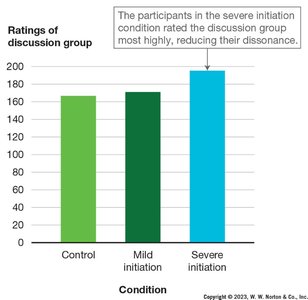
People justify the time, effort, or resources spent on something by increasing their liking for it, especially if the outcome is disappointing.
Examples: Club initiations, fraternity hazings, and the 'sweet lemons rationalization' (convincing oneself that an unpleasant experience was worthwhile).
Induced (Forced) Compliance
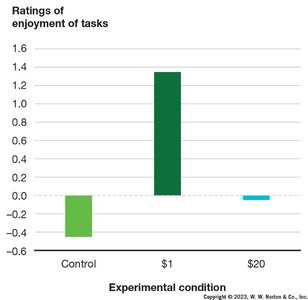
When individuals are subtly compelled to act against their beliefs, they may change their attitudes to align with their behavior, especially if external justification is minimal.
Classic Study: Participants paid $1 or $20 to lie about a boring task. Those paid $1 experienced more dissonance and changed their attitudes to believe the task was enjoyable.
Effort Justification and Hazing
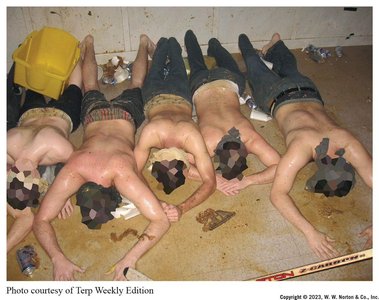
Severe initiations or hazing rituals increase group loyalty due to the need to justify the effort or discomfort endured.
Forbidden Toy Study
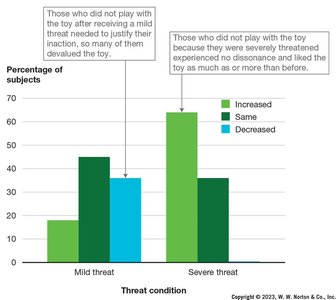
Children forbidden from playing with a toy under mild or severe threat later rated the toy differently. Mild threats led to devaluing the toy (to justify compliance), while severe threats did not change attitudes or even increased desire for the toy.
When Does Inconsistency Produce Dissonance?
Free Choice: Dissonance arises when behavior is freely chosen, not when it is forced.
Insufficient Justification: Weak or unclear reasons for behavior increase dissonance.
Negative Consequences: Dissonance is more likely if the behavior leads to negative outcomes.
Foreseeability: Dissonance is reduced if negative consequences were unforeseeable.
Self-Affirmation and Dissonance
Self-affirmation involves focusing on important aspects of the self to maintain self-esteem, which can reduce dissonance.
Cultural Differences in Dissonance
Cognitive dissonance is universal but may be triggered by different situations across cultures. For example, European Canadians experience more dissonance when making choices for themselves, while Asian Canadians experience more when making choices for others.
Self-Perception Theory
Self-perception theory suggests that people infer their attitudes by observing their own behavior and the context, especially when attitudes are weak or ambiguous. Unlike cognitive dissonance theory, it does not require the experience of discomfort to explain attitude change.
Application: "I did this, so I must feel this way."
The Embodied Nature of Cognition and Emotion
Physical actions can influence psychological states. For example, adopting certain postures or facial expressions can lead to corresponding emotional experiences.
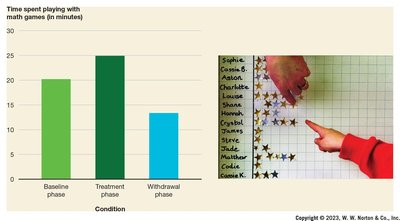
The Overjustification Effect
When external rewards are given for behaviors that are already intrinsically motivating, intrinsic motivation can decrease. This is known as the overjustification effect.
System Justification Theory
This theory posits that people are motivated to view the existing social, economic, and political systems as fair and legitimate, which helps reduce dissonance about inequalities or injustices.
Examples: Rationalizing social inequalities by emphasizing compensatory stereotypes or virtues of the status quo.
Terror Management Theory (TMT)
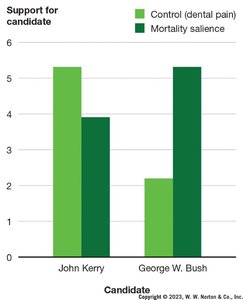
TMT explains how awareness of mortality influences attitudes and behaviors. People cope with existential anxiety by upholding cultural worldviews and seeking symbolic immortality through group identification and self-esteem.
Mortality Salience: Reminders of death increase commitment to in-groups, hostility toward out-groups, and adherence to cultural norms.
Caution in Evaluating TMT Evidence
Recent large-scale replications have questioned the robustness of some TMT findings, indicating the need for further research to clarify under what conditions the theory holds.
