 Back
BackBecoming Mindful and Building Resilience: Psychology of College Success
Study Guide - Smart Notes
 Tailored notes based on your materials, expanded with key definitions, examples, and context.
Becoming Mindful and Building Resilience
Introduction to the Psychology of College Success
Transitioning to university is a major life event that brings a mix of emotions, including excitement, anxiety, happiness, sadness, and fear. Understanding the psychological factors that contribute to academic success is essential for new students. This guide explores mindfulness, mindset, motivation, and resilience—key psychological concepts that support achievement and well-being in college.
The Three Ms of College Success
Mindfulness: Getting Ready to Learn
Mindfulness is the practice of intentionally focusing attention on the present moment. It is not simply about promising to pay attention, but about actively monitoring and directing your attention. In the fast-paced environment of university, mindfulness helps students manage distractions and stress.
Definition: Mindfulness is the intentional, non-judgmental focus of attention on the present moment.
Benefits: Fosters creative planning, enables envisioning positive outcomes, reduces stress, lowers blood pressure, and improves emotional regulation.
Example: Practicing mindfulness during study sessions can help students retain information and reduce anxiety.
Research: Studies show mindfulness interventions can reduce stress levels by 28%, improve sleep quality by 28%, and reduce pain by 19% (study with 50,000 employees).
Mindset: Recognizing the Value of Effort
Mindset refers to mental attitudes or inclinations that influence how individuals approach challenges and learning. A growth mindset, which values effort and perseverance, is linked to greater academic success.
Definition: Mindset is a set of beliefs about one's abilities and potential for growth.
Growth Mindset: Successful people love learning, seek challenges, value effort, and persevere through difficulties.
Self-Handicapping: Rationalizing failure by attributing it to lack of effort rather than ability can be detrimental.
Research: Beliefs about intelligence and mindset significantly impact college success.
Example: Students who persist after setbacks, much like a child learning to walk, demonstrate a growth mindset.

Motivation: Wanting to Learn
Motivation is the desire to engage and put forth effort, especially when faced with challenges. It can be extrinsic (driven by external rewards) or intrinsic (driven by internal satisfaction and curiosity).
Extrinsic Motivation: Learning to earn grades, credits, or fulfill requirements.
Intrinsic Motivation: Learning out of curiosity, fascination, or genuine interest in the subject.
C-Factors: Curiosity, Control, Career Outlook, and Challenge are key factors that boost intrinsic motivation.
Example: Adjusting the level of challenge in coursework helps maintain motivation and prevents frustration or boredom.
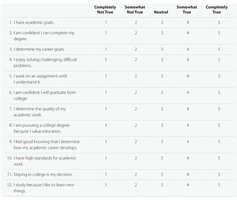
Academic Intrinsic Motivation Scale (AIMS)
The AIMS is a tool used to assess students' intrinsic motivation toward academic tasks. It includes statements rated on a scale from 'Completely Not True' to 'Completely True'.
Statement | Completely Not True | Somewhat Not True | Neutral | Somewhat True | Completely True |
|---|---|---|---|---|---|
I have academic goals. | 1 | 2 | 3 | 4 | 5 |
I am confident I can complete my degree. | 1 | 2 | 3 | 4 | 5 |
I determine my career goals. | 1 | 2 | 3 | 4 | 5 |
I enjoy solving challenging, difficult problems. | 1 | 2 | 3 | 4 | 5 |
I work on assignment until I understand it. | 1 | 2 | 3 | 4 | 5 |
I am confident I will graduate from college. | 1 | 2 | 3 | 4 | 5 |
I determine the quality of my academic work. | 1 | 2 | 3 | 4 | 5 |
I am pursuing a college degree because I value education. | 1 | 2 | 3 | 4 | 5 |
I feel good knowing that I determine how my academic career develops. | 1 | 2 | 3 | 4 | 5 |
I set high standards for academic work. | 1 | 2 | 3 | 4 | 5 |
I enjoy making my decisions. | 1 | 2 | 3 | 4 | 5 |
I truly love to learn new things. | 1 | 2 | 3 | 4 | 5 |
Building Resilience
What is Resilience?
Resilience is the capacity to recover from difficult life events and adapt well in the face of adversity, trauma, tragedy, threats, or significant sources of stress. It does not mean avoiding stress or suffering, but rather developing the strength to overcome hardship.
Definition: Resilience is the process of adapting well to adversity and bouncing back from difficult experiences.
Importance: Resilient individuals are less likely to be overwhelmed and more likely to use healthy coping mechanisms.
Example: Students who face academic setbacks and continue to pursue their goals demonstrate resilience.
How to Build Resilience
Resilience can be cultivated through several strategies, including realistic optimism, learning from failure, and recognizing one's role in overcoming challenges. It is a process that involves passing through multiple stages.
Realistic Optimism: Accepting current circumstances while working to improve them.
Fail Forward: Viewing failure as a process and an opportunity for growth.
Personal Contribution: Taking responsibility for one's actions and seeking resources to improve performance.
Commitment, Control, Challenge: The three "Cs" are essential for resilience—commitment to goals, control over actions, and embracing challenges.
Stages of Resilience
Resilience is developed through seven stages, often triggered by a stressful event. These stages include shock, guilt, anger, depression, exploration, action, and change. Understanding these stages helps individuals navigate adversity and move toward hope and commitment.
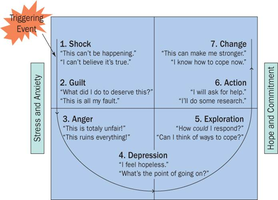
Shock: Initial disbelief and anxiety.
Guilt: Self-blame and questioning.
Anger: Frustration and perceived unfairness.
Depression: Hopelessness and withdrawal.
Exploration: Seeking ways to cope and adapt.
Action: Taking steps to address challenges.
Change: Growth and strengthened resilience.
Practical Strategies for Success
Micro-Meditation for Overload
When feeling overwhelmed, students can use the STOP micro-meditation strategy:
S: Stop and hit the pause button.
T: Take a few deep breaths.
O: Observe your body, mind, and emotions.
P: Proceed with new awareness.
Summary Table: The Three Ms of College Success
M | Definition | Key Benefits |
|---|---|---|
Mindfulness | Intentional focus on the present moment | Reduces stress, improves attention, enhances emotional regulation |
Mindset | Beliefs about ability and effort | Promotes perseverance, encourages learning, prevents self-handicapping |
Motivation | Desire to engage and learn | Drives effort, supports achievement, fosters curiosity |
Conclusion
Success in college is not solely determined by cognitive abilities, but also by psychological skills such as mindfulness, mindset, motivation, and resilience. By understanding and applying these concepts, students can better navigate challenges, maintain motivation, and achieve their academic and personal goals.
Additional info: Academic context and definitions were expanded for clarity and completeness. The included images directly reinforce the explanation of mindset, motivation, and resilience stages.
