 Back
BackBehaviour Change Interventions in Physical Activity: Psychological Foundations and Techniques
Study Guide - Smart Notes
 Tailored notes based on your materials, expanded with key definitions, examples, and context.
Behaviour Change Interventions
The Behaviour Change Wheel
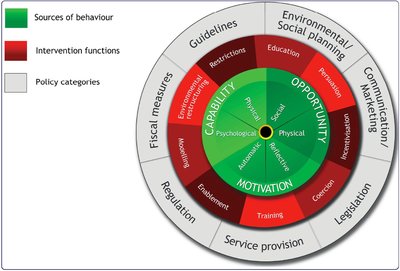
The Behaviour Change Wheel (BCW) is a comprehensive model for designing interventions aimed at changing behaviour. It integrates sources of behaviour, intervention functions, and policy categories to guide the development of effective strategies.
Sources of Behaviour: Capability (psychological, physical), Opportunity (social, physical), Motivation (automatic, reflective).
Intervention Functions: Education, persuasion, incentivization, coercion, training, restriction, environmental restructuring, modeling, enablement.
Policy Categories: Guidelines, environmental/social planning, communication/marketing, fiscal measures, regulation, legislation, service provision.
Application: The BCW helps practitioners identify which aspects to target for behaviour change and which policy levers to use.
Behaviour Change Techniques (BCTs)
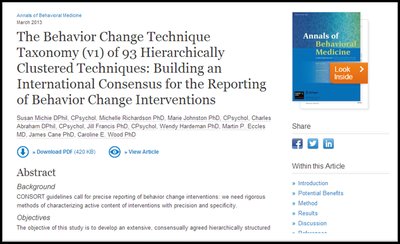
Behaviour Change Techniques are the 'active ingredients' within interventions designed to change behaviour. They are irreducible, observable, measurable, and replicable components that can be used alone or in combination.
Definition: BCTs are specific strategies or methods used to alter behaviour.
Examples: Goal-setting, self-monitoring, feedback, reinforcement.
Importance: Identifying BCTs is crucial for both designing interventions and evaluating their effectiveness.
Health Education Strategies
Informational Interventions
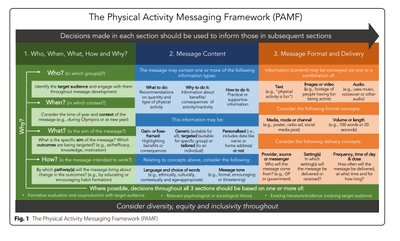
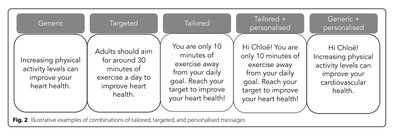
Informational interventions aim to increase knowledge, change attitudes, and enhance self-efficacy regarding physical activity. Effective interventions are tailored to the needs and preferences of the target audience and use theoretical predictors of behaviour change.
Key Constructs: Knowledge, attitudes, beliefs, outcome expectancies, self-efficacy, skills.
Tips for Effectiveness:
Emphasize specific consequences meaningful to the audience.
Create social pressure.
Enhance self-efficacy.
Provide simple, detailed "how to" information.
Audience Awareness: Understanding the audience is critical for message effectiveness.
Individual and Group Physical Activity Interventions
Exercise Prescription
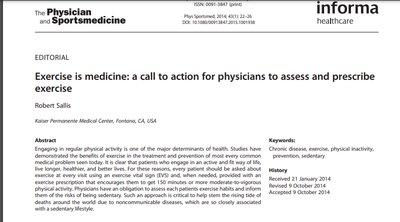
Exercise prescription involves providing patients with a structured plan for physical activity, often delivered by physicians or kinesiologists. Research shows it is brief, feasible, and effective for improving health outcomes.
Benefits: Increased exercise adherence, improved VO2max, enhanced self-efficacy, better blood pressure, decreased body weight.
Challenges: Low rates of exercise counseling/prescription in practice due to lack of time, training, knowledge, skill, self-efficacy, and institutional support.

Behaviour Modification
Behaviour modification techniques focus on altering environmental cues and reinforcement patterns to support desired behaviours.
Stimulus Control: Using cues to action (e.g., keeping running shoes in the car), reminders, and reinforcement (positive and negative).
Positive Reinforcement: Rewards, fun, socializing.
Negative Reinforcement: Nagging, anxiety.

Behaviour Regulation and Self-Regulatory Strategies
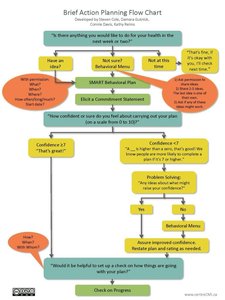
Self-regulatory strategies help individuals control their behaviour post-motivation, including goal-setting, planning, monitoring, and adjusting actions.
Goal-Setting: Goals should be challenging but realistic, specific, and measurable. Goal-setting is critical for other self-regulatory processes.
Action Plans: Concrete plans specifying when, where, and how to translate intentions into action.
Coping Plans: Plans for overcoming barriers (e.g., "If it snows, then I will do yoga instead of walking").


Self-Monitoring
Self-monitoring involves tracking one's behaviour to increase awareness and facilitate change. It is a key component of the feedback loop and works in tandem with goal-setting.
Methods: Fitness logs, wearable devices, journals.
Benefits: Increased awareness, motivation, and accountability.

Motivational Interviewing (MI)
Principles and Application
Motivational Interviewing is a counseling technique designed to strengthen intrinsic motivation for behaviour change. Originally used for substance abuse, it is effective for increasing physical activity.
Purpose: Help clients resolve ambivalence and move forward with behaviour change.
Four Basic Principles:
Development of discrepancy
Expression of empathy
Rolling with resistance
Supporting self-efficacy
Client-Centered: The client is guided towards resolution, has autonomy, and establishes "change talk." The therapist acts as a facilitator.
OARS: Open-ended questions, Affirmation, Reflective listening, Summarizing.


Summary Table: Behaviour Change Techniques and Applications
BCT | Definition | Example | Application |
|---|---|---|---|
Goal-Setting | Establishing specific, measurable targets | "Walk 30 minutes daily" | Physical activity interventions |
Self-Monitoring | Tracking behaviour to increase awareness | Fitness log, wearable tracker | Feedback and accountability |
Stimulus Control | Altering environmental cues | Keeping running shoes in car | Promoting exercise adherence |
Motivational Interviewing | Counseling to strengthen intrinsic motivation | OARS technique | Resolving ambivalence |
Action/Coping Plans | Concrete plans for action and overcoming barriers | "If it snows, do yoga instead" | Maintaining behaviour change |
Additional info: The notes integrate psychological theory and practical application, suitable for exam preparation in college-level psychology courses, especially those covering health, stress, coping, and behaviour change interventions.
