 Back
BackBiological Psychology: The Brain and Nervous System
Study Guide - Smart Notes
 Tailored notes based on your materials, expanded with key definitions, examples, and context.
Biological Psychology: The Brain and Nervous System
Introduction to Biological Psychology
Biological psychology explores the relationship between the brain, nervous system, and behavior. It investigates how neural structures and processes underlie thoughts, emotions, and actions, providing a foundation for understanding psychological phenomena.
The Neuron: Structure and Function
Basic Structure of the Neuron
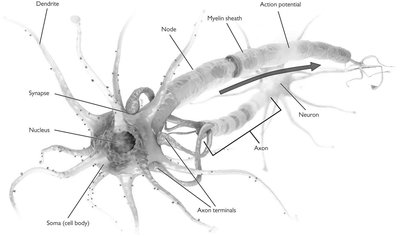
Neurons are the fundamental units of the nervous system, responsible for receiving, processing, and transmitting information through electrical and chemical signals.
Soma (Cell Body): Contains the nucleus and is responsible for the metabolic activities of the neuron.
Dendrites: Branch-like structures that receive messages from other neurons.
Axon: Long, slender projection that transmits electrical impulses away from the cell body.
Myelin Sheath: Fatty layer that insulates the axon, speeding up neural transmission.
Axon Terminals: Endings where neurotransmitters are released to communicate with other neurons.
Neural Communication: The Synapse
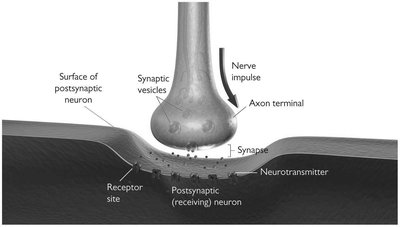
Neurons communicate at synapses, specialized junctions where the axon terminal of one neuron meets the dendrite or soma of another.
Synaptic Vesicles: Store neurotransmitters that are released into the synaptic cleft.
Neurotransmitters: Chemical messengers that cross the synapse to transmit signals.
Receptor Sites: Locations on the postsynaptic neuron that bind neurotransmitters, triggering a response.
The Action Potential
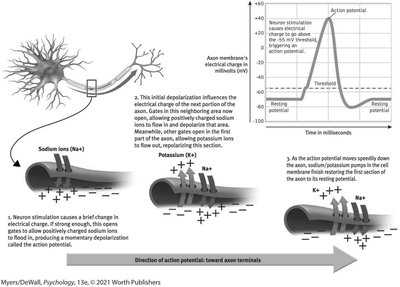
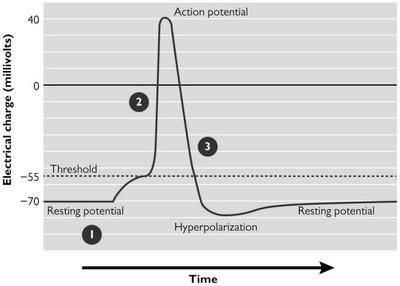
An action potential is a rapid change in electrical charge that travels down the axon, enabling neural communication.
Resting Potential: The neuron’s stable, negative charge when inactive (about -70 mV).
Depolarization: Sodium ions (Na+) enter the neuron, making the inside more positive.
Threshold: The minimum charge needed to trigger an action potential (about -55 mV).
Repolarization: Potassium ions (K+) exit, restoring the negative charge.
Hyperpolarization: The charge temporarily becomes more negative than the resting potential.
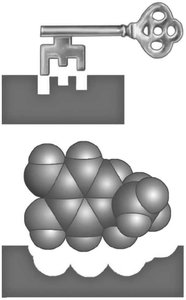
Neurotransmitter Binding: The Lock-and-Key Model
Neurotransmitters bind to specific receptor sites on the postsynaptic neuron, similar to a key fitting into a lock. This specificity ensures precise communication between neurons.
The Nervous System: Organization and Function
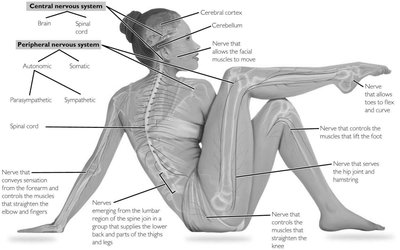
Central and Peripheral Nervous Systems
The nervous system is divided into the central nervous system (CNS) and the peripheral nervous system (PNS).
Central Nervous System (CNS): Consists of the brain and spinal cord; processes and interprets sensory information and issues instructions.
Peripheral Nervous System (PNS): Connects the CNS to the rest of the body; includes the somatic (voluntary control) and autonomic (involuntary control) systems.
Autonomic Nervous System: Subdivided into sympathetic (arouses the body) and parasympathetic (calms the body) branches.
Major Brain Structures and Their Functions
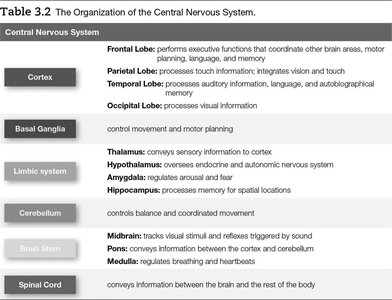
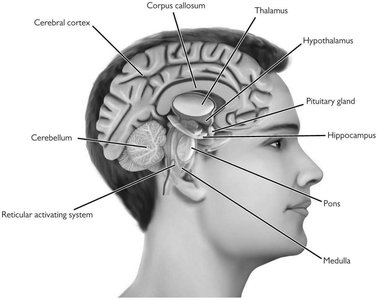
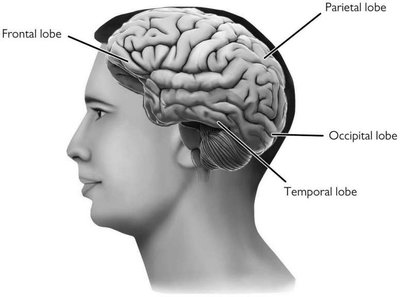
The brain is organized into specialized regions, each responsible for distinct functions.
Frontal Lobe: Executive functions, planning, decision-making, and voluntary movement.
Parietal Lobe: Processes sensory information related to touch, spatial orientation, and body awareness.
Temporal Lobe: Auditory processing, language, and memory.
Occipital Lobe: Visual processing.
Limbic System: Emotion, motivation, and memory (includes amygdala, hippocampus, hypothalamus).
Cerebellum: Coordination and balance.
Brain Stem: Basic life functions (breathing, heartbeat).
Corpus Callosum and Brain Hemispheres
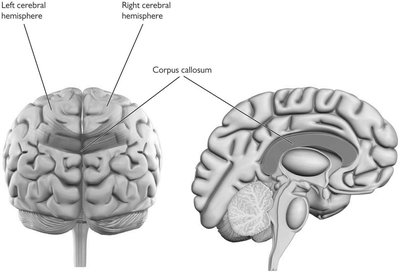
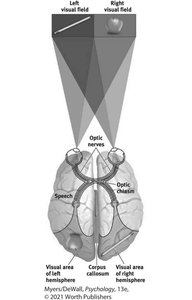
The brain is divided into left and right hemispheres, connected by the corpus callosum, which enables communication between the two sides.
Left Hemisphere: Language, logic, analytical thinking.
Right Hemisphere: Spatial abilities, creativity, holistic processing.
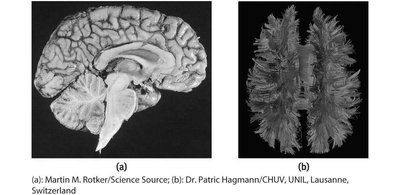
Corpus Callosum: Thick band of nerve fibers facilitating interhemispheric communication.
Split-Brain Research
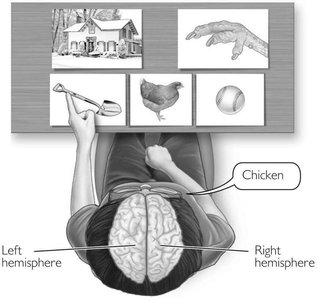
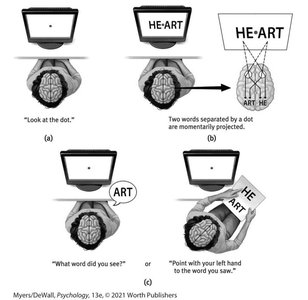
Studies of patients with severed corpus callosum reveal the specialized functions of each hemisphere and how they process information independently.
Visual Field Processing: Each hemisphere processes information from the opposite visual field.
Language Dominance: The left hemisphere typically controls speech and language in right-handed individuals.

Functional Areas of the Cortex
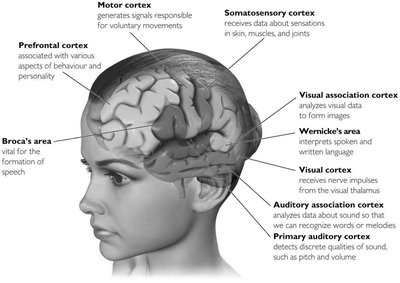
The cerebral cortex contains specialized regions for sensory processing, motor control, and language.
Motor Cortex: Controls voluntary movements.
Somatosensory Cortex: Processes sensory input from the body.
Broca’s Area: Speech production.
Wernicke’s Area: Language comprehension.
Visual and Auditory Cortices: Process visual and auditory information, respectively.
Brain Plasticity and Case Studies
The brain exhibits plasticity, the ability to reorganize and adapt following injury or experience. Famous case studies, such as Phineas Gage, illustrate the impact of brain damage on behavior and personality.
Phineas Gage: Suffered frontal lobe damage, resulting in personality changes.
Somatotopic Organization
The motor and somatosensory cortices are organized somatotopically, meaning specific regions correspond to particular body parts. This is often depicted as a homunculus.
Neuroimaging and Brain Research Methods
Techniques for Studying the Brain
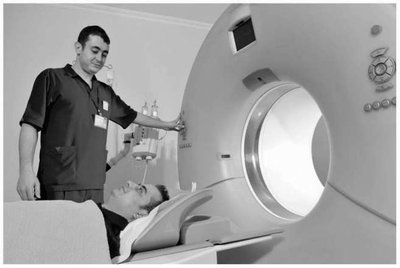
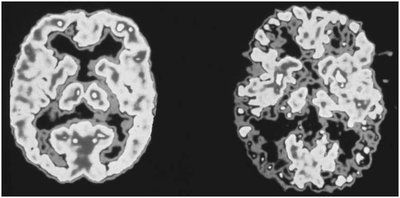
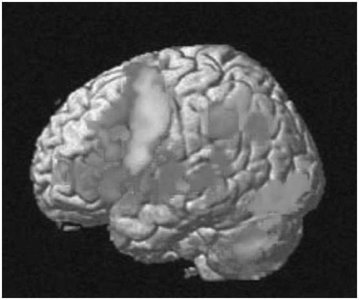
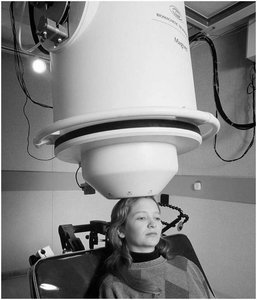
Modern neuroscience employs various imaging and recording techniques to study brain structure and function.
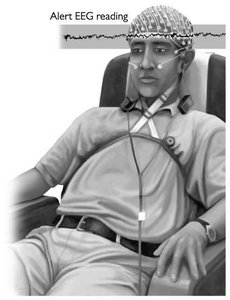
EEG (Electroencephalogram): Measures electrical activity in the brain, useful for studying states of consciousness and brain waves.
MRI (Magnetic Resonance Imaging): Provides detailed images of brain anatomy.
PET (Positron Emission Tomography): Shows brain activity by tracking glucose metabolism.
MEG (Magnetoencephalography): Measures magnetic fields produced by neural activity.
Neural Networks and Brain Connectivity
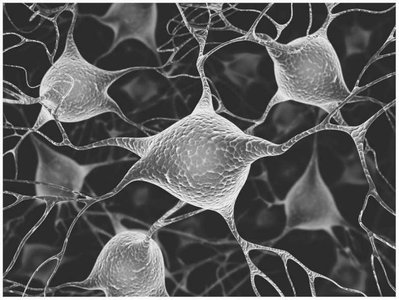
Neural Networks
Neurons form complex networks that underlie all brain functions. These networks are dynamic and can change with learning and experience.
Summary Table: Organization of the Central Nervous System
The following table summarizes the main structures and functions of the central nervous system:
Structure | Main Function(s) |
|---|---|
Frontal Lobe | Executive functions, planning, language, memory |
Parietal Lobe | Sensory integration, spatial awareness |
Temporal Lobe | Auditory processing, language, memory |
Occipital Lobe | Visual processing |
Basal Ganglia | Movement and motor planning |
Thalamus | Sensory relay to cortex |
Hypothalamus | Endocrine and autonomic regulation |
Amygdala | Emotion and fear |
Hippocampus | Memory formation |
Cerebellum | Balance and coordination |
Brain Stem | Basic life functions |
Spinal Cord | Information relay between brain and body |
Conclusion
Understanding the biological basis of behavior is essential for the study of psychology. The brain and nervous system form the foundation for all mental processes and behaviors, and advances in neuroscience continue to deepen our knowledge of how the mind works.
