Back
BackBiological Psychology: The Nervous System, Brain, and Behaviour
Study Guide - Smart Notes
 Tailored notes based on your materials, expanded with key definitions, examples, and context.
Biological Psychology
Introduction to Biological Psychology
Biological psychology explores how the central nervous system, brain function, and neural pathways influence and are responsible for thoughts, feelings, and actions. This field bridges biology and psychology to understand the physical basis of behavior and mental processes.
The Nervous System
Major Divisions of the Nervous System
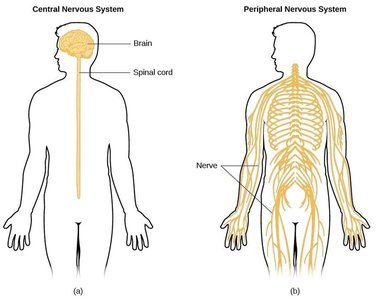
Central Nervous System (CNS): The command center, consisting of the brain and spinal cord. It processes information and coordinates activity.
Peripheral Nervous System (PNS): The information delivery system, comprising nerves outside the CNS that connect the brain and spinal cord to the rest of the body.
Neurotransmitters vs. Hormones
Neurotransmitters and hormones are both chemical messengers, but they differ in their mechanisms and effects.
Feature | Neurotransmitters | Hormones |
|---|---|---|
Where released | From neurons (axon terminals) into the synapse | From endocrine glands into the bloodstream |
Travel distance | Very short (micrometers) | Long (centimeters to meters) |
Speed | Very fast (milliseconds) | Slower (seconds to hours) |
Target | Specific postsynaptic neurons | Many organs and tissues |
Duration | Short-lived, quick reset | Longer-lasting effects |
Examples | Serotonin, dopamine, glutamate, GABA | Cortisol, adrenaline, estrogen |
Role | Precise communication between neurons | Broad regulation of body states and behaviour |
Brain Imaging Methods
Techniques for Studying Brain Structure and Function
CT Scan: Uses X-rays to create cross-sectional images of brain structure.
MRI: Uses magnetic fields for detailed brain anatomy.
fMRI: Measures changes in blood flow to show active brain areas.
EEG: Records electrical activity from the scalp, useful for studying brain waves.
PET Scan: Tracks brain metabolism and neurotransmitter activity with radioactive tracers.
MEG: Maps magnetic fields from neural activity for precise timing and location.
The Central Nervous System (CNS)
Protection of the CNS
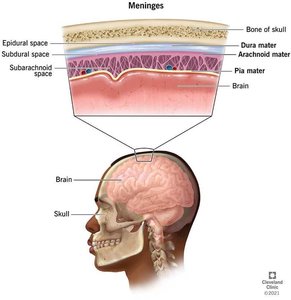
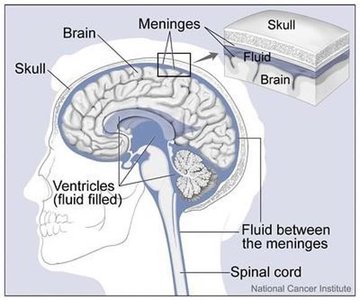
Meninges: Three protective membranes (dura mater, arachnoid mater, pia mater) surrounding the brain and spinal cord.
Blood-brain barrier: Prevents harmful substances from entering the brain.
Cerebrospinal fluid: Cushions the brain and removes waste.
Major Divisions of the Brain
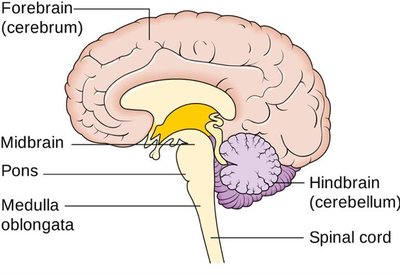
Forebrain: Responsible for higher thought processes.
Midbrain: Acts as a sensory relay and orientation center.
Hindbrain: Controls basic survival functions.
The Cerebral Cortex
Lobes and Hemispheres
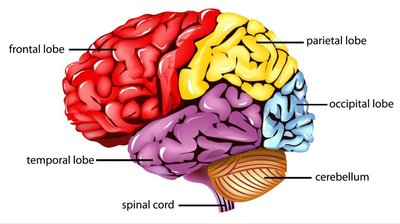
Frontal lobe: Voluntary movement, language production, decision-making, and executive functions.
Parietal lobe: Processes touch, pain, temperature, and spatial awareness.
Temporal lobe: Auditory processing, language comprehension, and memory formation.
Occipital lobe: Visual processing.
Cerebral Hemispheres and Corpus Callosum
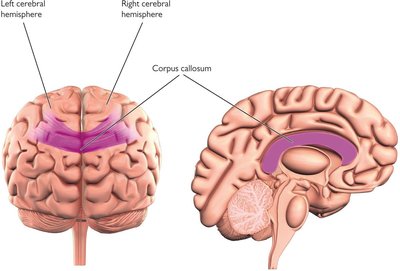
Lateralization: Some functions are more dominant in one hemisphere.
Contralateral control: Each hemisphere controls the opposite side of the body.
Corpus callosum: Large bundle of fibers connecting the two hemispheres.
Frontal Lobe: Primary Motor Cortex
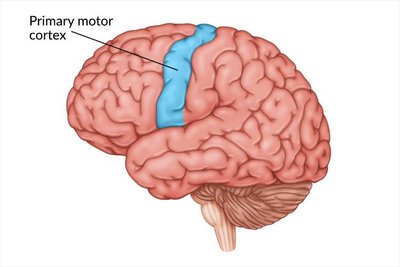
Located at the front of the brain, behind the forehead.
Involved in voluntary movement, language production (Broca’s area), and executive functions.
Contains the primary motor cortex, which controls movement of specific body parts.
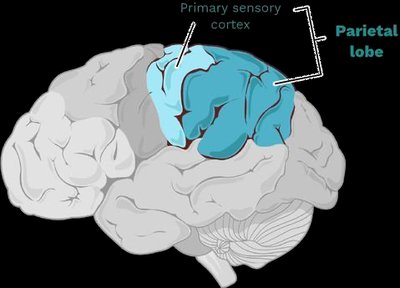
Parietal Lobe: Primary Somatosensory Cortex
Located behind the central sulcus.
Processes touch, pain, temperature, and body position.
Damage can lead to hemispatial neglect.
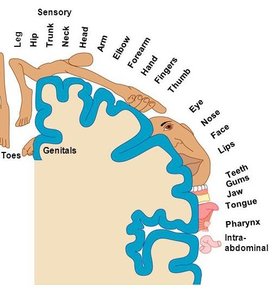
Sensory Homunculus
The sensory homunculus visually represents how much of the primary sensory cortex is devoted to different body parts, reflecting their sensitivity.
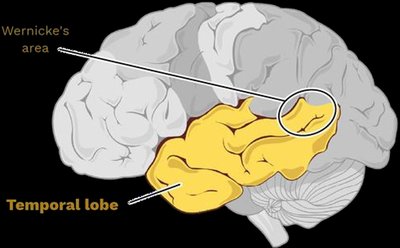
Temporal Lobe
Located on the sides of the brain, above the ears.
Involved in auditory processing, language comprehension (Wernicke’s area), and memory formation.
Includes regions for face recognition.
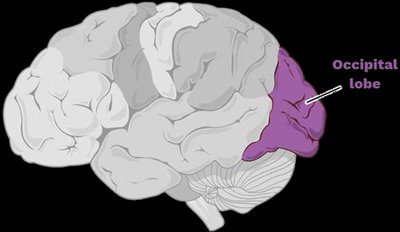
Occipital Lobe
Located at the back of the brain.
Responsible for visual processing and perception of light, shape, and movement.
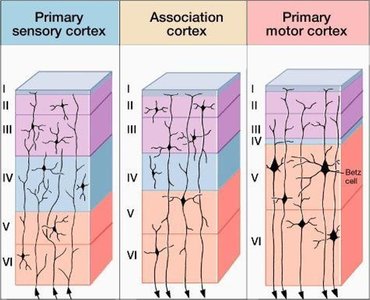
Cortical Hierarchies
The cortex processes information in stages, from simple detection in primary sensory areas to complex integration in association areas, and finally to action in motor areas.
Subcortical Structures
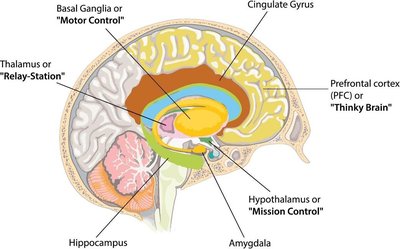
Major Subcortical Structures and Functions
Basal ganglia: Coordinate movement and support habits.
Limbic system: Links emotion, motivation, memory, and body states.
Thalamus: Relays sensory information to the cortex.
Hypothalamus: Maintains homeostasis and regulates hormones.
Amygdala: Detects emotional and threatening stimuli, especially fear.
Hippocampus: Forms new long-term memories.
Neurons: The Building Blocks of the Nervous System
Structure and Function of Neurons
Neurons are specialized cells that communicate using electrical and chemical signals.
Main parts: dendrites (receive signals), cell body (integrates signals), axon (transmits signals), myelin sheath (insulates axon), axon terminals (release neurotransmitters).
Direction of information flow: dendrites → cell body → axon → axon terminals.
Neurotransmission and Action Potentials
Action potential: The electrical signal that travels along the axon when a neuron fires.
Resting potential: About –70 mV; neuron is more negative inside than outside.
Excitatory input increases likelihood of firing; inhibitory input decreases it.
If threshold is reached, an action potential is triggered, followed by a refractory period.
Synaptic Transmission
Action potential reaches axon terminals, causing neurotransmitter release into the synapse.
Neurotransmitters bind to receptors on the postsynaptic neuron, opening ion channels.
Neurotransmitters are cleared by reuptake, enzymatic breakdown, or diffusion.
Major Neurotransmitters and Their Functions
Neurotransmitter | Main Functions | Notes |
|---|---|---|
Glutamate | Main excitatory signal, learning and memory | Most common in cortex |
GABA | Main inhibitory signal, calms neural activity | Target of anti-anxiety drugs |
Acetylcholine (ACh) | Muscle contraction, attention, memory | Works with parasympathetic system |
Dopamine | Movement, reward, motivation | Involved in habit formation |
Serotonin | Mood, appetite, sleep | Target of SSRIs |
Norepinephrine | Alertness, arousal, fight-or-flight | Works with sympathetic system |
Endorphins | Pain relief, pleasure, stress reduction | Released during exercise |
Psychoactive Drugs and the Brain
How Psychoactive Drugs Work
Agonists: Increase neurotransmitter activity (mimic, increase release, or block reuptake).
Antagonists: Decrease neurotransmitter activity (block receptors or reduce release).
Neural Plasticity and Neurogenesis
Neural Plasticity
The brain’s ability to change over time, strongest during early development but continues with learning.
Mechanisms: growth of dendrites/axons, synaptogenesis, pruning, myelination.
Learning strengthens or forms synapses (related to long-term potentiation).
Recovery after injury is limited but some reorganization is possible.
Adult Neurogenesis
Neurogenesis is the creation of new neurons.
Recent studies confirm adults can produce new neurons, especially in the hippocampus.
Supports learning, memory, mood regulation, and may aid in recovery from injury or disease.
Nature and Nurture in Brain Development
Genes and Environment
Nature: Genes influence brain development, neuron connectivity, and sensitivity to experiences.
Nurture: Environment shapes learning, stress response, and behavior through experience.
Genotype and Phenotype
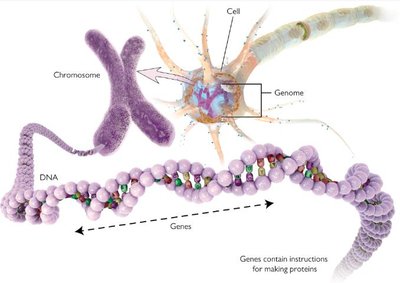
Genotype: Genetic makeup of an individual.
Phenotype: Observable traits, shaped by both genes and environment.
People with similar genes can show different traits due to environmental influences.

Behavioural Genetics
Studying Nature and Nurture
Behavioural genetics examines how genes and environment influence behavior.
Heritability: The extent to which genetic differences contribute to variation in a trait among individuals, expressed as a percentage.
Some traits are highly heritable (e.g., height), others are mostly environmental (e.g., religious affiliation).
Behavioural Genetic Designs
Family studies: Examine if traits run in families (genes and environment confounded).
Twin studies: Compare identical and fraternal twins to estimate genetic influence.
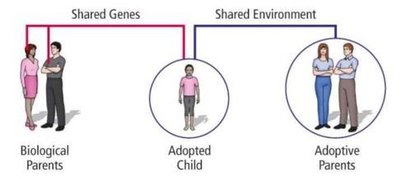
Adoption studies: Compare adopted children to biological and adoptive parents to separate genetic and environmental effects.