 Back
BackCauses of Abnormal Behavior: Paradigms, Models, and Research Methods in Psychology
Study Guide - Smart Notes
 Tailored notes based on your materials, expanded with key definitions, examples, and context.
Causes of Abnormal Behavior
Learning Objectives
This section introduces the foundational paradigms and models used to explain abnormal behavior in psychology, as well as key research methods. Understanding these frameworks is essential for analyzing psychological disorders and their etiology.
Biological Paradigm
Psychodynamic Paradigm
Cognitive-Behavioral Paradigm
Humanistic Paradigm
Systems Theory
Biopsychosocial Model
Research Methods
Overview of Paradigms in Psychology
Definition and Importance of Paradigms
A paradigm is a framework for observation and understanding, including assumptions about how phenomena should be studied and the kinds of research methods that are appropriate. Psychologists use various paradigms to explain the etiology of psychological disorders. Most now recognize that abnormal behavior is caused by a combination of biological, psychological, and social factors.
Historical Origins of Psychology Paradigms
The Biological Paradigm
The biological paradigm seeks biological abnormalities that might cause abnormal behavior. Historically, conditions such as general paresis (general paralysis) were linked to biological causes. However, specific biological causes have been identified for only some cognitive disorders.
The Psychodynamic Paradigm
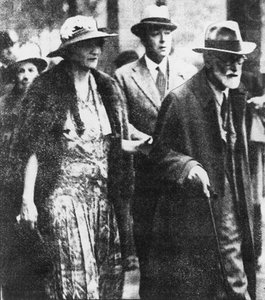
The psychodynamic paradigm is rooted in the writings of Sigmund Freud. Freud's psychoanalytic theory divides the mind into three parts:
Id: The source of instinctual drives and desires.
Ego: The rational part that mediates between the id and reality.
Superego: The moral conscience.
Freudian Defense Mechanisms
Defense mechanisms are unconscious strategies used by the ego to manage anxiety and conflict. Common mechanisms include:
Denial: Refusing to accept reality.
Displacement: Redirecting emotions to a safer outlet.
Projection: Attributing one's own feelings to others.
Rationalization: Justifying behaviors with logical reasons.
Reaction Formation: Acting opposite to one's feelings.
Repression: Pushing distressing thoughts out of consciousness.
Sublimation: Channeling impulses into socially acceptable activities.
The Cognitive-Behavioral Paradigm
This paradigm views both abnormal and normal behavior as products of learning. Two major learning processes are:
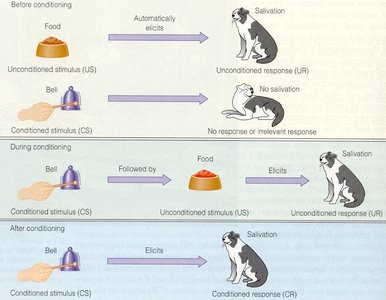
Classical Conditioning: Learning through association.
Operant Conditioning: Learning through consequences.
Classical Conditioning
Classical conditioning involves pairing a neutral stimulus (NS) with an unconditioned stimulus (US) to elicit a conditioned response (CR). For example, Pavlov's dogs learned to salivate at the sound of a bell after it was repeatedly paired with food.
Operant Conditioning
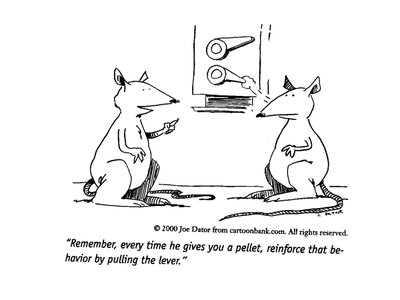
Operant conditioning asserts that learned behavior is a function of its consequences:
Positive Reinforcement: Adding a pleasant stimulus to increase behavior.
Negative Reinforcement: Removing an unpleasant stimulus to increase behavior.
Positive Punishment: Adding an unpleasant stimulus to decrease behavior.
Negative Punishment: Removing a pleasant stimulus to decrease behavior.
Behaviorism and John B. Watson
John B. Watson was a key figure in behaviorism, emphasizing the role of environmental factors in shaping behavior. The Little Albert Experiment demonstrated how emotional responses could be conditioned.

The Humanistic Paradigm
The humanistic paradigm offers an explicitly positive view of human nature, emphasizing personal growth and self-actualization. However, paradigms can both direct and misdirect scientific inquiry.
Systems Theory
Holism and Reductionism
Systems theory is an integrative approach to science, emphasizing holism—the idea that the whole is more than the sum of its parts. Reductionism is the opposite, focusing on breaking down phenomena into their simplest components. Systems theory encourages analysis at multiple levels.
Causality in Abnormal Behavior
Equifinality: Multiple pathways can lead to the same outcome.
Multifinality: One cause can lead to multiple outcomes.
Diathesis-Stress Model: Psychopathology results from the interaction between predispositional vulnerability (diathesis) and environmental stress.
Reciprocal Causality: Causes and effects can influence each other.
Developmental Psychopathology: Focuses on the developmental processes that contribute to psychological disorders.
The Biopsychosocial Model
Integrative Approach to Mental Health
The biopsychosocial model posits that abnormal behavior arises from a combination of biological, psychological, and social factors. This model is widely accepted in contemporary psychology.
Biological Factors: Physical health, genetic vulnerabilities, disability.
Psychological Factors: Temperament, IQ, self-esteem, coping skills.
Social Factors: Family relationships, trauma, peers, school environment.

Research Methods in Psychology
Correlation and Causation
Correlation measures the relationship between two variables, ranging from -1 to +1. However, correlation does not imply causation due to the third variable problem, where an unmeasured variable may influence both observed variables.
Correlation coefficient (r):
Third variable problem: A third factor may account for the observed relationship.
Example: Height and weight are correlated, but other factors (e.g., nutrition) may influence both.
Summary Table: Paradigms and Key Features
Paradigm | Main Focus | Key Concepts |
|---|---|---|
Biological | Biological abnormalities | Genetics, brain structure, neurotransmitters |
Psychodynamic | Unconscious processes | Id, ego, superego, defense mechanisms |
Cognitive-Behavioral | Learning and cognition | Classical/operant conditioning, behaviorism |
Humanistic | Personal growth | Self-actualization, positive view of human nature |
Systems Theory | Holistic analysis | Holism, reductionism, equifinality, multifinality |
Biopsychosocial | Integrated model | Biological, psychological, social factors |
Additional info: Academic context was added to clarify the paradigms, defense mechanisms, and research methods, as well as to provide examples and definitions for key terms.
