 Back
BackChapter 1: Psychology and Scientific Thinking – Foundations and Frameworks
Study Guide - Smart Notes
 Tailored notes based on your materials, expanded with key definitions, examples, and context.
Psychology and Scientific Thinking
Introduction to Psychology
Psychology is the scientific study of the mind, brain, and behavior. It seeks to understand how individuals think, feel, and act, using empirical methods to distinguish fact from intuition and pseudoscience.
Definition: Psychology is the scientific study of the mind, brain, and behavior.
Scope: Encompasses mental processes, emotions, motivations, personality, learning, and more.
Applications: Used in fields such as advertising, public safety, education, and criminal justice.

Levels of Analysis in Psychology
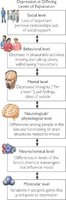
Psychological phenomena can be understood at multiple levels, from broad social influences to molecular genetics. This multi-level approach is essential for a comprehensive understanding of complex behaviors and mental processes.
Social: Influence of relationships and social context.
Behavioral: Observable actions and responses.
Mental: Thoughts, feelings, and cognitive processes.
Neurological/Physiological: Brain structure and function.
Neurochemical: Chemical messengers in the brain.
Molecular: Genetic and molecular underpinnings.
Science versus Intuition
While intuition and common sense can sometimes guide us correctly, they are prone to errors such as naive realism—the belief that we see the world exactly as it is. Science provides systematic safeguards against these biases.
Naive Realism: The error of believing we see the world precisely as it is.
Role of Intuition: Useful for generating hypotheses but must be tested scientifically.

Science as a Safeguard Against Bias
Scientific thinking helps protect against cognitive biases that can distort our understanding of reality.
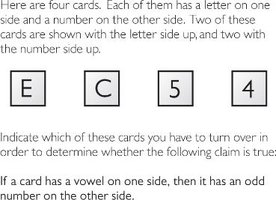
Confirmation Bias: Tendency to seek evidence that supports our beliefs and ignore contradictory evidence.
Belief Perseverance: Clinging to initial beliefs even when faced with disconfirming evidence.
Critical Thinking: Systematic evaluation of information to reach reasonable conclusions.
Scientific Theories and Hypotheses
Science relies on theories and hypotheses to explain and predict phenomena.
Scientific Theory: An explanation for a large number of findings in the natural world.
Hypothesis: A testable prediction derived from a theory.
Metaphysical Claims and the Boundaries of Science
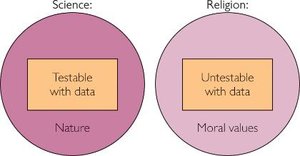
Science deals with testable claims about the natural world. Metaphysical claims, such as those about the existence of God or the soul, are unfalsifiable and lie outside the scope of scientific inquiry.
Metaphysical Claims: Assertions that cannot be tested or falsified by scientific methods.
Pseudoscience: Imposters of Science
Pseudoscience consists of beliefs or practices mistakenly regarded as being based on the scientific method. It lacks the safeguards of science and is often characterized by exaggerated claims, reliance on anecdotes, and lack of peer review.
Warning Signs: Exaggerated claims, overreliance on anecdotes, lack of connectivity to other research, absence of peer review, lack of self-correction, meaningless jargon, and talk of "proof" instead of "evidence".
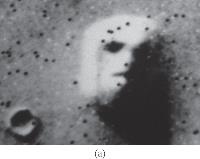
Patternicity: The tendency to perceive meaningful patterns where none exist.

The Dangers of Pseudoscience
Pseudoscience can lead to significant opportunity costs, direct harm, and an inability to think scientifically as citizens. Critical thinking and scientific skepticism are essential defenses.
Opportunity Costs: Resources spent on ineffective treatments or ideas.
Direct Harm: Physical or psychological harm from pseudoscientific practices.
Scientific Skepticism: Evaluating claims with an open mind but requiring persuasive evidence.
Principles of Scientific Thinking
Six core principles guide scientific thinking and help distinguish science from pseudoscience:
Principle | Description | Example |
|---|---|---|
Ruling out rival hypotheses | Consider alternative explanations | Depressed people receiving medication improve more than those who receive nothing |
Correlation vs. causation | Correlation does not imply causation | More ice cream is eaten on days that crimes occur |
Falsifiability | Claims must be testable and capable of being disproved | Humans have an invisible energy field that influences their mood |
Replicability | Findings must be repeatable | People who meditate score higher on intelligence tests |
Generalizability | Findings should apply broadly | Study in Iowa City found people more successful when living far from parents |
Extraordinary claims | Require extraordinary evidence | Claims that Bigfoot exists |

Theoretical Frameworks in Psychology
Five major theoretical perspectives have shaped modern psychology:
Structuralism: Uses introspection to identify basic elements of experience (Edward Titchener).
Functionalism: Focuses on the functions or adaptive purposes of thoughts, feelings, and behaviors (William James, influenced by Charles Darwin).
Behaviorism: Studies observable behavior and learning principles (John B. Watson, B. F. Skinner).
Cognitivism: Examines the role of mental processes in behavior (Jean Piaget, Ulric Neisser).
Psychoanalysis: Explores unconscious processes and early life experiences (Sigmund Freud).


Types of Psychologists
Psychologists specialize in various fields, each contributing uniquely to the understanding and application of psychological principles:
Clinical Psychologists: Assess, diagnose, and treat mental disorders.
Counseling Psychologists: Help with temporary or self-contained life problems.
School Psychologists: Work with students, teachers, and parents to address learning and behavioral issues.
Developmental Psychologists: Study emotional, physiological, and cognitive changes across the lifespan.
Experimental Psychologists: Research memory, language, thinking, and social behaviors.
Biological Psychologists: Examine the physiological basis of behavior.
Forensic Psychologists: Work in legal settings, assess inmates, and study legal processes.
Industrial-Organizational Psychologists: Apply psychology to workplace issues, employee selection, and performance.
Major Debates in Psychology
Two enduring debates shape psychological inquiry:
Nature-Nurture Debate: Are behaviors more influenced by genetics (nature) or environment (nurture)?
Free Will-Determinism Debate: To what extent are behaviors freely chosen versus determined by external or internal factors?
Summary
Psychology is the scientific study of mind, brain, and behavior.
Science provides safeguards against biases and errors in thinking.
Pseudoscience lacks these safeguards and can be harmful.
Six principles of scientific thinking help distinguish science from pseudoscience.
Multiple theoretical frameworks and specialties exist within psychology.
Psychology has broad applications and influences many aspects of life.
