 Back
BackChapter 2: Methods in Psychology – Scientific Approaches, Descriptive Research, Ethics, Correlation, and Experimental Design
Study Guide - Smart Notes
 Tailored notes based on your materials, expanded with key definitions, examples, and context.
Methods in Psychology
Introduction: From Rationalism to Scientific Method
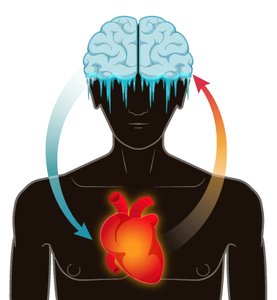
Psychology transitioned from philosophical rationalism, which relied on logical reasoning, to a scientific discipline focused on empirical evidence and systematic observation. Early philosophers like Aristotle believed the heart was the seat of emotions, but modern psychology uses scientific methods to study the mind and behavior.
Rationalism: Knowledge is acquired through reason and logic, not experience.
Empiricism: Knowledge is gained through observation and experience.
Scientific Revolution: Psychology began using experiments to test theories and collect data.
The Scientific Method in Psychology
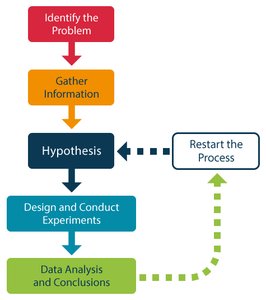
The scientific method is a systematic approach for investigating questions about behavior and mental processes. It consists of several steps that ensure research is objective and replicable.
Identify the Problem: Define the research question based on observation or theory.
Gather Information: Review existing literature and theories.
Generate a Hypothesis: Formulate a testable prediction about the outcome.
Design and Conduct Experiments: Develop procedures to test the hypothesis.
Analyze Data and Formulate Conclusions: Use statistical methods to interpret results.
Restart the Process: Replicate or extend the research based on findings.
Descriptive Methods
Naturalistic Observation
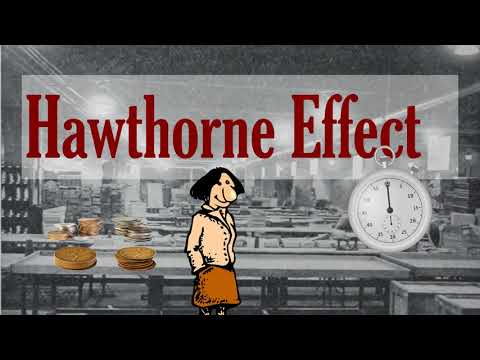
Naturalistic observation involves recording behavior as it occurs in real-world settings without manipulation. It is ecologically valid and useful for generating hypotheses, but lacks control over variables and may be affected by observer bias and reactivity (Hawthorne effect).
Operational Definition: Specifies how a variable is measured (e.g., defining a "legal stop" at a stop sign).
Reactivity: Subjects may alter their behavior when they know they are being observed.

Participant Observation
Participant observation occurs when the researcher becomes part of the group being studied. This method can provide unique insights but may increase bias and reactivity.
Example: Rosenhan's study on psychiatric diagnosis involved researchers posing as patients.
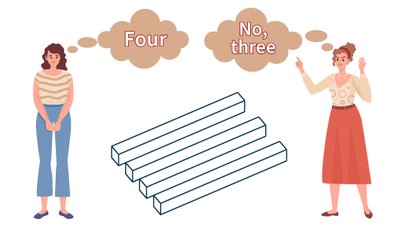
Drawbacks: Potential for observer bias and low reliability.

Case Studies
Case studies provide in-depth analysis of unique individuals or events. They are valuable for rare phenomena but may lack generalizability.
Example: H.M.'s case revealed the role of the hippocampus in memory formation.
Limitation: Findings may not apply to broader populations.

Surveys
Surveys are used to collect data on attitudes, opinions, and behaviors from large groups. Proper sampling is essential to avoid bias.
Sampling Error: Occurs when the sample is not representative of the population.
Wording Effects: The phrasing of questions can influence responses.
Response Bias: Includes acquiescence (yea-saying) and socially desirable responses.
Volunteer Bias: Those who choose to participate may differ from the general population.

Research Ethics
Ethical Principles in Psychology
Ethical research is guided by principles established by the American Psychological Association (APA):
Beneficence and Non-maleficence: Maximize benefits, minimize harm.
Fidelity and Responsibility: Maintain trust and honesty with participants.
Integrity: Report data accurately and honestly.
Justice: Ensure fairness in participant selection and benefits.
Respect for People’s Rights and Dignity: Protect privacy and obtain informed consent.


Special Considerations
Vulnerable Populations: Extra safeguards for those with decisional or situational vulnerability.
Deception: Allowed only when necessary, with debriefing required after participation.

Correlational Research
Understanding Correlation
Correlational research examines relationships between variables. Correlation coefficients (r) range from -1 to +1, indicating direction and strength.
Positive Correlation: Both variables increase together.
Negative Correlation: One variable increases as the other decreases.
Zero Correlation: No relationship between variables.
Correlation ≠ Causation: Correlation does not imply cause-and-effect.
*Additional info: Scatterplots are commonly used to visualize correlations, and confounding variables can create misleading relationships.*
Experimental Methods
Hypothesis and Variables
Experiments are designed to test hypotheses about cause-and-effect relationships. Key variables include:
Independent Variable (IV): Manipulated by the researcher.
Dependent Variable (DV): Measured outcome.
Extraneous/Confounding Variables: Uncontrolled factors that may affect results.
Sample Selection and Groups
Random Sample: Every individual has an equal chance of selection.
Stratified Sample: Ensures representation of subgroups.
Convenience Sample: Selected based on accessibility.
Experimental Group: Receives the treatment.
Control Group: Does not receive the treatment.
Placebo Effect: Psychological effects from expectations.

Validity
Internal Validity: Degree to which results are attributable to the IV.
External Validity: Generalizability of findings to other settings or populations.
Example Experiment: The Testing Effect
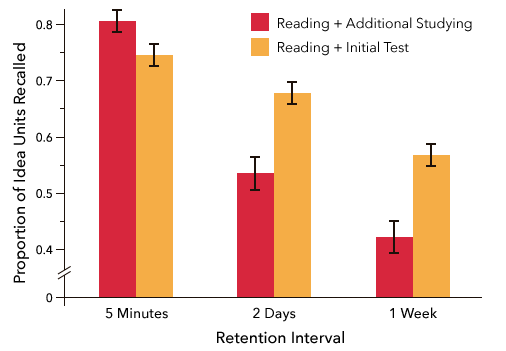
Roediger and Karpicke (2006) tested whether repeated testing improves memory retention compared to additional studying. Results showed that testing led to better long-term recall.
Statistics in Psychology
Descriptive Statistics: Central Tendency
Central tendency measures summarize data:
Mean: Average score.
Median: Middle score in ordered data.
Mode: Most frequent score.

Descriptive Statistics: Variability
Variability describes how spread out scores are:
Range: Difference between highest and lowest scores.
Variance: Average squared deviation from the mean.
Standard Deviation (SD): Square root of variance.
Inferential Statistics
Inferential statistics allow researchers to make conclusions about data, such as whether differences between groups are statistically significant (p < 0.05).
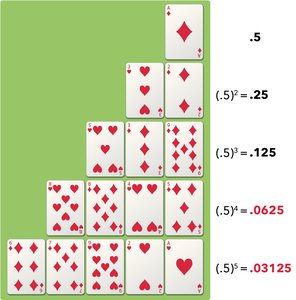
Probability: Used to determine likelihood of events.
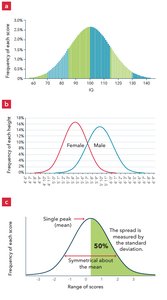
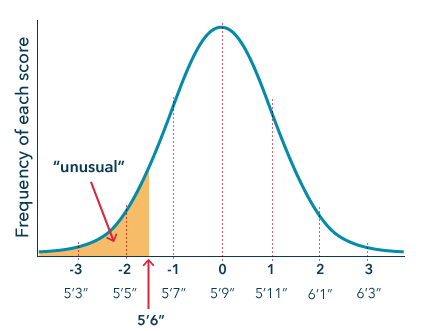
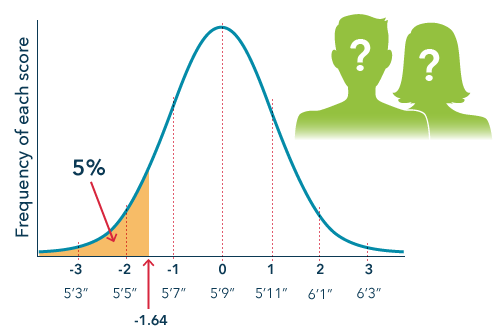
Normal Distribution: Bell-shaped curve describing many psychological variables.

Summary
Psychology has evolved from rationalism to scientific empiricism.
The scientific method is central to psychological research.
Descriptive methods (observation, case studies, surveys) provide rich data but have limitations.
Ethical principles guide research with human participants.
Correlational research identifies relationships but does not establish causality.
Experimental methods allow for testing cause-and-effect relationships.
Statistics help describe and interpret data, with measures of central tendency, variability, and inferential tests.
