 Back
Chapter 2: Reading and Evaluating Scientific Research in Psychology
Study Guide - Smart Notes
 Tailored notes based on your materials, expanded with key definitions, examples, and context.
Scientific Research in Psychology
Introduction to Psychological Science
Psychological science relies on systematic research methods to understand behavior and mental processes. This chapter focuses on how psychologists design, conduct, and evaluate scientific research, emphasizing the importance of objectivity, reliability, and validity in the scientific process.
Scientific Research Designs
Types of Research
Descriptive Research: Involves gathering data to define the current state of participants on a particular measure. Examples include case studies, naturalistic observation, and surveys.
Qualitative Research: Uses words or images as data. Researchers interpret subjective, personal, or socially constructed meanings. Methods include interviews and focus groups.
Quantitative Research: Involves numerical data, often through correlational or experimental designs. Data are analyzed statistically to identify patterns or test hypotheses.
Data Collection Methods
Physiological Measurements: Such as fMRI, blood, or saliva samples to assess biological responses.
Observation: Naturalistic observation involves watching subjects in their natural environment without interference.
Self-Reporting: Includes questionnaires, interviews, and focus groups. Care must be taken to avoid bias and word questions carefully.
Correlational Research
Understanding Correlations
Correlational research examines the relationship between two variables without manipulating them. The strength and direction of the relationship are represented by a correlation coefficient (r), which ranges from -1 to +1.
Positive Correlation: Both variables increase or decrease together.
Negative Correlation: As one variable increases, the other decreases.
Zero Correlation: No systematic relationship between the variables.
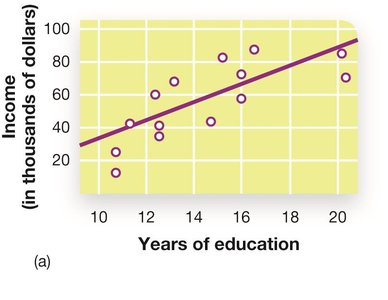
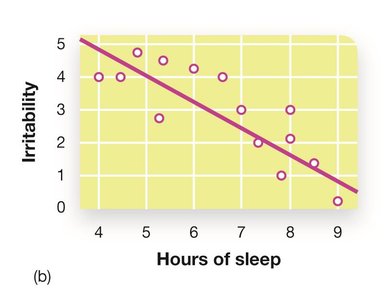
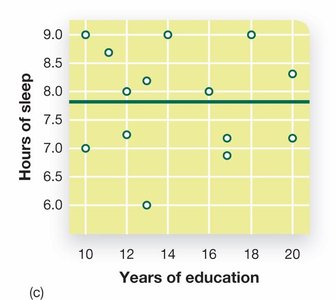
Example: A positive correlation exists between years of education and income, while a negative correlation is observed between hours of sleep and irritability.
Experimental Research
The Experimental Method
Experimental research involves manipulating one variable (independent variable) to observe its effect on another variable (dependent variable), while controlling for confounding variables.
Random Assignment: Participants are randomly assigned to groups to ensure each group is similar at the start of the experiment.
Experimental Group: Receives the treatment or stimulus targeting a specific behavior.
Control Group: Does not receive the treatment; serves as a baseline for comparison.
Quasi-Experimental Groups: Groups are based on predetermined characteristics rather than random assignment.
Between-Subjects Design: Compares different groups of participants.
Within-Subjects Design: Compares participants to themselves under different conditions.
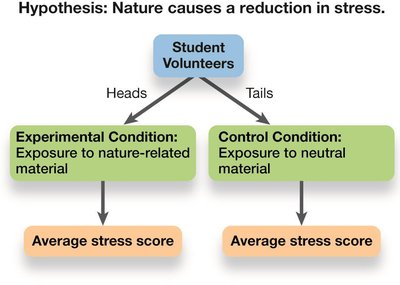
Example: To test if exposure to nature reduces stress, student volunteers are randomly assigned to view either nature-related or neutral material, and their average stress scores are compared.
Characteristics of Quality Scientific Research
Five Key Characteristics
Objective, Valid, and Reliable Measurements: Data must be collected using standardized, unbiased methods that yield consistent and accurate results.
Generalizability: Findings should apply beyond the specific sample studied, ideally to the broader population.
Reduction of Bias: Research should minimize the influence of researcher or participant expectations.
Public Disclosure: Results are shared through academic journals and peer review.
Replicability: Other researchers should be able to repeat the study and obtain similar results.
Scientific Measurement
Objectivity: Measurements should be free from personal bias. Examples include physiological measures and standardized self-reports.
Operational Definitions: Clearly defining variables in terms of how they are measured.
Reliability: Consistency and stability of measurements over time (e.g., test-retest reliability, inter-rater reliability).
Validity: The extent to which a measurement accurately reflects the concept it is intended to measure.
Generalizability of Results
Population vs. Sample: Researchers aim to study samples that best reflect the population of interest.
Random Sample: Every member of the population has an equal chance of being selected.
Convenience Sample: Participants are selected based on ease of access, which may limit generalizability.
Ecological Validity: The extent to which research findings generalize to real-world settings.
Bias and Techniques to Reduce Bias
Sources of Bias
Researcher Bias: Expectations or preferences of the researcher may influence the results.
Participant Bias: Participants may alter their behavior due to awareness of being studied (Hawthorne effect), desire to present themselves favorably (social desirability), or attempts to guess the study’s purpose (demand characteristics).
Placebo Effect: Participants experience changes simply because they believe they are receiving a treatment.
Reducing Bias
Anonymity: Participants’ identities are not linked to their data.
Confidentiality: Researchers keep participants’ information private.
Single-Blind Study: Participants do not know which group they are in.
Double-Blind Study: Neither participants nor researchers know group assignments, reducing both researcher and participant bias.
Sharing and Evaluating Research
Dissemination and Replication
Academic Journals: Research is published for peer review and scrutiny by the scientific community.
Replication: Repeating studies to confirm findings. Psychology faces a “replication crisis” where some results are difficult to reproduce.
Characteristics of Poor Research
Lack of Falsifiable Hypotheses: Good research questions must be testable and capable of being proven false.
Anecdotal Evidence: Personal stories or isolated examples are not sufficient for scientific conclusions.
Biased Data Selection: Choosing data that supports a hypothesis while ignoring contradictory evidence.
Appeal to Authority: Relying on expert opinion without supporting data.
Appeal to Common Sense: Accepting claims because they seem obvious, not because they are scientifically supported.
Summary Table: Key Concepts in Psychological Research
Concept | Definition | Example |
|---|---|---|
Independent Variable | Variable manipulated by the researcher | Type of material viewed (nature vs. neutral) |
Dependent Variable | Variable measured in the experiment | Average stress score |
Confounding Variable | Uncontrolled variable that may affect results | Participant mood prior to experiment |
Reliability | Consistency of measurement | Test-retest reliability of a questionnaire |
Validity | Accuracy of measurement | Does a stress scale truly measure stress? |
Additional info: This summary is based on lecture slides and textbook images for an introductory psychology course, focusing on research methods and scientific thinking in psychology.
