 Back
BackClassical Conditioning: Principles, Processes, and Applications
Study Guide - Smart Notes
 Tailored notes based on your materials, expanded with key definitions, examples, and context.
Learning and Conditioning
Definition of Learning
Learning is a relatively enduring change in behavior, thought, or knowledge as a result of past experience. It is a foundational concept in psychology, underlying how organisms adapt to their environments.
Learning: Any process through which experience at one time can alter an individual's behavior at a future time.
Conditioning: A form of learning that involves making associations between environmental stimuli and an organism’s responses.
Example: A dog learns to associate the sound of a bell with being fed, eventually salivating at the sound alone.
Classical Conditioning
Introduction to Classical Conditioning
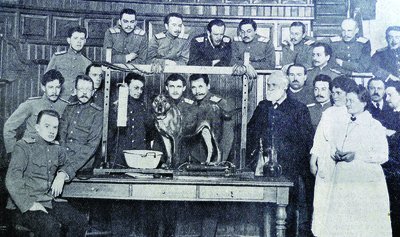
Classical conditioning is a type of associative learning first described by Ivan Pavlov, a Russian physiologist, in the 1890s. Pavlov discovered that dogs could learn to associate a neutral stimulus (such as a bell) with food, leading to a learned response (salivation) to the previously neutral stimulus.
Ivan Pavlov: Conducted experiments on digestion in dogs and noticed that dogs would salivate in response to environmental cues associated with food, even before the food was presented.
Key Insight: Environmental signals (such as the sight of a lab assistant) could trigger salivation, indicating that the dogs had learned an association.

Key Terms in Classical Conditioning
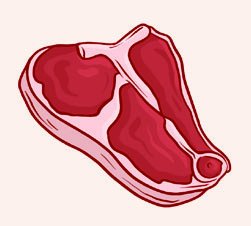
Unconditioned Stimulus (US): A stimulus that naturally and automatically triggers a reflexive response (e.g., food).
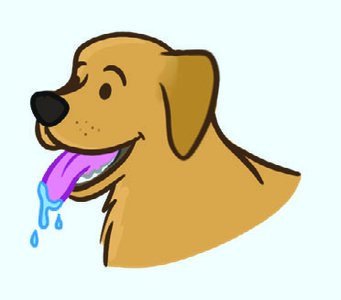
Unconditioned Response (UR): The unlearned, naturally occurring response to the US (e.g., salivation to food).
Neutral Stimulus (NS): A stimulus that does not naturally elicit a consistent response (e.g., a bell before conditioning).
Conditioned Stimulus (CS): A previously neutral stimulus that, after being paired with the US, elicits a learned response (e.g., the bell after conditioning).
Conditioned Response (CR): The learned response to the previously neutral stimulus (e.g., salivation to the bell).
Stages of Classical Conditioning
Classical conditioning typically involves three main stages:
Before Conditioning: The US elicits the UR; the NS elicits no response.
During Conditioning (Acquisition): The NS is repeatedly paired with the US, leading to the UR.
After Conditioning: The NS becomes the CS, which now elicits the CR (similar to the UR).



Principles of Classical Conditioning
Acquisition: The phase during which the NS and US are paired together. For strongest learning, the NS should precede the US.
Timing: The closer in time the NS and US are presented, the stronger the association.
Second-Order (Higher-Order) Conditioning
Conditioned responses can be extended through higher-order conditioning, where a new neutral stimulus is paired with an existing conditioned stimulus until the new stimulus also elicits the conditioned response.
Procedure: Pair a new NS with the established CS. Eventually, the new NS becomes a CS and elicits the CR.
Example: If a bell (CS) is paired with a light (new NS), the light can eventually elicit salivation (CR) even without the bell.
Stimulus Generalization and Discrimination
Conditioned responses can be broadened or narrowed based on the similarity of stimuli.
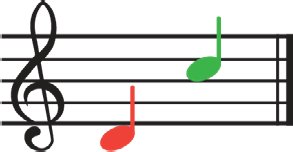
Stimulus Generalization: The tendency for stimuli similar to the CS to elicit the CR.
Stimulus Discrimination: The ability to distinguish between the CS and other similar stimuli, so that only the CS elicits the CR.
As discrimination increases, generalization decreases, and vice versa.
Example: A dog conditioned to salivate to a specific bell tone may also salivate to similar tones (generalization), but with training, can learn to respond only to the original tone (discrimination).
Extinction and Spontaneous Recovery
Learned responses can diminish or reappear under certain conditions.
Extinction: The elimination of a learned response when the CS is repeatedly presented without the US. Over time, the CR decreases and eventually disappears.
Spontaneous Recovery: The sudden reappearance of a previously extinguished CR after a period of rest.
Extinction is affected by the duration and strength of the original conditioning, as well as biological preparedness (e.g., taste aversion is harder to extinguish).


Common Misconceptions in Classical Conditioning
Misconception 1: Classical conditioning is a simple association. Correction: The CS is learned as a signal that predicts the US.
Misconception 2: During acquisition, the NS and US are presented simultaneously. Correction: For stronger conditioning, the NS should precede the US.
Summary Table: Key Terms in Classical Conditioning
Term | Definition | Example (Pavlov's Dog) |
|---|---|---|
Unconditioned Stimulus (US) | Stimulus that naturally elicits a reflexive response | Food |
Unconditioned Response (UR) | Reflexive, unlearned response to the US | Salivation to food |
Neutral Stimulus (NS) | Stimulus that does not naturally elicit a response | Bell (before conditioning) |
Conditioned Stimulus (CS) | Previously neutral stimulus that elicits a response after pairing with US | Bell (after conditioning) |
Conditioned Response (CR) | Learned response to the CS | Salivation to bell |
Applications and Examples
Taste Aversion: Animals (including humans) can develop aversions to foods associated with illness, even after a single pairing.
Phobias: Fears can be acquired through classical conditioning when a neutral stimulus is paired with a frightening event.
Advertising: Products are paired with positive stimuli (e.g., attractive people, pleasant music) to elicit positive responses.
Key Equations and Concepts
Acquisition Curve: The strength of the CR increases with repeated pairings of the NS and US, then plateaus.
Extinction Curve: The strength of the CR decreases with repeated presentation of the CS alone.
Additional info: This guide expands on the provided notes with definitions, examples, and applications to ensure a comprehensive understanding of classical conditioning for psychology students.
