 Back
BackCommunity, Culture, and the Media in Adolescent Development
Study Guide - Smart Notes
 Tailored notes based on your materials, expanded with key definitions, examples, and context.
Community, Culture, and the Media
The Importance of Community
Community plays a crucial role in adolescent development by providing a sense of belonging, shared purpose, and social support. Adolescents' experiences within their communities can shape their values, behaviors, and psychological well-being.
Sense of community: Involves close interconnections among people, fostering feelings of common membership, purpose, and solidarity.
Over half of Canadians report a strong sense of community belonging.
Age segregation: Can create distance and negative stereotypes between adolescents and adults, leading to a lack of trust.
Social trust tends to be lower in poor inner-city neighborhoods.
Teens and Community Organizations
Participation in community organizations helps adolescents develop social and civic skills, such as cooperation, compromise, and identification with collective goals.
Teens learn to prioritize organizational goals and practice democratic procedures.
Community values influence the nature and effectiveness of teen organizations.
Culture and Psychology
What Is Culture?
Culture consists of shared norms, beliefs, attitudes, values, and behaviors that are transmitted across generations. Individuals vary in their adherence to cultural norms.
Tight cultures: Enforce strict conformity to norms.
Loose cultures: Are more tolerant of deviations from norms.
Ethnocentrism: The tendency to interpret the world from one's own cultural perspective.
Psychology and Culture
Psychological research often examines cultural differences in behavior and values. For example, shyness and modesty are valued among Chinese children, while Canadian children may be encouraged to be more assertive.
Cross-cultural research must be interpreted cautiously, considering whether concepts have the same meaning across cultures.
Avoid judging one culture as "better than" another; focus on differences.
Individualism and Collectivism
Two broad cultural worldviews influence adolescent development:
Individualism: Emphasizes independence, personal rights, and self-expression. Valued traits include assertiveness and achievement.
Collectivism: Emphasizes interdependence and prioritizing group goals. Valued traits include cooperativeness, obedience, and self-control.
Most societies contain elements of both worldviews.
Teens and Social Diversity
Adolescents in multicultural societies navigate complex cultural identities and may experience acculturation, which involves adapting to both their heritage and the majority culture.
Acculturation: The process of accepting or rejecting one's own and the majority culture.
Four patterns: assimilation, marginalization, separation, and integration.
Bicultural teens: Identify with both their own and the majority culture.
Adolescents often acculturate faster than their immigrant parents, which can lead to conflicts over autonomy and family closeness.
Social Class and Adolescence
Social class, including income, living conditions, and status, significantly affects adolescent development. Poverty is associated with a range of negative outcomes.
Poverty rates are higher among ethnic minorities and Aboriginal teens in Canada.
Effects of poverty include poor health, low academic achievement, delinquency, and teen pregnancy.
Social support is crucial for mitigating these effects.
The Impact of Media on Adolescents
Media Use Among Teens
Media consumption is a significant aspect of adolescent life, with Canadian teens spending over eight hours per day using various media.
Three-quarters of Canadian teens use social media platforms like Facebook.
Media use is linked to risk-taking behaviors and poor sleep quality.
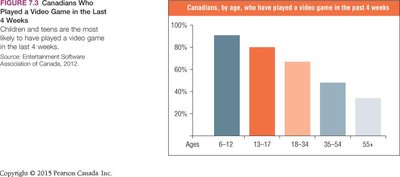
Boys tend to spend more time on television and video games, while girls use computers more.
Teens from lower socioeconomic backgrounds use more television and video games.
What Attracts Teens to Media?
Teens are drawn to media for various reasons, including entertainment, information, and social connection.
Uses and gratifications: Diversion, cognition, utility, withdrawal, and identity formation.
High sensation seekers use media for stimulation and excitement.
Individual differences shape media choices and experiences.
Effects of Media Exposure
Media exposure can influence adolescent attitudes and behaviors through several psychological mechanisms.
Cultivation theory: Media shapes perceptions of reality by consistently representing certain myths and values.
Social cognitive theory: Media figures serve as models for behavior, demonstrating actions and consequences.
Schematic theory: Media provides social scripts and schemas that guide behavior.
Exposure to media violence is strongly linked to increased aggressiveness, especially concerns about violent video games.
The Media and Teen Sexuality
Media is a major source of sexual information for teens, but it often presents distorted views of sexuality and relationships.
Most teens have encountered online pornography and receive sexual information from television, magazines, and the Internet.
Media portrayals can influence teens' attitudes toward sex, often leading to more cynical or unrealistic views.
Sexting is an emerging concern among adolescents.
Media and Body Image
Media often promotes unrealistic body ideals, which can negatively affect adolescents' body satisfaction and eating behaviors.
Women are typically portrayed as thinner and men as more muscular in media.
Exposure to fashion magazines is linked to body dissatisfaction among girls.
Television viewing is associated with eating problems.
Natural experiments, such as those in Fiji, show the impact of media introduction on body image concerns.
Positive Effects of Media Involvement
Despite potential risks, media can also have positive effects on adolescent development.
Provides access to global cultural resources, such as online libraries and museums.
Enables sharing of niche interests and maintaining social connections across distances.
Adolescents can be active media creators and producers, not just consumers.
