 Back
BackComprehensive Study Notes: Cognitive and Developmental Psychology, Research Methods, and Psychological Disorders
Study Guide - Smart Notes
 Tailored notes based on your materials, expanded with key definitions, examples, and context.
Cognitive and Developmental Psychology
Jean Piaget's Theory of Cognitive Development
Jean Piaget proposed that children's cognitive development occurs in four universal, sequential stages. Each stage is characterized by distinct ways of thinking and understanding the world.
Sensorimotor Stage (Birth–2 years): Infants learn about the world through sensory experiences and motor actions. A key milestone is object permanence—the understanding that objects continue to exist even when not seen.
Preoperational Stage (2–7 years): Children develop symbolic thinking, language, and imagination, but their thinking is still intuitive and egocentric. They struggle with understanding the perspectives of others and lack logical operations.
Concrete Operational Stage (7–11 years): Logical thinking develops, but is limited to concrete objects and events. Children understand concepts like conservation, reversibility, and cause and effect.
Formal Operational Stage (12 years and up): Abstract, hypothetical, and deductive reasoning emerge. Adolescents can think about possibilities, test hypotheses, and reason about complex problems.
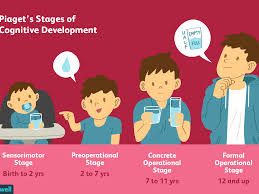
Example: In the concrete operational stage, a child understands that pouring water from a short, wide glass into a tall, thin glass does not change the amount of water (conservation).
Additional info: Piaget's work emphasized that children are not less intelligent than adults; they simply think differently.
Vygotsky's Sociocultural Theory
Lev Vygotsky argued that cognitive development is largely a result of social interaction and cultural context. He introduced the concept of the Zone of Proximal Development (ZPD), which is the range between what a child can do alone and what they can achieve with guidance.
Scaffolding: Support provided by a more knowledgeable other (e.g., adult or peer) to help the learner accomplish tasks within the ZPD.
Language: Plays a central role in cognitive development, serving as a primary tool for thought and learning.
Example: A teacher helps a student solve a math problem by providing hints and encouragement, gradually reducing assistance as the student becomes more competent.
Research Methods in Psychology
The Scientific Method
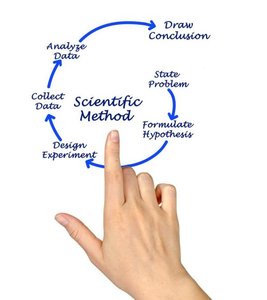
The scientific method is a systematic approach to investigating questions and testing hypotheses in psychology. It aims to minimize bias and ensure replicability.
Steps:
Ask a question
Conduct background research
Formulate a hypothesis
Test with an experiment
Analyze results
Draw conclusions
Report results
Key Terms: Theory (an integrated explanation), hypothesis (a testable prediction), replication (repeating studies to confirm findings).
Experimental Method
The experimental method involves manipulating one or more independent variables to observe their effect on a dependent variable, allowing researchers to infer cause-and-effect relationships.
Independent Variable (IV): The factor manipulated by the researcher.
Dependent Variable (DV): The outcome measured.
Control Group: Does not receive the IV; used for comparison.
Random Assignment: Ensures each participant has an equal chance of being in any group.
Confounding Variable: Any factor other than the IV that might affect the DV.
Single-blind and Double-blind Studies: Used to minimize bias.
Strengths: Can establish causality; replicable. Weaknesses: May lack ecological validity; ethical limitations.
Correlation Studies
Correlation studies examine the relationship between two variables without manipulation. They are useful when experiments are unethical or impractical.
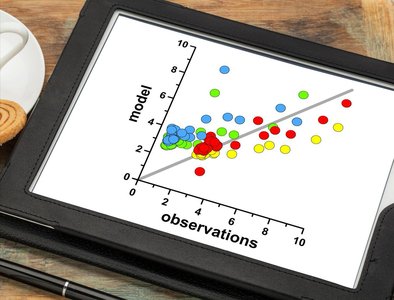
Correlation Coefficient (r): Ranges from -1.0 (perfect negative) to +1.0 (perfect positive); 0 indicates no correlation.
Scatterplot: Visual representation of the relationship.
Positive Correlation: Both variables increase or decrease together.
Negative Correlation: One variable increases as the other decreases.
Illusory Correlation: Perceived relationship that does not exist.

Strengths: Useful for prediction; avoids unethical manipulation. Weaknesses: Cannot establish causation; possible third-variable problem.
Case Studies
Case studies involve in-depth analysis of a single individual or group, often used to explore rare or unique phenomena.
Strengths: Detailed, rich data; can generate hypotheses.
Weaknesses: Limited generalizability; potential for researcher bias.
Example: The case of Phineas Gage, whose brain injury provided insights into the relationship between brain function and personality.
Naturalistic Observation
Researchers observe behavior in its natural environment without intervention.
Strengths: High ecological validity; participants act naturally.
Weaknesses: Lack of control; cannot determine causality.

Surveys and Interviews
Surveys collect self-reported data from large groups, while interviews allow for deeper exploration of individual perspectives.
Strengths: Efficient for gathering data; can reach large samples.
Weaknesses: Potential for response bias; wording effects.


Abnormal Psychology: Psychological Disorders
Obsessive-Compulsive Disorder (OCD)
OCD is characterized by persistent, unwanted obsessions (thoughts) and compulsions (behaviors) that interfere with daily life.
Obsessions: Intrusive thoughts, fears, or images (e.g., fear of germs).
Compulsions: Repetitive behaviors performed to reduce anxiety (e.g., hand washing, checking).
Diagnosis: Symptoms must be time-consuming, cause distress, and not be attributable to another condition.
Causes: Biological factors (e.g., serotonin dysfunction), genetics, stress.
Example: A person repeatedly checks if the door is locked, even when they know it is.
Personality Disorders: Antisocial and Narcissistic
Antisocial Personality Disorder (ASPD): Marked by disregard for others' rights, lack of remorse, impulsivity, and deceitfulness. More common in males; associated with criminal behavior.
Narcissistic Personality Disorder (NPD): Characterized by grandiosity, need for admiration, lack of empathy, and sensitivity to criticism. Individuals may exploit others and have fragile self-esteem.
Causes: Both genetic and environmental factors contribute to the development of personality disorders.
Borderline Personality Disorder (BPD)
BPD involves instability in mood, self-image, and relationships, with high rates of impulsivity and self-harm.
Symptoms: Intense emotional swings, fear of abandonment, unstable relationships, impulsive behaviors.
Causes: Genetic predisposition, childhood trauma, and neurobiological factors.
Treatment: Psychotherapy (e.g., dialectical behavior therapy), medication for symptom management.
Tables and Data
Correlation Types Table
Type of Correlation | Description | Correlation Coefficient (r) |
|---|---|---|
Positive | Both variables increase or decrease together | +1.0 (perfect positive) |
Negative | One variable increases as the other decreases | -1.0 (perfect negative) |
No Correlation | No relationship between variables | 0.0 |
Summary
Piaget and Vygotsky provided foundational theories for understanding cognitive development.
Research methods in psychology include experiments, correlation studies, case studies, naturalistic observation, surveys, and interviews.
Abnormal psychology covers a range of disorders, including OCD and personality disorders, with emphasis on symptoms, causes, and treatments.
