 Back
BackConformity, Compliance, and Obedience: Social Influence in Psychology
Study Guide - Smart Notes
 Tailored notes based on your materials, expanded with key definitions, examples, and context.
Conformity: An Overview
Definition and Nature of Conformity
Conformity is a fundamental concept in social psychology, referring to the change in a person's behavior as a result of real or imagined group pressure. It is a cross-species phenomenon and is defined by the American Psychological Association (APA) as the adjustment of one’s opinions, judgments, or actions to align with those of others or with the normative standards of a group or situation.
Private Acceptance: Genuine belief in the group’s actions or opinions.
Public Compliance: Outwardly conforming without internal agreement.
Types of Conformity
Informational Social Influence
Informational social influence occurs when individuals conform because they believe others’ interpretation of an ambiguous situation is more accurate than their own. This type of influence is driven by the need to be correct and often leads to private acceptance.
Most likely to occur when:
The situation is ambiguous or confusing
The task is important
It is a crisis situation
Others are perceived as experts
Risks: Can be dangerous if the group is misinformed.
Resisting Informational Influence: Seek independent information, question group actions, and critically evaluate others’ interpretations.

Normative Social Influence
Normative social influence is the tendency to conform in order to be liked, accepted, or to avoid rejection and punishment. This influence is based on the need for social acceptance and typically results in public compliance rather than private acceptance.
Social Norms: Implicit or explicit rules for acceptable group behavior, values, and beliefs.
Enforcement: Non-conformists may face ridicule, punishment, or ostracism.
Jeer-Pressure: The threat of social disapproval can induce conformity even from strangers.

Classic Studies: Asch’s Conformity Experiments
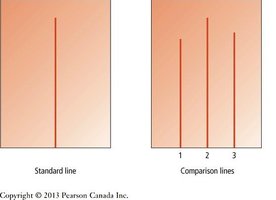
Solomon Asch’s (1951) experiments demonstrated the power of normative social influence. Participants conformed to incorrect group judgments about line lengths, even when the correct answer was obvious.
When is Normative Influence Strongest?
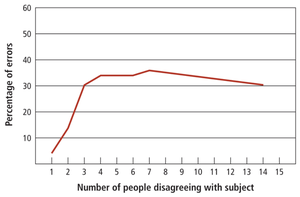
Group Unanimity: Conformity increases when the group is unanimous.
Social Impact Theory: Conformity depends on group strength (importance), immediacy (proximity), and number (size). Increases in group size raise conformity, but only up to about 4-5 people.
Gender, Culture, and Conformity
Gender: Women are slightly more likely to conform in public settings due to socialized gender roles.
Culture: Collectivist cultures show higher conformity, especially within in-groups. Economic and ecological factors (e.g., food production, pathogen load) also play a role.


Consequences and Resistance
Negative: Can lead to dangerous or unhealthy behaviors (e.g., substance use) and social rejection for non-conformity.
Positive: Can promote prosocial behaviors (e.g., charity, environmentalism).
Resisting Normative Influence: Awareness of norms, finding allies, and building idiosyncrasy credits (reputation for conformity) can help resist pressure.

Body Norms and Media Influence
Cultural Variation in Body Norms
Preferences for body size and shape vary across cultures and are influenced by economic context. In resource-scarce areas, larger bodies may be preferred for their association with health and wealth. Western ideals of thinness and muscularity have spread globally through media exposure, narrowing cultural differences.
Media Effects on Body Image
Exposure to idealized body images in Western media is linked to body dissatisfaction, lower self-esteem, and disordered eating, especially among vulnerable individuals. However, research suggests that the effects are generally small for most people.
Representation and Self-Acceptance
Diverse representation in media (body types, ages, ethnicities, abilities) is associated with higher self-esteem and body satisfaction.
Social Media and Body Image
Social media can amplify both negative and positive influences on body image, depending on the content and user’s predispositions.
Pornography and Body Image
Meta-analyses indicate that pornography use is not significantly associated with body dissatisfaction or self-esteem, in contrast to non-sexual media’s thin-ideal imagery.
Minority Influence
Definition and Conditions
Minority influence occurs when a smaller segment of a group influences the majority’s beliefs or behaviors. For effectiveness, the minority must be consistent, logical, and united in their stance.
Compliance
Definition and Techniques
Compliance is a change in behavior in response to a direct request, often studied in marketing but applicable in many contexts. It is distinct from obedience, which involves responding to commands.
Door-in-the-Face: Large request followed by a smaller one; relies on reciprocity norm.
Foot-in-the-Door: Small request followed by a larger one; changes self-perception and increases long-term compliance.
Lowball Technique: Gaining commitment to an attractive offer before revealing hidden costs; creates an illusion of irrevocability.
Obedience to Authority
Definition and Classic Research
Obedience is conformity in response to the commands of an authority figure. Stanley Milgram’s (1963) experiments demonstrated that ordinary people are likely to follow orders from authority figures, even to the extent of inflicting harm on others.
Findings from Milgram’s Studies
62.5% of participants administered the maximum shock level.
Obedience decreased when authority was less immediate or prestigious, or when participants had to physically harm the learner.
Normative and informational social influence made it difficult for participants to refuse.
Incremental commitment and self-justification increased obedience.
Disobedience was most likely at the first sign of distress from the learner (150 volts).
Implications
Milgram’s research highlights the power of situational factors over individual aggression in producing obedience. Awareness of these influences can enhance moral reasoning and resistance to unethical commands.
Summary
Conformity, compliance, and obedience are central processes in social psychology, shaping everyday behavior.
Understanding these processes can help individuals recognize and resist undue social influence.
