 Back
Developmental Stages in Human Psychology: An Overview
Study Guide - Smart Notes
 Tailored notes based on your materials, expanded with key definitions, examples, and context.
Developmental Psychology
Introduction to Developmental Stages
Developmental psychology examines the physical, cognitive, emotional, and social changes that occur throughout the human lifespan. Understanding these stages is essential for supporting healthy growth and addressing the unique needs of individuals at each phase of life.
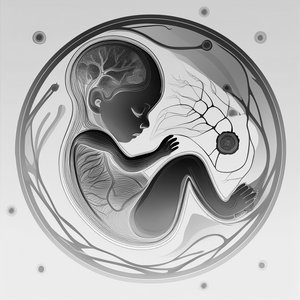
Prenatal Stage (Conception to Birth)
The prenatal stage is the period from conception until birth, characterized by rapid physical growth and the formation of vital organs and brain structures. Maternal health, nutrition, and environmental exposures play a critical role in influencing fetal development and long-term well-being.
Key Point 1: Major organ systems and the brain begin to develop during this stage.
Key Point 2: Factors such as maternal nutrition, stress, and exposure to toxins can impact fetal health.
Example: Exposure to alcohol during pregnancy can lead to fetal alcohol spectrum disorders, affecting cognitive and physical development.
Neonatal Stage (Birth to 1 Month)
The neonatal stage marks the transition from the womb to the external environment. Newborns must adapt by developing basic survival skills, such as feeding, crying, and responding to sensory stimuli. Attachment to caregivers begins to form, laying the foundation for emotional and social development.
Key Point 1: Reflexes such as sucking and grasping are present at birth and are essential for survival.
Key Point 2: Sensory perception (sight, sound, touch) rapidly develops, enabling the infant to interact with their environment.
Example: The rooting reflex helps a newborn find the mother's breast for feeding.

Infancy (1 Month to 2 Years)
Infancy is a period of rapid physical and cognitive development. Motor skills such as crawling and walking emerge, and language abilities begin to develop. Strong emotional bonds with caregivers are formed, which are crucial for social and emotional growth.
Key Point 1: Motor milestones include sitting, crawling, standing, and walking.
Key Point 2: Early language development includes babbling, first words, and simple sentences.
Example: By 18 months, many infants can walk independently and use several words to communicate needs.

Preschool Stage (2 to 6 Years)
During the preschool years, children experience significant growth in motor skills, language, and cognitive abilities. They become more independent, engage in social play, and begin to develop a sense of self and foundational learning skills.
Key Point 1: Fine and gross motor skills improve, allowing for activities like drawing and running.
Key Point 2: Social interactions with peers become more complex, and children start to understand rules and cooperation.
Example: Preschoolers often engage in imaginative play, which supports cognitive and social development.

Middle Childhood (6 to 12 Years)
Middle childhood is marked by steady physical growth and significant advances in cognitive abilities, including problem-solving and academic learning. Peer relationships become increasingly important, influencing self-esteem and social skills.
Key Point 1: Children develop logical thinking and can perform more complex mental operations.
Key Point 2: School and extracurricular activities play a major role in socialization and skill development.
Example: Children learn to cooperate in team sports and group projects, building social competence.

Adolescence (12 to 18 Years)
Adolescence is a transitional stage characterized by puberty and significant physical, emotional, and social changes. Cognitive abilities mature, enabling abstract thinking, identity formation, and increased independence in decision-making.
Key Point 1: Puberty leads to rapid physical changes and the development of secondary sexual characteristics.
Key Point 2: Adolescents explore personal identity and values, often seeking greater autonomy from parents.
Example: Teenagers may question societal norms and experiment with different roles as part of identity development.

Summary Table: Major Developmental Stages
Stage | Age Range | Main Features |
|---|---|---|
Prenatal | Conception to Birth | Organ formation, brain development, influenced by maternal health |
Neonatal | Birth to 1 Month | Adaptation to environment, reflexes, sensory development |
Infancy | 1 Month to 2 Years | Motor and language development, attachment formation |
Preschool | 2 to 6 Years | Motor, language, cognitive growth, social play |
Middle Childhood | 6 to 12 Years | Academic learning, peer relationships, logical thinking |
Adolescence | 12 to 18 Years | Puberty, abstract thinking, identity formation |
Conclusion: Each developmental stage builds upon the previous one, shaping an individual’s overall growth. Providing appropriate support at each phase is crucial for fostering healthy development and preparing individuals for future challenges and success.
