 Back
Freud’s Psychoanalytic Theory of Personality: Structured Study Notes
Study Guide - Smart Notes
 Tailored notes based on your materials, expanded with key definitions, examples, and context.
Classical Theories of Personality
Psychoanalytic Approach
The psychoanalytic approach, developed by Sigmund Freud, is a foundational theory in personality psychology. It emphasizes the role of unconscious processes, instincts, and early childhood experiences in shaping personality and behavior. Freud's theory is both influential and controversial, providing a basis for later developments in psychology.

The Structure of Personality
Freud's Model: Id, Ego, and Superego
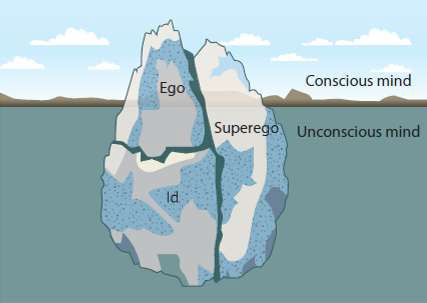
Freud proposed that personality is structured into three main components, each operating at different levels of consciousness and serving distinct functions:
Id: The primitive and instinctual part of the mind, driven by basic urges and desires. It operates according to the pleasure principle, seeking immediate gratification.
Ego: The rational and realistic part, mediating between the id and the superego. It operates according to the reality principle, balancing desires with social norms and practical constraints.
Superego: The moral component, internalizing societal values and standards. It strives for perfection and judges actions as right or wrong.
These components interact dynamically, often resulting in internal conflict that influences behavior and emotions.

Levels of Awareness
Conscious, Preconscious, and Unconscious
Freud distinguished between three levels of mental awareness:
Conscious: Thoughts and feelings we are aware of at any given moment.
Preconscious: Memories and information just below the surface, easily retrievable.
Unconscious: Deep-seated memories, emotions, and instincts that influence behavior but are not accessible to conscious awareness.
The unconscious mind is considered the largest and most influential part of personality.
Instincts: The Basis of Personality
Life and Death Instincts
Freud identified two primary categories of instincts that drive personality development:
Life Instinct (Eros): Associated with survival, reproduction, and pleasure. Includes basic needs such as hunger, thirst, and sexual desire.
Death Instinct (Thanatos): Associated with aggression, self-destructive behavior, and the drive toward death.
These instincts are mental representations of internal stimuli, motivating actions and shaping personality.
Freud’s Psychosexual Stages of Personality Development
Stages and Erogenous Zones
Freud theorized that personality develops through a series of stages, each characterized by a focus on a specific erogenous zone and associated developmental tasks. Fixation at any stage can result in distinct adult personality traits.
Stage | Age Range | Erogenous Zone | Developmental Task/Conflict | Possible Fixation |
|---|---|---|---|---|
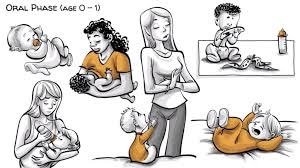
Oral | Birth–18 months | Mouth | Weaning from breast/bottle | Oral passive/dependent, oral aggressive/sadistic |
Anal | 18 months–3 years | Anus | Potty training | Anal-aggressive (stubborn), anal-retentive (perfectionism) |
Phallic | 3–6 years | Genitals | Attachment to opposite-sex parent, Oedipus/Electra complex | Boastful, vain, flirtatious |
Latency | 7 years–puberty | None | Libido is sublimated; dormancy | Consolidation of skills |
Genital | Puberty–adulthood | Genitals | Establishing healthy relationships | Responsibility, delayed gratification |



Application: Structure of Personality in Everyday Life
Example Scenario
Consider a situation where two people reach for the last shopping basket:
Id: "I was here first so I’m definitely making sure that I snatch that basket right back from her." (Impulsive, self-serving response)
Ego: "Do I really need a trolley though? I’m only here for 3 items anyway so I can just hold them in my hand." (Rational, practical response)
Superego: "Fighting with old people is not the right thing to do." (Moral, ethical response)
This illustrates how the three components of personality interact to influence decision-making.
Critical Evaluation of Freud’s Theory
Strengths and Limitations
Freud’s psychoanalytic theory has been both influential and controversial. Key points of evaluation include:
Historical Context: Freud’s ideas were groundbreaking for their time, introducing the concept of the unconscious.
Controversial Aspects: The emphasis on sexuality and childhood experiences has been criticized, especially regarding the Oedipus and Electra complexes.
Cultural Critique: Responses from African and feminist perspectives highlight limitations in the theory’s applicability across cultures and genders.
Lifespan Limitation: Freud’s theory suggests personality development ends at puberty, which is inconsistent with modern lifespan psychology.
Scientific Validation: Many aspects of the theory lack empirical support and are difficult to test scientifically.
Despite these criticisms, Freud’s theory remains a foundational framework for understanding personality and has inspired numerous subsequent theories.
Summary Table: Freud’s Psychosexual Stages
Stage | Age Range | Erogenous Zone | Key Conflict | Fixation Outcome |
|---|---|---|---|---|
Oral | 0–18 months | Mouth | Weaning | Dependency, aggression |
Anal | 18 months–3 years | Anus | Potty training | Orderliness, stubbornness |
Phallic | 3–6 years | Genitals | Oedipus/Electra complex | Vanity, flirtatiousness |
Latency | 7–puberty | None | Dormancy | Skill consolidation |
Genital | Puberty–adulthood | Genitals | Intimacy | Healthy relationships |
Further Reading
For more on the NeoPsychoanalytic Approach (Carl Jung and others), refer to pages 120–122 in the recommended textbook.
Additional info: Academic context and expanded explanations were added to ensure completeness and clarity for exam preparation.
