 Back
BackHealth, Stress, and Coping: Psychological and Biological Perspectives
Study Guide - Smart Notes
 Tailored notes based on your materials, expanded with key definitions, examples, and context.
Health Psychology
Introduction to Health Psychology
Health psychology examines how biological, social, and psychological factors influence health and illness. It explores behaviors such as smoking and obesity, their consequences, and strategies for prevention and intervention.
Smoking
Nicotine and Its Effects
Nicotine is a psychoactive substance found in tobacco that acts as an acetylcholine (ACh) agonist.
Positive effects: Improvements in memory, concentration, reduced stress and anxiety, enhanced mood, and hunger suppression.
Negative effects: Exposure to toxic chemicals, increased risk of cancer, heart disease, pulmonary diseases, and overall bodily harm.
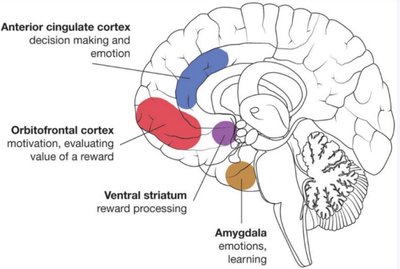
Conditioning: Smoking behavior is reinforced through both positive and negative reinforcement, and environmental cues can activate the brain's reward circuit.
Prevention Strategies
Laws banning smoking in public places
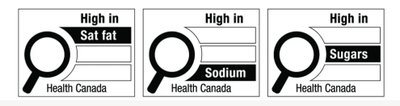
Taxes and warning labels on tobacco products
Obesity
Understanding Obesity
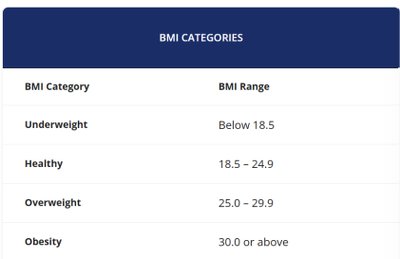
Obesity is a condition characterized by excessive body fat, often measured using the Body Mass Index (BMI). It is influenced by genetic, behavioral, and environmental factors.
BMI Formula:
Consequences: Increased risk of cardiovascular disease, diabetes, osteoarthritis, and certain cancers.
Influences: Genetics, set point theory, and sedentary lifestyle.
Barriers to weight loss: Environmental, psychological, and physiological factors.
Physical Activity and Lifestyle Recommendations
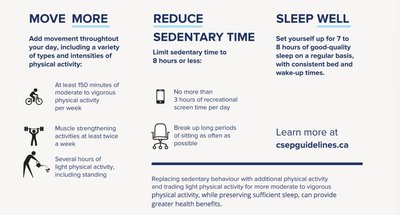
At least 150 minutes of moderate to vigorous physical activity per week
Muscle strengthening activities at least twice a week
Limit sedentary time to 8 hours or less per day
7 to 8 hours of good-quality sleep per night
Stress
Causes and Theories of Stress
Stress is a psychological and physiological reaction that occurs when perceived demands exceed available resources. The cognitive appraisal theory explains how individuals evaluate and respond to stressors.
Social Readjustment Rating Scale: Measures the stressfulness of life events; scores above 300 are linked to increased risk of illness.
Task Performance and Stress: Performance is optimal at moderate stress levels; too little or too much stress impairs performance. Simple tasks are less affected by stress than complex tasks.
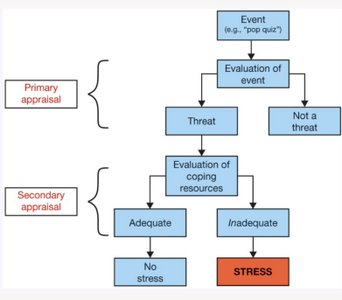
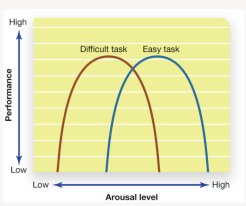
Primary and Secondary Appraisal
Primary appraisal: Initial evaluation of whether an event is a threat.
Secondary appraisal: Assessment of coping resources and options.
Physiology of Stress
The body's response to stress involves multiple systems, including the autonomic nervous system (ANS) and the hypothalamic-pituitary-adrenal (HPA) axis.
Fight or flight response: Physiological changes in response to threats, mediated by the sympathetic branch of the ANS.
General Adaptation Syndrome (GAS): Three stages—alarm, resistance, and exhaustion.
HPA Axis: Involves the hypothalamus, pituitary gland, and adrenal cortex, leading to the release of cortisol.
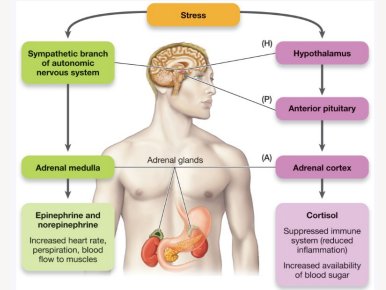
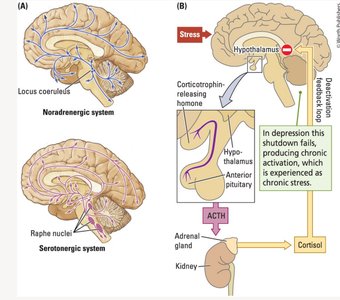
Immunity, Illness, and Personality
Psychoneuroimmunology
Psychoneuroimmunology studies the interaction between the nervous system and the immune system, particularly how stress can influence susceptibility to illness.
Coronary heart disease: Linked to stress and personality types.
Type A personality: Impatient, competitive, easily angered, and highly motivated—higher risk for heart disease.
Type B personality: Laid-back, patient, and relaxed—lower risk for heart disease.
Stress eating: Increased food intake in response to stress, often leading to weight gain.
Coping and Well-Being
Coping Strategies
Coping refers to the processes used to manage demands, stress, and conflict. Strategies can be problem-focused (addressing the source of stress) or emotion-focused (managing emotional responses).
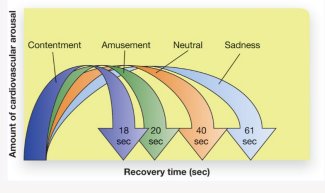
Positive psychology: The study of human strengths and potential, emphasizing positive emotions and well-being.
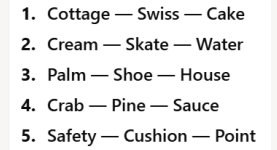
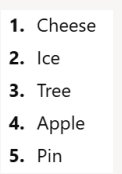
Creativity: Measured by tasks such as the Remote Associates Test (RAT), which assesses the ability to find connections between seemingly unrelated words.
Resilience: The ability to recover from adversity or illness; associated with post-traumatic growth.
Meditation and Relaxation
Meditation Techniques and Benefits
Meditation involves shifting consciousness to a state of high focus, awareness, and control of mental processes. Common forms include focused attention (FA) and open monitoring (OM) meditation.
Mindfulness-based stress reduction (MBSR): Techniques such as body scan meditation reduce stress and increase meaningfulness in life.
Happiness and relaxation: Meditation can enhance well-being, with different focuses (narrative vs. experiential) affecting brain regions such as the medial prefrontal cortex (mPFC).
