 Back
BackHuman Development: Physical and Cognitive Changes Across the Lifespan
Study Guide - Smart Notes
 Tailored notes based on your materials, expanded with key definitions, examples, and context.
Human Development
Introduction to Human Development
Human development is the scientific study of how people change and remain the same throughout their lives. It encompasses physical, cognitive, and psychosocial growth from infancy through old age. Developmental psychology investigates the processes that underlie these changes and the factors that influence them.

Physical Development
Maturation
Maturation refers to the biologically-driven growth and development that enables orderly and predictable changes in behavior. In psychology, maturation is not simply about becoming more mature emotionally, but about the unfolding of physical and neurological processes that allow for new abilities.
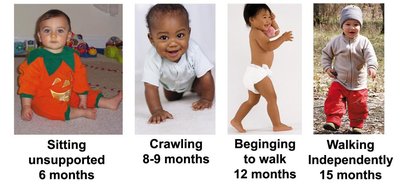
Sequential Development: Infants typically develop motor skills in a set order: lifting the head, sitting up, crawling, and then walking.
Brain and Motor Skills: Maturation affects both the brain and the body, enabling new motor abilities as the nervous system develops.
Role of Training: Physical training cannot significantly alter the timing of these maturational milestones, as they are largely biologically programmed.
Cognitive Development
What is Cognition?
Cognition includes all mental activities associated with thinking, knowing, remembering, and communicating. Cognitive development refers to the changes in these mental abilities as a person grows.
Language Acquisition: One of the earliest milestones, beginning in infancy and progressing rapidly through childhood.
Major Theories: Jean Piaget is considered the father of modern developmental psychology for his theory of cognitive development.
Jean Piaget’s Theory of Cognitive Development
Piaget proposed that children move through four stages of cognitive development, each characterized by different ways of thinking and understanding the world. These stages are universal and occur in a fixed order.
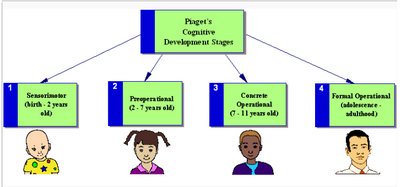
1. Sensorimotor Stage (Birth – 2 years)
Infants learn about the world through their senses and actions (e.g., looking, touching, mouthing).
Development of object permanence: understanding that objects continue to exist even when out of sight (typically around 6-8 months).
Transition from reflexive actions to goal-directed behavior.
2. Preoperational Stage (2 – 7 years)
Rapid development of language and symbolic thinking (e.g., pretend play).
Thinking is intuitive and egocentric; children have difficulty taking another’s perspective (egocentrism).
Lack understanding of conservation: the idea that quantity remains the same despite changes in shape or appearance.
Struggle with logical operations and reversibility.


3. Concrete Operational Stage (7 – 11 years)
Children can think logically about concrete events and objects.
Mastery of conservation, classification, and seriation (ordering objects by size, number, etc.).
Understand reversibility (the idea that objects can be changed and then returned to their original condition).
Still struggle with abstract and hypothetical concepts.
4. Formal Operational Stage (11 years – adulthood)
Ability to think logically about abstract, hypothetical, and scientific problems.
Development of systematic problem-solving and deductive reasoning.
Increased concern with social issues, identity, and moral reasoning.
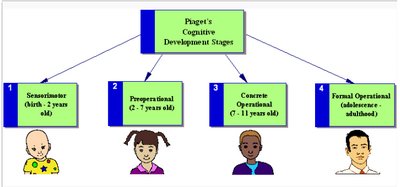
Summary Table: Piaget’s Four Stages of Cognitive Development
Stage | Age Range | Main Characteristics |
|---|---|---|
Sensorimotor | Birth – 2 years | Experience world through senses and actions; object permanence develops |
Preoperational | 2 – 7 years | Symbolic thinking, egocentrism, lack of conservation |
Concrete Operational | 7 – 11 years | Logical thinking about concrete events, mastery of conservation |
Formal Operational | 11 years – adulthood | Abstract and hypothetical reasoning, scientific thinking |
Adolescence
Physical and Cognitive Changes
Adolescence is the period between puberty and adulthood, marked by rapid physical, emotional, and cognitive changes. The onset and duration of adolescence can vary across cultures.
Puberty: The age at which a person becomes capable of sexual reproduction, influenced by genetic and environmental factors.
Brain Development: The frontal lobes, responsible for impulse control and decision-making, do not fully mature until late adolescence or early adulthood.
Risk-Taking: Adolescents may engage in risk-taking behaviors due to immature impulse control, increased opportunities, and a sense of invincibility ("personal fable").

Emerging Adulthood
Definition and Characteristics
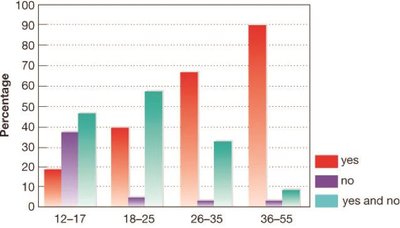
Emerging adulthood is a distinct phase of life, typically from ages 18 to 25, characterized by exploration and transition. Many individuals in this stage are in college or university and are not yet fully independent.
Five characteristics of emerging adulthood (Arnett, 2004):
Age of identity explorations
Age of instability
Self-focused age
Age of feeling in-between
Age of possibilities
Summary
Physical development follows a predictable sequence driven by biological maturation.
Cognitive development progresses through Piaget’s four stages, each with distinct abilities and limitations.
Adolescence and emerging adulthood are periods of significant change, with unique challenges and opportunities for growth.
