 Back
BackInfant and Toddler Development: Physical, Cognitive, and Social/Emotional Foundations
Study Guide - Smart Notes
 Tailored notes based on your materials, expanded with key definitions, examples, and context.
Physical Development in Infancy and Toddlerhood
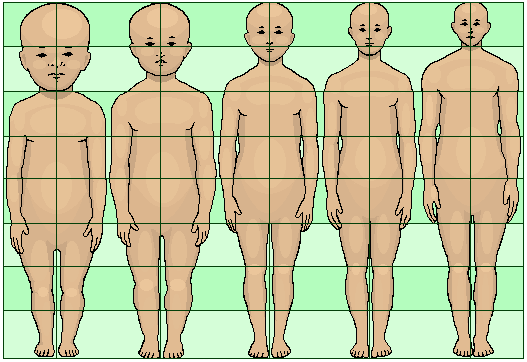
Changing Proportions
Infants undergo significant changes in body proportions during early development. At birth, the head accounts for approximately 25% of the body length, which decreases to about 20% in adulthood. This reflects the rapid growth and maturation of the body relative to the head.
Key Point: The average weight of newborns is around 7.5 pounds.
Key Point: Head-to-body ratio decreases as children grow.
Early Brain Development
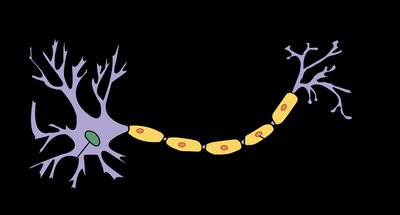
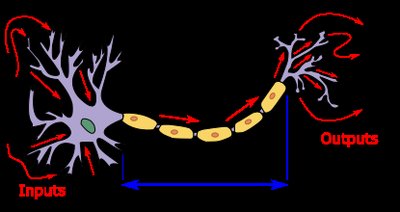
The infant brain undergoes dramatic changes in the first two years. While all neurons are present at birth, they are not fully matured. Dendrite formation and synaptogenesis (creation of neuron connections) enhance cognitive, social, and motor skills. Myelination of neurons allows for faster signal transmission.
Key Point: Dendrite branching and synaptogenesis are crucial for early learning.
Key Point: Myelination increases the speed of neural communication.
Proliferation and Pruning
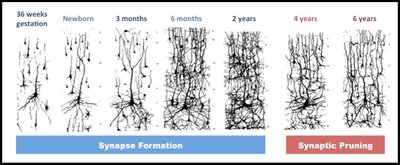
Synaptic pruning is the process of eliminating excess neural connections, allowing for specialization and efficiency. This process is essential for healthy brain development and is implicated in some theories of autism (either too much or too little pruning).
Key Point: Synaptic pruning increases efficiency in neural networks.
Key Point: Over- or under-pruning may be linked to neurodevelopmental disorders.
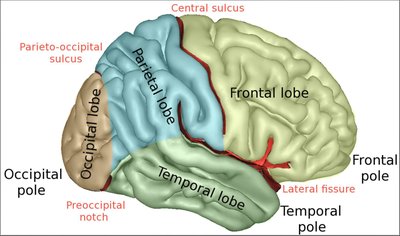
Major Brain Lobes
The brain is divided into several lobes, each with specialized functions:
Frontal Lobe: Decision making, motor planning
Parietal Lobe: Sensation, touch, motor skills
Occipital Lobe: Vision
Temporal Lobe: Hearing
Pre-Frontal Cortex Maturation
The pre-frontal cortex, responsible for planning, self-regulation, and decision-making, is the last area of the brain to mature, with development extending into the mid-20s.
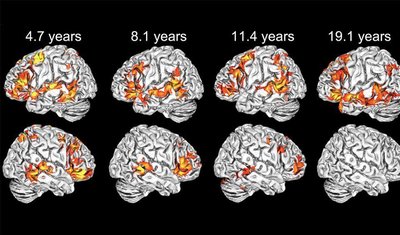
Brain Specialization and Plasticity
As children grow, areas of the brain specialize. Children use both hemispheres for language, unlike adults, and are more resilient to brain injury due to greater plasticity.
Sleep in Infancy
Newborns typically sleep around 16 hours daily, decreasing to about 10 hours by age two. Infants spend up to half their sleep time in REM, which decreases with age.
Key Point: REM sleep is associated with dreaming and brain development.
Key Point: Safe sleep practices are essential to prevent sudden infant death syndrome (SIDS).

Nutrition and Breastfeeding
Breastmilk is considered optimal nutrition for infants, providing antibodies and lowering risks of health conditions. Exclusive breastfeeding is recommended until six months, with breastmilk as part of the diet up to two years.
Key Point: Breastfeeding benefits both infants and mothers.
Key Point: Maternal and infant health, as well as environmental factors, may affect breastfeeding ability.

Infant Malnutrition
Malnutrition can occur in both developing and developed countries. Kwashiorkor results from insufficient protein, while marasmus is due to insufficient calories and protein.
Key Point: Iron deficiency is the most common nutrient deficiency in developed countries.

Infant Motor Development
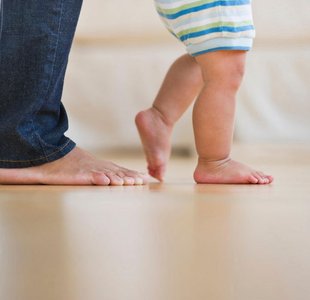
Motor development follows cephalocaudal (head to toe) and proximodistal (center to extremities) patterns. Head control is one of the first skills, followed by sitting, crawling, and walking.
Key Point: There is a large "normal" range for motor skill development.
Key Point: Delays in multiple areas are more concerning than in one area.

Reflexes and Motor Skills
Reflexes are present at birth and gradually replaced by voluntary behaviors. Fine motor skills involve small movements (e.g., grasping a pencil), while gross motor skills involve large movements (e.g., walking).
Palmer Grasp: Grasping objects without the use of the thumb (before 9 months).
Pincer Grasp: Using the thumb for grasping (begins around 9 months).


Vision, Hearing, and Other Senses
Newborns have limited vision, preferring high-contrast patterns. Smooth pursuit (tracking objects with eyes) emerges in the first few months. Binocular vision develops in the first year, improving depth perception.
Key Point: Infants can distinguish flavors and show a preference for sweet.
Key Point: Integrating sensory data (intramodality) is evident in early learning.

Cognitive Development in Infancy and Toddlerhood
Piagetian Concepts: Schema, Assimilation, and Accommodation
Jean Piaget proposed that infants actively construct knowledge through schemas (mental frameworks). Assimilation involves adding new information to existing schemas, while accommodation requires modifying schemas or creating new ones.
Key Point: Schemas are foundational for cognitive development.
Example: Learning that a light switch turns off lights (schema), but not all switches are light switches (accommodation).
Sensorimotor Substages
Piaget identified six substages of sensorimotor intelligence:
Reflex activity (0-1 months)
Primary circular reactions (1-4 months)
Secondary circular reactions (4-8 months)
Coordination of secondary circular reactions (8-12 months)
Tertiary circular reactions (12-18 months)
Mental representation formation (18-24 months)
Object Permanence
Object permanence is the understanding that objects continue to exist even when not visible. Piaget suggested it develops around eight months, but newer research shows it may emerge earlier.
A-not-B Error: Infants search for an object in its original location even after it is moved.
Memory in Infants
Infantile amnesia refers to the inability to recall early childhood events. Memory development relies on language, self-awareness, and hippocampal maturation. Infants can remember tasks and imitate actions after delays (deferred imitation).
Language Development
Language development begins with cooing and babbling, progressing to single words and short phrases. Infants develop receptive language before expressive language.
Phoneme: Smallest sound unit (e.g., d, k, e).
Morpheme: Smallest unit of meaning (e.g., "ed" for past tense).
Holophrases: Single words to convey meaning.
Telegraphic Speech: Short phrases with unnecessary words omitted.
Theories of Language Acquisition
Bandura: Language is learned through imitation and reciprocal determinism.
Chomsky: Proposed a language acquisition device (LAD) and universal grammar, though grammar varies across cultures.
Social and Emotional Development in Infancy and Toddlerhood
Temperament and Goodness-of-Fit
Temperament is stable from birth and influences parent-child interactions. Goodness-of-fit refers to how well caregiver style matches infant temperament.
Easy Child: Adapts quickly, positive mood (40%)
Difficult Child: Challenges adapting, negative mood (15%)
Slow to Warm Up: Low activity, takes time to adapt (10%)
Personality vs. Temperament
Personality includes social needs, self-concept, motivation, and coping mechanisms, shaped by both genetics and environment.
Emotions and Self-Regulation
Infants display basic emotions (pleasure, anger, fear) and develop self-conscious emotions (embarrassment, guilt) as self-awareness grows. Self-regulation skills develop gradually, with caregiver support essential in early years.
Attachment Theories
Attachment is the emotional bond between infant and caregiver. Key theorists include Freud (oral stage), Erikson (trust vs. mistrust), Harlow (comfort contact), Bowlby (secure base), and Ainsworth (attachment styles: secure, ambivalent, avoidant, disorganized).
Strange Situation: Used to assess attachment styles; cultural differences exist in interpretation.
Sense of Self
Children between 15-24 months can recognize themselves in a mirror, demonstrated by the "rouge test" (red dot on nose).
Impact of Early Neglect
Neglect can lead to reactive attachment disorder and psychological dwarfism (non-organic failure to thrive). Adverse childhood experiences (ACES) can affect brain development, particularly the hippocampus and amygdala, leading to difficulties in memory and emotion regulation.
Erikson's Psychosocial Theory
Erikson's stages emphasize the importance of trust vs. mistrust (0-2 years) and autonomy vs. shame and doubt (2-4 years) in early development. Early neglect can disrupt these stages, impacting social and emotional growth.
Summary Table: Physical and Cognitive Milestones
Milestone | Typical Age Range | Description |
|---|---|---|
Head Control | 3 weeks - 4 months | Ability to hold head up |
Sitting Alone | 5 - 9 months | Ability to sit without support |
Pincer Grasp | ~9 months | Using thumb and finger to grasp |
Object Permanence | 6 - 8 months | Understanding objects exist when out of sight |
First Words | 10 - 12 months | Expressive language begins |
Self-Recognition | 15 - 24 months | Recognizing self in mirror |
Practice Questions
Short Answer: Briefly describe one of Ainsworth’s attachment styles and how the baby would behave in the strange situation. How might this not be accurate with a German toddler?
Short Answer: Briefly describe one of the four main parenting styles. Provide an example from class about how interpretation of this style might be different in an Asian or European context.
Multiple Choice: To hold a crayon and draw a circle, a toddler likely needs a _______ grasp. a) Palmer b) Pincer c) Index d) Mature
Multiple Choice: The smallest unit of speech that has meaning is known as a _______. a) Phoneme b) Verb c) Morpheme d) Noun
Key Terms and Concepts
Cephalocaudal: Head-to-toe developmental progression
Proximodistal: Center-to-extremities developmental progression
Synaptogenesis: Formation of synaptic connections
Synaptic Pruning: Elimination of excess neural connections
Object Permanence: Understanding that objects exist when not seen
Holophrase: Single word used to express a complete idea
Telegraphic Speech: Short, simple phrases omitting unnecessary words
Goodness-of-Fit: Match between caregiver style and child temperament
Formulas and Equations
While developmental psychology does not rely heavily on mathematical formulas, the following LaTeX equation represents the concept of growth rate:
For neural development:
Additional info: Academic context was added to expand brief points and clarify developmental milestones, attachment theories, and language acquisition concepts. Images were included only when directly relevant to the explanation of the paragraph.
