 Back
BackIntroduction to Psychological Science: Foundations, Methods, and Historical Perspectives
Study Guide - Smart Notes
 Tailored notes based on your materials, expanded with key definitions, examples, and context.
Introducing Psychological Science
Defining Psychology
Psychology is the scientific study of behaviour, thought, perception, emotion, and experience, and how these are influenced by physical, mental, social, and environmental factors. Psychologists use the scientific method to investigate questions about human and animal behaviour.
Behaviour: Observable actions of individuals.
Mind: Internal states and processes, such as thoughts and feelings.
Scientific Method: Systematic approach to research and evidence gathering.
Three Key Elements of Psychology
Scientific enterprise: Psychology relies on empirical evidence and systematic observation.
Study of behaviour: Focuses on observable actions.
Study of the mind: Investigates internal mental processes.
Reading and Evaluating Scientific Research
The Scientific Method
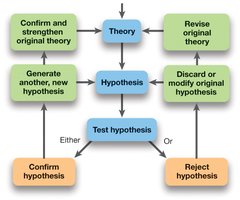
The scientific method is a structured way of learning about the world through observation, theory development, and hypothesis testing. It is central to psychological research and ensures that findings are reliable and valid.
Theory: A set of principles that explains phenomena and predicts future outcomes.
Hypothesis: A testable prediction derived from a theory.
Falsifiability: Hypotheses must be stated so they can be proven false.

Process of Scientific Inquiry
Scientists use theories to generate hypotheses.
Hypotheses are tested through experiments and observations.
Results either confirm or reject the hypothesis, leading to theory refinement.
Biological Psychology
The Biopsychosocial Model
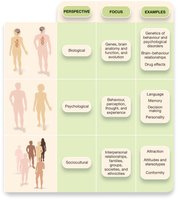
The biopsychosocial model explains behaviour as a product of biological, psychological, and sociocultural factors. This integrative approach deepens our understanding of human behaviour.
Biological: Brain structures, chemicals, hormones, and drugs.
Psychological: Memories, emotions, personality, and cognition.
Sociocultural: Family, peers, ethnicity, and culture.
Scientific Literacy in Psychology
Building Scientific Literacy
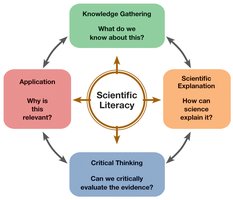
Scientific literacy is the ability to understand, analyze, and apply scientific information. It involves four key skills:
Knowledge gathering: Collecting information about the world.
Scientific explanation: Using scientific concepts to explain phenomena.
Critical thinking: Evaluating evidence and identifying bias.
Application: Using information to improve theories and address real-world issues.
Philosophical and Scientific Origins of Psychology
Ancient Philosophical Insights
Psychology's roots trace back to ancient philosophers and physicians. Socrates, Plato, and Aristotle explored personality and behaviour, while Hippocrates and Galen developed early theories of personality based on bodily fluids (humours).
Four Humours: Blood, yellow bile, black bile, and phlegm.
Temperaments: Sanguine, choleric, melancholic, phlegmatic.

Dualism and Monism
Dualism (Descartes): Mind and body are separate entities.
Monism (Hobbes): Mind and body are one synergistic entity.
Psychophysics and Early Experiments
Gustav Fechner pioneered psychophysics, the study of the relationship between the physical world and mental representation.
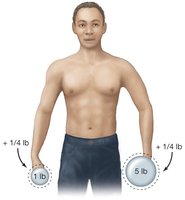
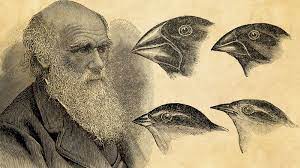
Evolutionary Theory
Charles Darwin's theory of natural selection influenced psychology by suggesting that behaviour and mental processes are shaped by evolutionary forces.
Traits that aid survival and reproduction are more likely to persist.
Memory, emotion, and social bonds are examples of adaptive behaviours.
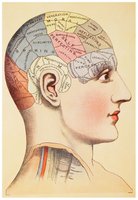
Medicine and Brain Function
Clinical psychology and the study of brain localization were influenced by medicine. Phrenology proposed that mental traits could be detected by examining the skull.
Localization of function: Specific brain areas control specific abilities.
Phrenology: Discredited theory mapping mental traits to skull regions.
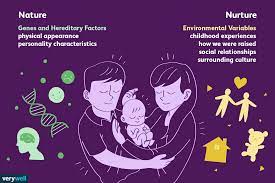
Nature vs. Nurture
The nature vs. nurture debate explores how heredity (genes) and environment (upbringing) influence behaviour and mental processes.
Nature: Genetic and hereditary factors.
Nurture: Environmental variables and experiences.
Major Schools and Theories in Psychology
Structuralism
Wilhelm Wundt and Edward Titchener developed structuralism, which analyzed conscious experience by breaking it down into basic elements.
Introspection: Examining one's own mental processes.
Focus on how elements combine to produce emotions.
Functionalism
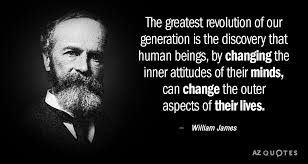
William James founded functionalism, focusing on the purpose and function of behaviour and conscious experience. This approach led to evolutionary psychology, which interprets behaviour in terms of ancestral adaptation.
Behaviour shaped by physical and social environments.
Behaviourism
Behaviourism dominated early 20th-century psychology, emphasizing the study of observable behaviour and environmental influences.
Pavlov: Classical conditioning in dogs.
Skinner: Radical behaviourism—rewards and punishments shape behaviour.
Watson: Only overt behaviours should be measured; strong environmental emphasis.
Classical Conditioning and Childhood Fears
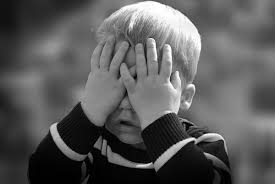
Classical conditioning explains how children may develop fears by associating neutral objects with frightening experiences.
Social and Cultural Influences
Social psychology studies how others influence behaviour, while personality psychology examines how traits affect thoughts and actions. Kurt Lewin emphasized the role of environment in shaping behaviour.
Cognitive Revolution
Gestalt psychology and cognitive psychology shifted focus to perception, memory, and higher-order thinking, emphasizing the whole experience over its parts.
Humanistic Psychology
Humanistic psychology focuses on individual uniqueness, freedom, and rational thought. Carl Rogers developed person-centered therapy based on these principles.
Behavioural Neuroscience
Behavioural neuroscience studies the links between the brain, nervous system, and behaviour. Canadian researchers Wilder Penfield and Donald Hebb made significant contributions to mapping brain function and understanding learning at the cellular level.
Women in Psychology
Women have made key contributions to psychology, including Anna Freud, Karen Horney, Sandra Bem, Virginia Satir, and Mamie Phipps Clark, who advanced understanding in personality, therapy, and social issues.
The Neuroimaging Explosion
Functional resonance imaging (fMRI) and cognitive neuroscience have revolutionized the study of brain activity and its relation to behaviour, emotion, and decision-making.
Psychology in the Real World
Developmental Psychology
Studies human growth and change across the lifespan, including physical, cognitive, emotional, and social development. Geropsychology focuses on aging.
Clinical and Positive Psychology
Clinical psychology addresses diagnosis and treatment of psychological disorders. Positive psychology promotes self-acceptance and improved social relationships.
Applied Psychology
Applied psychology uses scientific methods to solve practical problems in schools, workplaces, and other settings. Industrial/organizational psychology and human factors psychology ensure fair and efficient environments and technology interactions.
Summary Table: Biopsychosocial Model Perspectives
Perspective | Focus | Examples |
|---|---|---|
Biological | Genes, brain anatomy and function, evolution | Genetics, drug effects, brain-behaviour relationships |
Psychological | Behaviour, perception, thought, experience | Language, memory, emotions, personality |
Sociocultural | Interpersonal relationships, families, groups, societies, and cultural influences | Attraction, attitudes, conformity |
