 Back
Introduction to Psychology: Foundational Concepts, Research Methods, and Biological Psychology
Study Guide - Smart Notes
 Tailored notes based on your materials, expanded with key definitions, examples, and context.
Psychology and Scientific Thinking
Key Concepts in Psychology
Psychology is the scientific study of the mind, encompassing affect (emotions), behaviour (actions), and cognition (thought processes), as well as their reciprocal interactions. Understanding these components is essential for analyzing human experience and behaviour.
Psyche: Refers to the soul, mind, or self.
Affect: Experiences of feelings, emotions, and moods; can be positive or negative and vary in intensity.
Behaviour: Observable or unobservable actions and reactions to internal or external stimuli; categorized as overt (observable) or covert (not directly observable).
Cognition: Mental processes involved in acquiring knowledge and processing information, including both conscious and unconscious processes.
Reciprocal interaction: The dynamic influence among affect, behaviour, and cognition.
Psychological Science vs. Pseudoscience
Psychological science: Systematic study using observation, measurement, experimentation, and critical evaluation.
Pseudoscience: Claims lacking reliable evidence, testability, replicability, or scholarly review.
Warning signs of pseudoscience: Overreliance on anecdotes, meaningless psychobabble, talk of proof instead of evidence, lack of scholarly review.
Principles of Critical Thinking
Ruling out rival hypotheses: Considering alternative explanations.
Correlation vs. causation: Distinguishing between variables being related and one causing changes in another.
Falsifiability: Claims must be testable and potentially shown to be false.
Replicability: Ability to repeat a study and obtain similar results.
Extraordinary claims: Require extraordinary evidence.
Occam’s razor: The simplest explanation is preferred when alternatives are equal.
Major Psychological Perspectives
Biological: Focuses on the relationship between mind and brain; includes mind-body dualism (mind and brain are separate) and monism (mind and brain are intertwined).
Cognitive: Includes structuralism (identifying elements of mind and consciousness) and functionalism (understanding how the mind works).
Psychodynamic: Emphasizes unconscious processes and their influence on affect, behaviour, and cognition.
Behavioural: Focuses on observable behaviour and environmental conditioning; includes the concept of tabula rasa (blank slate).
Humanistic: Optimistic perspective emphasizing personal growth, free will, and achieving full potential.
Sociocultural: Examines how culture and social relationships influence behaviour; distinguishes between individualistic and collectivistic cultures.
Research Methods in Psychology
The Scientific Method
The scientific method is a systematic approach to research, ensuring objectivity and reliability in psychological studies.
Observation: Noticing phenomena or behaviours.
Review: Examining previous research and theory.
Research Question & Hypothesis: Formulating a testable question and prediction.
Study Design: Planning how to test the hypothesis.
Prediction & Testing: Conducting the study and analyzing results.
Types of Measurements
Psychophysiological measures: Bodily responses (e.g., cortisol, heart rate, brain activity) to understand psychological states.
Self-report: Participants describe their own attitudes, emotions, beliefs, or behaviours.
Reports by others: Observers (e.g., parents, teachers) provide information about participants.
Behavioural measures: Direct observation of actions (e.g., reaction time, task performance).
Reliability and Validity
Reliability: Consistency of a measure (e.g., test-retest, inter-rater reliability).
Validity: Extent to which a measure assesses what it claims to measure.
Variables in Research
Independent variable (IV): Manipulated by the researcher; has different levels.
Dependent variable (DV): Outcome measured to assess the effect of the IV.
Operational definition: Precise description of procedures used to measure or manipulate a variable.
Confounding variable: Uncontrolled factor that may influence the DV and distort conclusions.
Types of Research Designs
Experimental design: Allows cause-and-effect conclusions; involves manipulation of IV and measurement of DV.
Between-subjects design: Different participants in each condition; random assignment is key.
Within-subjects design: Same participants complete all conditions; comparison is within individuals.
Correlational design: Measures relationships between variables without manipulation; cannot establish causation.
Correlation Coefficient
Ranges from -1.0 to +1.0; indicates direction and strength of relationship.
Positive correlation: Both variables increase or decrease together.
Negative correlation: One variable increases as the other decreases.
Absolute value: Indicates strength; 0.0 means no relationship.
Statistics in Psychology
Descriptive statistics: Summarize data (mean, median, mode).
Inferential statistics: Draw conclusions about populations from samples; includes t-tests and p-values.
Statistical significance: p-value below 0.05 is considered significant.
Ethics in Psychological Research
Informed consent: Participants must be informed and agree voluntarily.
Deception: Used only when necessary; must be followed by debriefing.
Debriefing: Explaining the study’s true purpose after participation.
Confidentiality: Protecting participants’ privacy.
Biological Psychology
Neurons and Neurotransmission
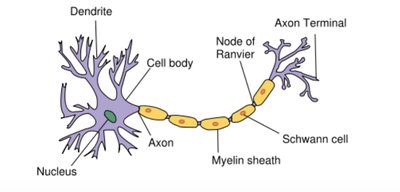
Neurons are the basic cells of the nervous system, responsible for receiving and transmitting information. Neurotransmission is an electrochemical process involving electrical communication within neurons and chemical communication between neurons.
Dendrites: Receive information.
Cell body (soma): Main information hub.
Nucleus: Contains DNA.
Axon: Sends information to other neurons.
Axon terminals: Release neurotransmitters.
Myelin sheath: Insulates axon, speeds communication.
Nodes of Ranvier: Gaps in myelin sheath, allow action potentials.
Neurotransmitters
Excitatory: Increase likelihood of action potential (e.g., epinephrine).
Inhibitory: Decrease likelihood of action potential (e.g., serotonin).
Action potential: Electrical signal triggered when threshold is reached; follows all-or-none principle.
Central and Peripheral Nervous System
Central Nervous System (CNS): Brain and spinal cord; control center for processing information and coordinating responses.
Peripheral Nervous System (PNS): Nerves extending from CNS to rest of body; links CNS to limbs, organs, and tissues.
Forebrain and Cerebral Cortex
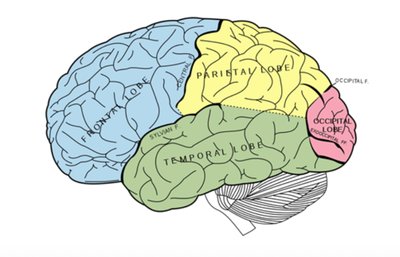
The forebrain is the most developed and largest section, responsible for language, memory, and intellectual abilities. The cerebral cortex is divided into two hemispheres, each with four lobes:
Frontal lobes: Decision-making, problem-solving, voluntary movement, personality, speech.
Parietal lobes: Sensory processing (touch, temperature, pain, spatial awareness).
Occipital lobes: Visual processing.
Temporal lobes: Auditory processing, language comprehension, memory, emotion.
Limbic System
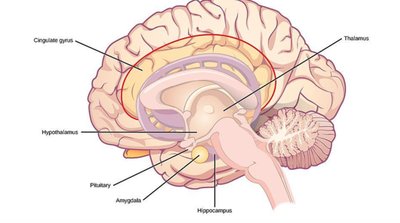
The limbic system is the emotional center of the brain, involved in memory, emotion, and motivation.
Thalamus: Sensory relay station.
Hippocampus: Memory formation and retrieval.
Hypothalamus: Regulates homeostasis, biological drives, hormones, fight-or-flight response.
Amygdala: Organizes emotional responses, especially fear and aggression.
Midbrain and Hindbrain
Midbrain: Reticular formation (arousal, consciousness, sensory filtering).
Hindbrain: Pons (breathing, sleep), medulla (heart rate, breathing), cerebellum (balance, posture, coordination).
Nature vs. Nurture
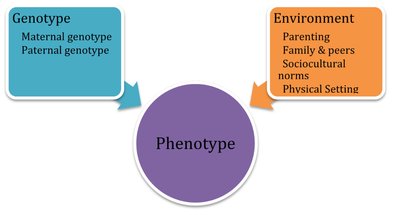
Behaviour and development result from the interaction between genetics (nature) and environment (nurture).
Genotype: Genetic makeup inherited from parents.
Environment: Physical surroundings, social relationships, cultural norms.
Phenotype: Observable characteristics resulting from genotype and environment.
Measuring Genetics
Adoption studies: Compare adopted individuals to adoptive and biological families to separate nature and nurture effects.
Twin studies: Compare monozygotic (identical) and dizygotic (fraternal) twins to assess genetic influence.
Modern methods: DNA sampling (e.g., saliva) to analyze genetic predispositions.
Summary Table: Major Psychological Perspectives
Perspective | Key Focus | Example |
|---|---|---|
Biological | Mind-brain relationship, genetics | Brain structure, neurotransmitters |
Cognitive | Mental processes, information processing | Memory, perception |
Psychodynamic | Unconscious processes | Freud's theory |
Behavioural | Observable behaviour, conditioning | Learning, reinforcement |
Humanistic | Personal growth, free will | Self-actualization |
Sociocultural | Culture, social context | Individualism vs. collectivism |
Key Takeaways
Psychology is defined by affect, behaviour, and cognition.
Scientific thinking and research methods are essential for valid psychological knowledge.
Biological psychology explores the nervous system, brain structure, and genetics.
Behaviour and development are shaped by both nature and nurture.
