 Back
BackIntroduction to Psychology: Foundations, Major Perspectives, and Historical Development
Study Guide - Smart Notes
 Tailored notes based on your materials, expanded with key definitions, examples, and context.
Introduction to Psychology
What is Psychology?
Psychology is the scientific study of the mind and behavior. It relies on empirical evidence—information gathered through scientific observation or experimentation. Modern psychology aims to understand people’s thoughts, motivations, and emotions, explain how the brain works, identify and explain broad patterns of behavior, and examine stability and change as people develop and across situations.
Empirical Evidence: Data collected through systematic observation or experimentation.
Mind-Body Relationship: Psychology explores the connection between mental processes and physical states.
Key Questions: What is the nature of the relationship between the mind and the body? Where does human knowledge come from?
Philosophical Roots: Early debates included dualism (mind and body are separate) vs. materialism (mind is a result of brain activity), and empiricism (knowledge from experience) vs. nativism (innate knowledge).

Additional info: The Greek roots of the word psychology are psyche (mind/soul) and logos (study).
Philosophical Roots of Psychology
Dualism vs. Materialism
Dualism: The mind and body are fundamentally different (Descartes).
Materialism: The mind is what the brain does; consciousness arises from physical processes (Hobbes).
Empiricism vs. Nativism
Empiricism: All knowledge is acquired through experience; humans are born as blank slates (tabula rasa) (Locke).
Nativism: Some knowledge is innate (Kant).
Additional info: These debates evolved into the nature vs. nurture debate in psychology.
Early Schools of Thought
Structuralism
Structuralism, founded by Wilhelm Wundt and Edward Titchener, sought to analyze the basic elements of conscious experience using introspection—analyzing one’s own moment-to-moment experiences when presented with a stimulus.
Key Method: Introspection
Limitation: Subjective experiences cannot be generalized.
Contribution: Established psychology as a laboratory science.

Functionalism
Functionalism, led by William James, emphasized the adaptive significance of mental processes. Influenced by Darwin’s theory of natural selection, functionalists focused on why mental processes exist and how they help individuals adapt to their environment.
Key Method: Observation, experimentation, longitudinal studies, questionnaires
Limitation: Overlooked individual differences
Contribution: Focused on the purpose of mental processes

Psychoanalysis
Psychoanalysis, developed by Sigmund Freud, emphasized the influence of the unconscious mind and early childhood experiences on behavior. Freud believed that unconscious conflicts and traumas could cause psychological symptoms.
Key Method: Psychoanalytic therapy (talk therapy)
Limitation: Lack of empirical evidence
Contribution: Introduced the concept of the unconscious mind
Gestalt Psychology
Gestalt psychology, founded by Max Wertheimer, emphasized that humans perceive objects as organized wholes rather than the sum of their parts. This approach focused on principles of perceptual organization.
Key Principle: "The whole is greater than the sum of its parts."
Contribution: Influenced the study of perception and problem-solving
Additional info: Gestalt principles are foundational in sensation and perception research.
Behaviorism
Behaviorism, established by John B. Watson and further developed by Ivan Pavlov and B.F. Skinner, focused on observable behavior and the ways it is learned through interactions with the environment. This approach dominated psychology from the 1920s to the 1950s, especially in the United States.
Key Concepts: Classical conditioning (Pavlov), operant conditioning (Skinner)
Key Method: Experimental analysis of behavior
Limitation: Ignored mental processes

Developmental Psychology
Developmental psychology studies how psychological phenomena change over the lifespan. It examines when, why, and how these changes occur, with a focus on cognitive, emotional, and social development.
Key Figures: G. Stanley Hall, Jean Piaget, Arnold Gesell
Key Concepts: Stages of development, developmental milestones
Contribution: Emphasized the importance of studying children and adolescents

Social Psychology
Social psychology examines how individual and group behaviors are influenced by social factors. It explores topics such as identity, attitudes, stereotypes, and group dynamics.
Key Figures: Kurt Lewin, Solomon Asch
Key Concepts: Social influence, conformity, impression formation
Contribution: Demonstrated the power of social context on behavior

Humanism
Humanism, developed by Abraham Maslow and Carl Rogers, emphasizes inherent goodness, free will, and the potential for personal growth. Humanistic psychologists focus on self-actualization and the realization of one’s fullest potential.
Key Concepts: Hierarchy of needs (Maslow), client-centered therapy (Rogers)
Key Methods: Empathy, unconditional positive regard, active listening
Contribution: Focused on positive aspects of human nature


Cognitive Psychology
Cognitive psychology focuses on mental processes such as information processing, memory, perception, language, and problem solving. The field was inspired by the development of computers and the analogy of the mind as an information processor, leading to the "Cognitive Revolution" in the 1960s.
Key Figures: Ulric Neisser, George A. Miller, Noam Chomsky
Key Concepts: Short-term memory, language acquisition, information processing
Contribution: Reintroduced the study of mental processes into psychology

Evolutionary Psychology
Evolutionary psychology examines how human behavior and mental processes have been shaped by natural selection. It seeks to understand the adaptive value of psychological traits and behaviors.
Key Figures: John Garcia, Leda Cosmides, John Tooby
Key Concepts: Biological preparedness, mate selection, parental investment
Contribution: Applied evolutionary theory to psychological phenomena

Cultural Psychology
Cultural psychology studies how culture influences human behavior and mental processes. It emphasizes the importance of considering cultural context when examining psychological phenomena.
Key Figures: Wilhelm Wundt, John Berry, Richard Shweder
Key Concepts: Acculturation, ecological framework, cultural specificity
Contribution: Challenged the generalizability of psychological theories across cultures
Biological Perspective / Neuroscience
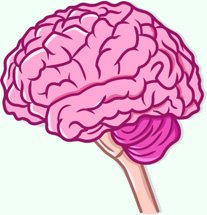
The biological perspective, or neuroscience, studies the relationship between the brain/nervous system and behavior or mental processes. Advances in technology have allowed for rapid growth in this field since the 1990s.
Key Figure: Santiago Ramón y Cajal
Key Concepts: Neurons, neural networks, neurotransmitters
Contribution: Provided the cellular basis for understanding the nervous system
Contemporary Psychology: Integrating Perspectives
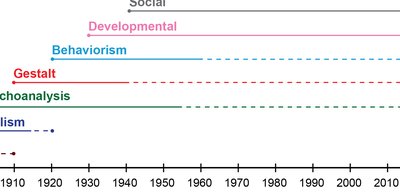
Modern psychology integrates multiple perspectives to provide a holistic understanding of human behavior and mental processes. While some historical perspectives are less prominent, their principles continue to influence contemporary research and practice.
Prominent Today: Social psychology, cognitive psychology, biological perspective/neuroscience, developmental psychology, evolutionary psychology, cultural psychology
Historical Perspectives: Psychoanalysis, behaviorism, Gestalt psychology, humanism, structuralism, functionalism
Additional info: Considering behavior, cognition, and mental processes through multiple lenses allows for a more comprehensive understanding of psychology.
