Back
Introduction to Psychology: Foundations, Major Theories, and Fields
Study Guide - Smart Notes
 Tailored notes based on your materials, expanded with key definitions, examples, and context.
Introduction to Psychology
What is Psychology?
Psychology is the scientific study of mental processes and behaviours. It aims to describe, explain, predict, and control behaviour through evidence-based reasoning. Unlike pseudoscience or intuition, psychology relies on systematic research and empirical data.
Scientific Discipline: Psychology uses rigorous methods to investigate questions about human and animal behaviour.
Distinction from Pseudoscience: Psychology is grounded in research, not anecdotal evidence or "pop" psychology.
Goals: Describe, explain, predict, and control behaviour.
Relevance: Psychological research informs real-world applications, from therapy to education.
Levels of Analysis
Psychology examines behaviour from multiple perspectives:
The Brain: Biological factors such as brain structure and activity.
The Person: Individual mental processes and personality.
The Group: Social and cultural influences.
Major Theories and Approaches in Psychology
Psychoanalysis
Psychoanalysis is a foundational theory in psychology, emphasizing the influence of unconscious desires and conflicts on behaviour. Developed by Sigmund Freud, it introduced therapeutic techniques aimed at resolving unconscious issues.
Key Concepts: Unconscious mind, internal conflicts, dream analysis.
Therapy: Psychoanalysis seeks to uncover and address hidden motivations.
Example: Freudian therapy often involves exploring childhood experiences.

Behaviourism
Behaviourism focuses on observable behaviour and the ways it is shaped by environmental stimuli. It rejects introspection and emphasizes learning through conditioning.
Classical Conditioning: Ivan Pavlov demonstrated that animals can learn associations between stimuli (e.g., dogs salivating at a bell).
Operant Conditioning: B.F. Skinner explored how reinforcement and punishment shape behaviour.
Social Learning: Albert Bandura described learning through observation, especially in children.
Example: The "Little Albert" experiment by John B. Watson showed classical conditioning in humans.
Humanistic Psychology
Humanistic psychology takes an optimistic view of human nature, emphasizing free will, personal growth, and self-actualization. It focuses on the unique qualities of individuals and their potential for development.
Key Features: Free will, subjectivity, whole person, growth, present focus, unconditional positive regard.
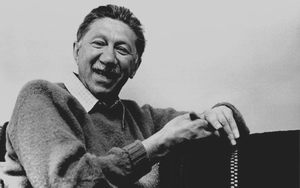
Abraham Maslow: Developed the hierarchy of needs, highlighting the drive for self-actualization.
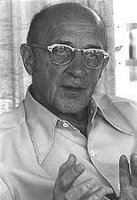
Carl Rogers: Created client-centred therapy, emphasizing empathy and genuineness.
Cognitive Psychology
Cognitive psychology studies mental processes such as information processing, language development, problem-solving, and thinking. It explores how people perceive, remember, and interpret information.
Key Concepts: Memory, learning, perception, language, problem-solving.
Applications: Understanding how the brain processes information and how this affects behaviour.
Includes: Cultural and cross-cultural psychology, psychobiology, neuroscience, cognitive neuroscience.
Biopsychosocial Model
The biopsychosocial model recognizes that behaviour and health are influenced by the interaction of biological, psychological, and social factors.
Biological: Genetics, brain chemistry, physical health.
Psychological: Thoughts, emotions, personality, coping styles.
Social: Relationships, culture, socioeconomic status, environment.
Major Fields in Psychology
Overview of Fields
Psychology encompasses a wide range of subfields, each focusing on different aspects of behaviour and mental processes.
Clinical Psychology: Assessment and treatment of mental illness.
Counselling Psychology: Support for emotional and life challenges.
Developmental Psychology: Study of human growth and change across the lifespan.
Social Psychology: Examination of how social environments influence behaviour.
Cognitive Psychology: Study of mental processes.
Biological/Neuropsychology: Exploration of brain-behaviour relationships.
Health Psychology: Focus on psychological factors in health and illness.
Educational/School Psychology: Application of psychology in educational settings.
Forensic Psychology: Application in legal contexts.
Industrial/Organizational Psychology: Study of behaviour in workplaces.
Sport Psychology: Focus on athletic performance and motivation.
Environmental Psychology: Study of interactions between people and their environments.
Community Psychology: Focus on social issues and community well-being.
Experimental Psychology: Research on basic psychological processes.
Psychometrics: Measurement of psychological traits and abilities.
Evolutionary Psychology: Study of behaviour through evolutionary principles.
Cross-Cultural Psychology: Comparison of behaviour across cultures.
Who's Who in Mental Health Care
Different professionals provide mental health care, each with distinct qualifications and roles.
Therapist: General term for anyone trained to provide therapy; not regulated.
Counsellor: Typically holds a master's degree; provides talk therapy and support.
Psychotherapist: Holds a master's or higher; offers structured therapy for mental health conditions.
Psychologist: Holds a doctoral degree; assesses and treats mental health using talk therapy and testing.
Clinical Psychologist: Specializes in complex mental illness; works in hospitals, clinics, or private practice.
Psychiatrist: Medical doctor; can diagnose, treat, and prescribe medication for mental health conditions.

Main Branches of Psychology Today
Clinical and Counselling
Clinical and counselling psychologists work as therapists, helping individuals manage and overcome mental health challenges.
Applied Psychology
Applied psychologists use psychological principles to address real-life problems in various settings, such as schools, workplaces, and communities.
Academic Psychology
Academic psychologists conduct research and teach at universities, contributing to the advancement of psychological science.

Values of Psychology
Core Values
Psychology is theory-driven, empirical, multi-level, and contextual. It evolves as new research and perspectives emerge.
Theory Driven: Uses theories to explain behaviour.
Empirical: Based on research and evidence.
Multi-Level: Explained by the brain, individual, and group.
Contextual: Considers situational and cultural factors.
Critical Thinking in Psychology
Evaluating Claims
Psychology encourages critical thinking to evaluate claims about human thoughts, feelings, and behaviours. This involves identifying biases, logical fallacies, and unsupported assumptions.
Example: Questioning whether a claim is based on scientific evidence or anecdote.

Diversity and Representation in Psychology
Historical Context
Historically, psychology has been dominated by researchers from Western, educated, industrialized, rich, and democratic (WEIRD) societies, often lacking diversity in gender and ethnicity.
Impact: Research findings may not generalize to all populations.
Current Efforts: Increasing focus on diversity and cross-cultural research.