 Back
BackIntroduction to Psychology: Foundations, Methods, and Critical Thinking
Study Guide - Smart Notes
 Tailored notes based on your materials, expanded with key definitions, examples, and context.
Introduction to Psychology
What is Psychology?
Psychology is the scientific study of the mind, brain, and behavior. It seeks to understand why people act the way they do by examining mental processes, biological mechanisms, and observable actions.
Mind: Refers to mental processes such as thoughts, feelings, and perceptions.
Brain: The biological organ that enables mental processes and behavior.
Behavior: Observable actions of humans and animals.
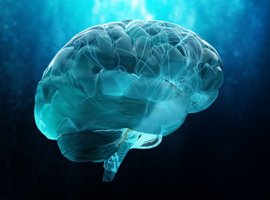
Additional info: Psychology bridges the gap between biological sciences and social sciences, integrating knowledge from both to explain complex behaviors.
Levels of Analysis in Psychology
Why Multiple Levels Matter
Psychological phenomena can be understood at different levels, from biological to social. For example, depression can be analyzed in terms of brain chemistry, thought patterns, and social influences. Using multiple levels of analysis provides a more comprehensive understanding of behavior.
Biological Level: Examines genetic, neurological, and physiological processes.
Psychological Level: Focuses on thoughts, emotions, and motivations.
Social Level: Considers cultural, familial, and peer influences.
Example: Depression may involve neurotransmitter imbalances (biological), negative thinking patterns (psychological), and lack of social support (social).
Individual Differences
How People Differ in Response
People respond differently to the same situation due to individual differences in personality, background, experiences, and skills. There is no universal reaction to any given event.
Personality: Traits such as confidence, anxiety, or indifference shape responses.
Experience: Past experiences influence how new situations are perceived and handled.
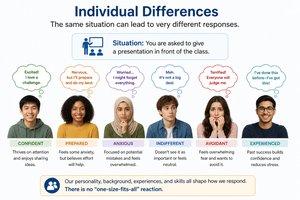
Example: When asked to give a presentation, some may feel excited, others anxious, and some indifferent.
Reciprocal Determinism
Interaction Between Person and Environment
Reciprocal determinism is the concept that people and their environments mutually influence each other. Thoughts, feelings, and behaviors both shape and are shaped by the surrounding environment.
Person influences environment: Choices and actions affect surroundings.
Environment influences person: Social and physical contexts shape thoughts and behaviors.
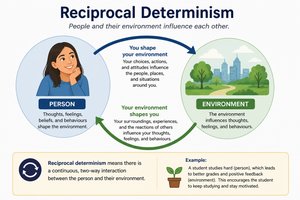
Example: A student who studies hard receives positive feedback, which encourages further studying.
Culture and Perception
How Culture Shapes What We See
Cultural background influences perception. People from different cultures may focus on different aspects of the same scene, reflecting learned patterns of attention and interpretation.
Western cultures: Tend to focus on central objects.
East Asian cultures: Tend to focus on the context and background.
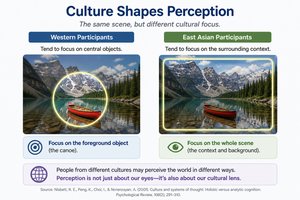
Example: In a landscape, Westerners may focus on a boat, while East Asians notice the entire scene.
Psychology vs. Common Sense
Why Science is Needed
Psychology is not just common sense. While intuition relies on gut feelings, psychology uses scientific methods to test ideas and reduce bias. Common sense can be misleading and is not always accurate.
Science: Uses evidence, tests ideas, and seeks the truth.
Intuition: Relies on feelings, can be biased, and is not always correct.
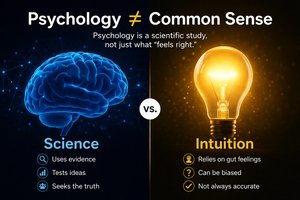
Example: Many proverbs sound true but contradict each other; only scientific testing can determine accuracy.
Contradictory Proverbs
Testing What Feels True
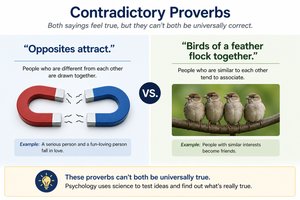
Many common sayings seem true but are mutually exclusive. Psychology uses science to test which, if any, are supported by evidence.
"Opposites attract" vs. "Birds of a feather flock together": Both cannot be universally correct; research is needed to determine which applies in specific contexts.
Psychology as a Science
Theory and Hypothesis
Psychology relies on theories and hypotheses to guide research. A theory is a broad explanation supported by evidence, while a hypothesis is a specific, testable prediction derived from a theory.
Theory: Organizes and explains a wide range of findings.
Hypothesis: A prediction that can be tested through research.
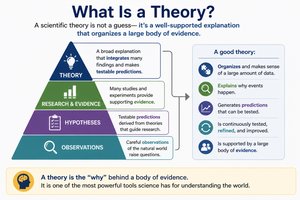
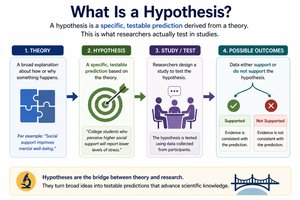
Additional info: Theories are refined as new evidence emerges, and hypotheses are tested through systematic observation and experimentation.
Critical Thinking in Psychology
Confirmation Bias
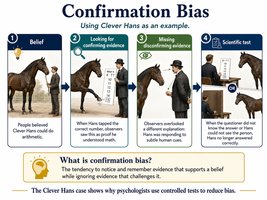
Confirmation bias is the tendency to notice and remember evidence that supports our beliefs while ignoring evidence that challenges them. Psychologists use controlled tests to reduce this bias.
Example: The Clever Hans case, where observers unintentionally influenced a horse's behavior, illustrates the importance of scientific testing.
Belief Perseverance
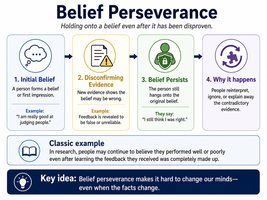
Belief perseverance is the tendency to hold onto beliefs even after they have been disproven. This makes it difficult to change our minds, even when presented with contradictory evidence.
Example: People may continue to believe they performed well on a task even after being shown evidence to the contrary.
Key Takeaways
Psychology is scientific: It uses evidence and systematic methods to study behavior and mental processes.
Behavior is complex: Multiple factors at different levels influence actions.
Intuition can mislead: Common sense is not always reliable.
Science reduces bias: Critical thinking and scientific methods help uncover the truth.
