 Back
Karen Horney’s Theory of Personality and Coping: Study Notes for Introduction to Psychology
Study Guide - Smart Notes
 Tailored notes based on your materials, expanded with key definitions, examples, and context.
Personality & Coping
Exploring Reactions to Common Scenarios
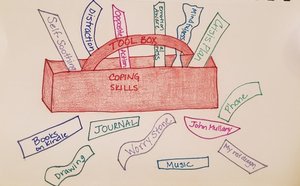
Personality and coping strategies are central to understanding how individuals respond to everyday stressors and interpersonal conflicts. Our reactions to situations such as social exclusion or roommate conflict reveal underlying patterns in our coping mechanisms and personality traits.
Scenario 1: Social Exclusion – Feeling left out by friends can trigger emotional responses such as sadness, anger, or anxiety.
Scenario 2: Roommate Conflict – Unfair division of chores may lead to frustration, confrontation, or avoidance.
Consistency of Responses – Individuals may notice patterns in their reactions across different scenarios, reflecting their preferred coping strategies.
Effectiveness of Coping Strategies – Some strategies are more adaptive, leading to better emotional outcomes and healthier relationships.
Personality and Coping – Coping styles are often linked to personality traits, shaping how people manage stress and conflict.

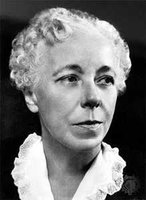
Karen Horney: Social Psychoanalysis
Departure from Traditional Psychoanalysis
Karen Horney was a pioneering psychologist who challenged many of Freud’s original ideas, emphasizing the role of social and cultural factors in personality development. She argued that anatomy is not destiny, and that female motivation is not driven by "penis envy." Horney believed that instincts are not the sole source of behavior.
Anatomy ≠ Destiny – Gender differences are shaped by culture, not biology.
Female Motivation – Women’s motivations are not rooted in envy of male anatomy.
Instincts – Social needs and relationships are more important than biological instincts.
Personality Development
Parent-Child Relationship and Self-Realization
Horney emphasized the decisive role of the parent-child relationship in personality growth. The goal of a healthy personality is self-realization, which involves developing one’s potentials and the desire to be loved by others. Social needs, especially the child’s need for safety, are prioritized over biological needs.
Warm, Nurturing Parents – Foster health and self-realization.
Basic Evil – Indifference, hostility, broken promises, overprotection, and isolation from parents can lead to psychological problems.
Basic Anxiety – The child feels lonely and isolated in a hostile world.
Basic Hostility – Anger towards parents, often repressed for survival.


Neurotic Needs and Coping Strategies
Development of Coping Strategies
When children experience anxiety, they develop specific coping strategies known as neurotic needs. These needs are strategies for coping with basic anxiety and hostility. While most people experience neurotic needs, "neurotics" focus on one or two throughout life and apply them to all relationships.
Neurosis – A part of normal life, used for interpersonal control and coping.
Neurotic Needs – Insatiable, often worsen anxiety instead of relieving it.
Three Categories of Neurotic Trends – How individuals relate to others:
Category | Description | Type |
|---|---|---|
Moving Toward Others | Compliant, dependent, unassertive | Compliant Type |
Moving Against Others | Aggressive, competitive, exploits | Hostile Type |
Moving Away from Others | Self-sufficient, alienated, aloof | Detached Type |



Defense Mechanisms and Coping with Anxiety
Real vs. Ideal Self and Other Mechanisms
Horney described several defense mechanisms that individuals use to cope with basic anxiety. These include the distinction between the real and ideal self, externalization, blind spots, compartmentalization, excessive self-control, and elusiveness.
Real vs. Ideal Self – The real self is perceived as unlovable, while the ideal self is how one "should" be. The "tyranny of the shoulds" can lead to neurotic misery.
Externalization – Attributing one’s feelings to others and believing they are responsible for one’s difficulties.
Blind Spots – Unawareness of behaviors inconsistent with the ideal self.
Compartmentalization – Incompatible behaviors are not recognized simultaneously.
Excessive Self-Control – Avoidance of strong emotions to prevent being overwhelmed.
Elusiveness – Avoiding commitment to avoid conflict.

Comparison of Horney and Freud
Agreements and Disagreements
Horney and Freud both recognized the importance of anxiety and conflict, as well as childhood experiences. However, Horney was more optimistic and rejected Freud’s concept of "penis envy," instead emphasizing self-realization and the desire to be loved as sources of motivation.
Agreements – Anxiety, conflict, importance of childhood.
Disagreements – Horney’s optimism, rejection of biological instincts as primary motivators, reinterpretation of female personality.
Applications of Horney’s Theory
Sexuality, Achievement, and Consumer Psychology
Horney’s theory has practical applications in understanding sexuality, achievement motivation, and consumer behavior. She identified three types of sexual relationships and discussed the "fear of success" in women, as well as how personality types influence product preferences.
Sexual Relationships – Establishing contact, submitting for fear of rejection, and using sexuality as an anxiety outlet.
Need for Achievement – Women may be discouraged from success due to social consequences (Matina Horner’s "fear of success").
Consumer Psychology – Compliant types prefer personal products, hostile types prefer "masculine" products, detached types show no preference.
Type | Product Preference |
|---|---|
Compliant | Personal products |
Hostile | Masculine products |
Detached | No preference |
Horney’s Therapy and Self-Analysis
Therapeutic Approach
Horney’s therapeutic approach involves confronting neurotic needs and understanding their influence on current life. She encouraged challenging the ideal self and engaging in self-analysis for deeper insight, though some blind spots may remain inaccessible.
No "Band Aid" Solutions – Therapy aims for lasting change by addressing underlying needs.
Self-Analysis – Useful for specific problems or regular reflection, though some issues may be difficult to uncover.
Summary of Horney’s Main Points
No biological (instinct) motivations
Self-realization = health = life motivation
Social needs over biological needs
Basic evil, hostility, anxiety
10 Neurotic Needs, 3 Neurotic "trends"
Defense Mechanisms: real vs ideal self, externalization, etc.
Role of anxiety, conflict, childhood experiences
Additional info: These notes expand on Karen Horney’s theory, providing context and examples for Introduction to Psychology students. The included images visually reinforce concepts such as coping skills, personality types, and defense mechanisms.
