 Back
BackLearning: Mechanisms and Theories in Psychology
Study Guide - Smart Notes
 Tailored notes based on your materials, expanded with key definitions, examples, and context.
Learning in Psychology
Introduction to Learning
Learning is a fundamental psychological process involving a relatively permanent change in behavior or knowledge due to experience. Unlike innate behaviors such as instincts and reflexes, learning enables humans and other organisms to adapt to their environment through acquired skills and knowledge.
Instincts: Complex, innate behaviors triggered by broad events (e.g., migration).
Reflexes: Simple, automatic responses to specific stimuli (e.g., sucking reflex in infants).
Learning: Involves both conscious and unconscious processes, resulting in behavioral or cognitive change.

Example: Sea turtles are born knowing how to swim, while humans must learn this skill.
Approaches to Learning
Associative Learning
Associative learning occurs when an organism connects stimuli or events that occur together in the environment. The main approaches within behaviorism are classical conditioning, operant conditioning, and observational learning.
Classical Conditioning
Principles and Process
Classical conditioning is a learning process in which an organism learns to associate two stimuli, resulting in the anticipation of events. Ivan Pavlov's research with dogs led to the discovery of this mechanism.
Unconditioned Stimulus (UCS): Naturally elicits a reflexive response (e.g., food).
Unconditioned Response (UCR): Natural, unlearned reaction to UCS (e.g., salivation).
Neutral Stimulus (NS): Does not elicit a response before conditioning (e.g., bell).
Conditioned Stimulus (CS): Previously neutral, now elicits response after pairing with UCS.
Conditioned Response (CR): Learned response to CS (e.g., salivation to bell).
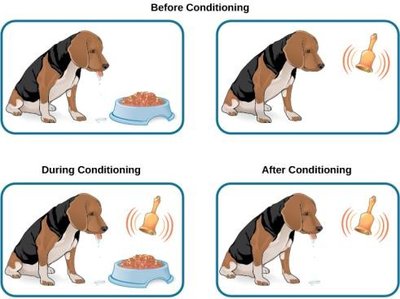
Example: Dogs learn to salivate at the sound of a bell after repeated pairings with food.
Higher-Order Conditioning
Higher-order conditioning occurs when an established conditioned stimulus is paired with a new neutral stimulus, resulting in the new stimulus eliciting the conditioned response.
Second-order stimulus: New neutral stimulus paired with CS.
Result: New stimulus elicits CR without original CS.
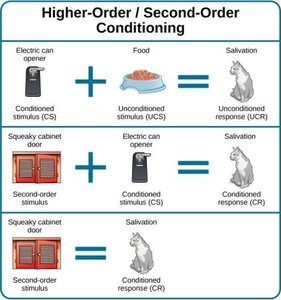
Example: A cat learns to salivate at the sound of a squeaky cabinet door after it is paired with the sound of an electric can opener.
General Processes in Classical Conditioning
Acquisition: Initial learning phase where NS and UCS are paired.
Extinction: Decrease in CR when UCS is no longer presented with CS.
Spontaneous Recovery: Return of extinguished CR after a rest period.
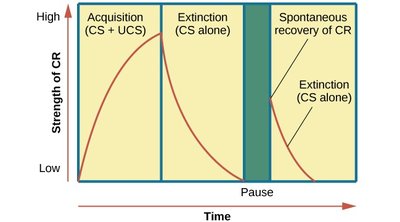
Example: A dog stops salivating to a bell if food is no longer presented, but may spontaneously recover the response after a pause.
Stimulus Discrimination, Generalization, and Habituation
Stimulus Discrimination: Learning to respond differently to similar stimuli.
Stimulus Generalization: Responding to stimuli similar to the CS.
Habituation: Learning not to respond to a repeated, unchanged stimulus.
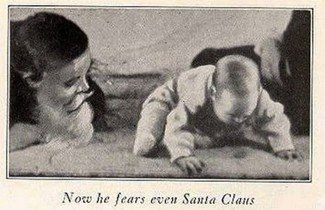
Example: Little Albert's experiment demonstrated stimulus generalization, as he learned to fear all furry objects after conditioning.
Operant Conditioning
Principles and Process
Operant conditioning, proposed by B.F. Skinner, involves learning through the association of behavior and its consequences. Behaviors are either reinforced (increased) or punished (decreased).
Positive Reinforcement: Adding something to increase behavior (e.g., praise, paychecks).
Negative Reinforcement: Removing something to increase behavior (e.g., seatbelt beeping stops).
Positive Punishment: Adding something to decrease behavior (e.g., scolding).
Negative Punishment: Removing something to decrease behavior (e.g., taking away a toy).

Skinner Box and Experimental Methods
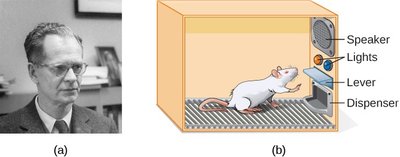
Skinner used operant conditioning chambers (Skinner boxes) to study how animals learn behaviors through reinforcement and punishment.
Shaping
Shaping involves reinforcing successive approximations of a target behavior, useful for teaching complex behaviors.
Breaks behavior into small steps.
Reinforces closer approximations until target behavior is achieved.
Example: Animal trainers use shaping to teach tricks.
Primary and Secondary Reinforcers
Primary Reinforcers: Innate value (e.g., food, water).
Secondary Reinforcers: Learned value, associated with primary reinforcers (e.g., money, tokens).
Example: Token economies in schools and prisons.
Reinforcement Schedules
Reinforcement can be administered continuously or partially, with partial schedules varying by interval (time) or ratio (responses), and by fixed or variable patterns.
Fixed Interval: Reinforcement at predictable time intervals.
Variable Interval: Reinforcement at unpredictable time intervals.
Fixed Ratio: Reinforcement after a predictable number of responses.
Variable Ratio: Reinforcement after an unpredictable number of responses.

Example: Gambling uses a variable ratio schedule, leading to high response rates.
Cognitive Aspects of Learning
Latent Learning and Cognitive Maps
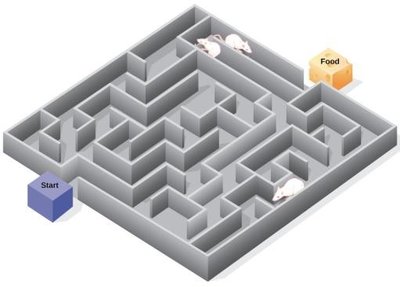
Edward C. Tolman demonstrated that learning can occur without reinforcement, introducing the concept of latent learning and cognitive maps.
Latent Learning: Learning that is not immediately demonstrated.
Cognitive Map: Mental representation of spatial layout.

Example: Rats learn the layout of a maze without reinforcement, but demonstrate their knowledge when motivated by food.
Observational Learning (Modeling)
Principles and Process
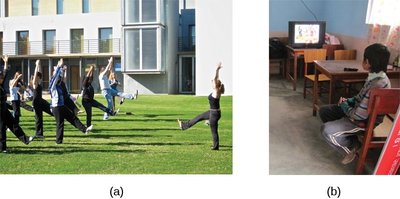
Observational learning occurs when individuals learn by watching others and imitating their behavior. The individual being observed is called the model.
Live Model: Direct observation of behavior.
Symbolic Model: Observation via media or symbolic representation.
Social Learning Theory
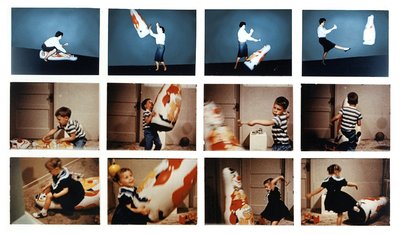
Albert Bandura's social learning theory explains learning through observation, emphasizing internal mental states and the modeling process.
Attention: Focusing on the model's behavior.
Retention: Remembering the observed behavior.
Reproduction: Ability to perform the behavior.
Motivation: Desire to imitate the behavior.
Vicarious Reinforcement: Observer sees model rewarded, increasing likelihood of imitation.
Vicarious Punishment: Observer sees model punished, decreasing likelihood of imitation.

Example: Children who observed adults being punished for aggressive behavior were less likely to imitate aggression.
Applications and Implications
Observational learning has both prosocial and antisocial consequences. Research suggests a correlation between exposure to violence (e.g., in video games) and increased aggression in children.
Example: Children may imitate violent behaviors seen in media or from adults.
Summary Table: Classical vs Operant Conditioning
Aspect | Classical Conditioning | Operant Conditioning |
|---|---|---|
Conditioning Approach | Pairing UCS with NS to create CS and CR | Behavior followed by reinforcement or punishment |
Stimulus Timing | Stimulus occurs before response | Stimulus occurs after response |
Key Example | Pavlov's dogs salivating to bell | Skinner's rats pressing lever for food |
