 Back
BackLearning Styles, Intelligence, and Study Strategies in Psychology
Study Guide - Smart Notes
 Tailored notes based on your materials, expanded with key definitions, examples, and context.
Learning and the Brain
How Learning Changes Your Brain
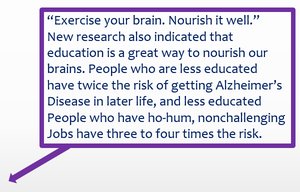
Learning is a dynamic process that actively shapes the structure and function of the brain. Engaging in educational activities and challenging tasks stimulates neural growth and strengthens cognitive abilities. Research indicates that education can reduce the risk of neurodegenerative diseases, such as Alzheimer's, and that mentally stimulating work is protective for brain health.
Neuroplasticity: The brain's ability to reorganize itself by forming new neural connections throughout life.
Education and Brain Health: Higher levels of education are associated with lower risk of Alzheimer's disease and cognitive decline.
Challenging Activities: Engaging in complex, non-routine tasks helps maintain cognitive function.
Best Conditions for Learning
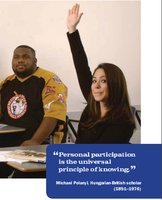
Optimal learning occurs when students are intrinsically motivated, appropriately challenged, and emotionally engaged. Creating a relaxed yet alert state, searching for personal meaning, and actively constructing knowledge are essential for effective learning.
Intrinsic Motivation: Learning driven by curiosity and personal interest.
Relaxed Alertness: High challenge with low threat enhances learning.
Active Construction: Learning is not passive; it requires active engagement and restructuring of knowledge.
Intelligence and Learning Styles
Multiple Intelligences
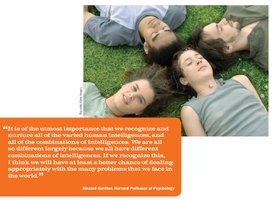
Intelligence is multifaceted, encompassing various abilities beyond traditional linguistic and logical-mathematical skills. Howard Gardner's theory of multiple intelligences identifies several distinct types, each reflecting different ways of processing information and solving problems.
Types of Intelligence: Musical, Logical-Mathematical, Spatial, Bodily-Kinesthetic, Linguistic, Interpersonal, Intrapersonal, Naturalistic.
Definition: Intelligence is the ability to find and solve problems and create products of value in one or more cultural settings.
Application: Recognizing and nurturing diverse intelligences increases the likelihood of solving complex problems.
Intelligence-Oriented Study Techniques
Study strategies can be tailored to individual intelligence profiles, enhancing learning effectiveness. For example, musical learners may benefit from rhythmic mnemonics, while spatial learners excel with diagrams and visual aids.
Personalized Techniques: Use study methods that align with your strongest intelligences.
Examples: Visual learners use charts; kinesthetic learners engage in hands-on activities.
Learning Styles and Sensory Modalities
VARK Model
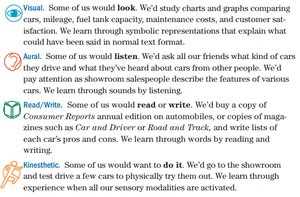
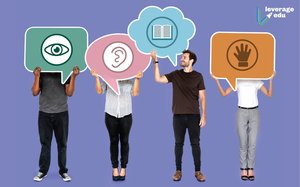
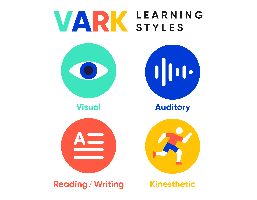
The VARK model categorizes learning preferences into four sensory modalities: Visual, Auditory, Reading/Writing, and Kinesthetic. Understanding your preferred modality can help you optimize study strategies and classroom engagement.
Visual: Prefers charts, graphs, and symbolic representations.
Auditory: Learns best through listening and discussion.
Read/Write: Prefers reading and writing activities.
Kinesthetic: Learns through hands-on experience and movement.
Applying VARK Preferences
Adapting study habits to your VARK preferences can improve retention and understanding. For example, visual learners should convert notes into diagrams, while kinesthetic learners benefit from practical exercises.
Visual: Use flowcharts and graphs.
Auditory: Read notes aloud and discuss material.
Read/Write: Rewrite notes and translate visuals into text.
Kinesthetic: Recall experiments and use practice tests.
Personality and Learning
Personality's Role in Learning
Personality traits influence learning preferences and strategies. Adapting course material to suit your personality can enhance comfort and effectiveness, but versatility is also important for academic success.
Adaptation: Translate material to match your style.
Strategic Choices: Avoid using style as an excuse; strive for versatility.
Maximizing Opportunities: Take advantage of diverse learning experiences.

Learning Disabilities
Supporting Learners with Disabilities
Learning disabilities are neurological disorders that affect the ability to process information. Strategies for self-help include seeking accommodations, using assistive technology, and developing personalized study techniques.
Types: Dyslexia, dysgraphia, dyscalculia, ADHD, etc.
Support Strategies: Use modifications, seek support, and leverage strengths.
Metacognition
Metacognition: Thinking About Thinking
Metacognition refers to awareness and understanding of one's own learning processes. It involves setting goals, monitoring progress, and adjusting strategies for optimal learning.
Self-Awareness: Know your strengths and weaknesses as a learner.
Goal Setting: Identify learning objectives and track progress.
Strategy Adjustment: Use self-assessment to refine study methods.
Study Strategies and Planning
Master Study Plan
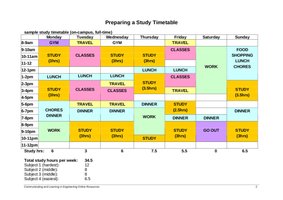
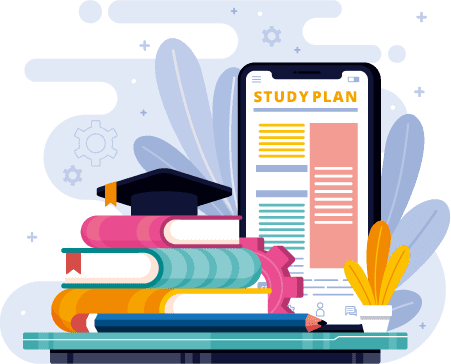
Creating a master study plan involves organizing assignments, scheduling study sessions, and varying techniques according to course content. Effective planning increases productivity and reduces stress.
Understand Assignments: Clarify requirements and expectations.
Schedule: Plan study time across past, present, and future tasks.
Mix Techniques: Use different methods for different subjects.
Take Breaks: Regular breaks improve focus and retention.
Estimate Time: Set realistic deadlines and treat school as a job.

Disciplined Studying
When under pressure, disciplined studying involves prioritizing tasks, using every available moment, and focusing on gaps in knowledge. Cramming should be a last resort, and strategic triage helps manage workload.
Triage: Prioritize urgent tasks.
Gap Analysis: Identify and address areas of weakness.
Strategic Cramming: Use only when necessary.
Summary
This chapter explores the interplay between learning styles, intelligence, personality, and study strategies. Understanding these factors enables students to optimize their learning, adapt to challenges, and achieve academic success in psychology and beyond.
