 Back
BackLifespan Development: Foundations of Developmental Psychology
Study Guide - Smart Notes
 Tailored notes based on your materials, expanded with key definitions, examples, and context.
Developmental Psychology
Introduction to Developmental Psychology
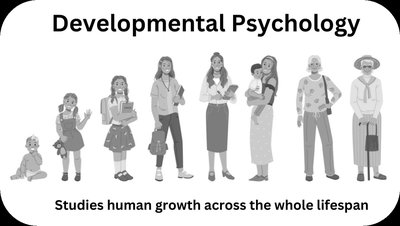
Developmental psychology is the scientific study of how humans grow, change, and adapt physically, cognitively, socially, and behaviorally throughout their lives. This field seeks to understand the processes that influence individual differences and similarities across the lifespan, from conception to old age.
Physical development: Changes in the body, brain, and motor skills.
Cognitive development: Changes in thinking, problem-solving, and information processing.
Social and emotional development: Changes in relationships, emotions, and personality.
Research Methods in Developmental Psychology
Key Research Designs
Developmental psychologists use several research designs to study changes over time:
Cross-sectional design: Compares individuals of different ages at one point in time.
Longitudinal design: Follows the same group of individuals over an extended period.
Cohort effects: Differences between age groups that result from growing up in different historical periods, not from age itself.
Prenatal Development
Stages of Prenatal Development
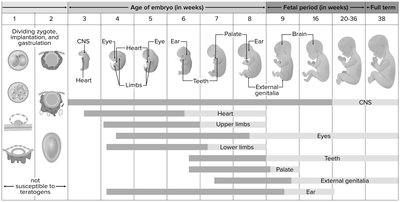
Prenatal development is divided into three main stages: germinal, embryonic, and fetal. Each stage is characterized by specific physical changes and varying susceptibility to environmental influences.
Germinal stage (0–2 weeks): Zygote formation, cell division, and implantation.
Embryonic stage (3–8 weeks): Major organs and structures begin to form; most sensitive to teratogens.
Fetal stage (9 weeks–birth): Growth and maturation of tissues and organs.
Age of viability: The earliest point (about 22 weeks) at which a fetus can survive outside the womb with medical support.
Prenatal Learning
Research shows that fetuses can learn and recognize speech sounds before birth. For example, babies whose mothers read "The Cat in the Hat" aloud during pregnancy showed a preference for the story after birth, as measured by changes in sucking rate.

Teratogens
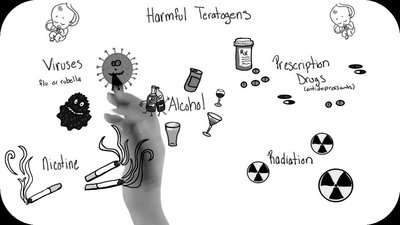
Teratogens are substances or environmental factors that can cause harm to a developing fetus, leading to birth defects, growth problems, or miscarriage. The effects depend on the timing and duration of exposure.
Alcohol: Can cause Fetal Alcohol Spectrum Disorders (FASD).
Tobacco: Associated with low birth weight.
Viruses: Such as Zika or rubella, can cause severe birth defects.
Bacteria/parasites: e.g., toxoplasmosis.
Radiation and pollution: Lead, mercury, pesticides.
Prescription/illegal drugs: e.g., thalidomide, accutane.
Environmental Influences: Fluoride Example
Recent research suggests that high maternal fluoride exposure during pregnancy may be associated with slightly lower IQ scores in children. However, these findings are controversial and the effect size is small.

Thalidomide: A Case Study in Teratogenic Effects
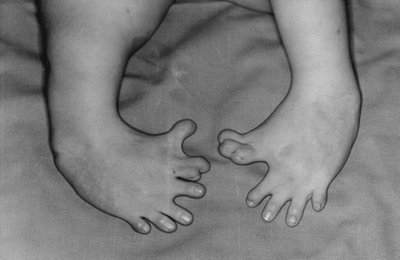
Thalidomide, a drug once prescribed for morning sickness, caused severe limb malformations and other birth defects when taken during early pregnancy. This tragedy led to stricter drug safety protocols worldwide.
Effects: Limb malformations, missing ears, other organ defects.
Historical impact: Raised awareness of teratogenic risks and improved drug regulation.

Infancy and Childhood
Physical and Motor Development
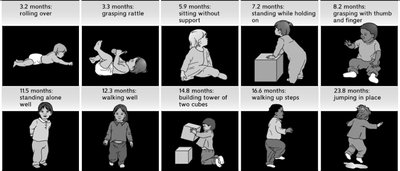
Physical development in infancy and childhood is driven by biological maturation and influenced by environmental exploration and cultural practices. Milestones such as rolling over, sitting, walking, and jumping are achieved at varying ages.
Motor skills: Develop in a predictable sequence but timing varies among children.
Influences: Genetics, nutrition, activity level, and cultural expectations.
Visual Perception and Social Foundations
Newborns have sophisticated visual preferences, such as favoring patterns with contours and edges. They can imitate adult facial expressions, laying the groundwork for social interaction skills.
Kindchenschema (Baby Schema)
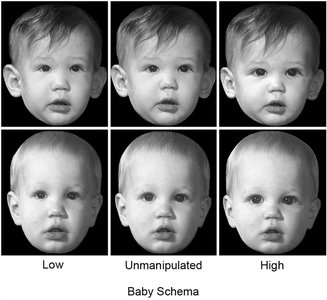
Humans are evolutionarily predisposed to respond to "baby schema"—a set of physical features (large eyes, round cheeks, small nose and mouth) that trigger caregiving and affection in adults. This response supports infant survival.
Attachment
Theories and Research on Attachment
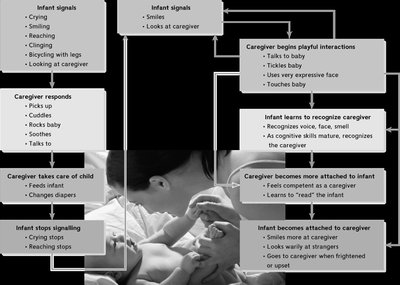
Attachment is the emotional bond between a child and caregiver, providing safety and security. Early attachment research by Konrad Lorenz (imprinting in goslings) and Harry Harlow (monkey studies) demonstrated the importance of comfort and contact over mere provision of food.
Attachment behaviors: Crying, clinging, smiling to attract caregiver attention.
Critical period: Early deprivation can lead to cognitive and emotional impairment.


Bowlby's Attachment Theory
John Bowlby proposed that attachment is an innate system evolved to ensure infant survival. Secure attachment forms when caregivers are responsive and sensitive to the child's needs, fostering trust and exploration.
Ainsworth's Strange Situation and Attachment Styles
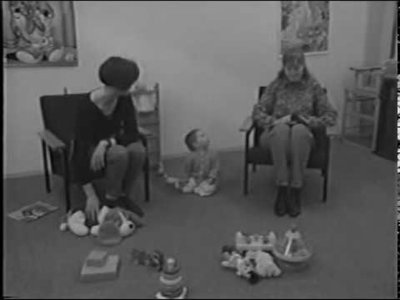
Mary Ainsworth developed the "Strange Situation" to assess attachment styles in infants:
Secure: Distressed when caregiver leaves, comforted upon return.
Avoidant: Unresponsive to caregiver's departure and return.
Ambivalent: Distressed when caregiver leaves, ambivalent upon return.
Disorganized: Inconsistent, contradictory behaviors.
Consequences and Criticisms of Attachment
Secure attachment in infancy predicts better social, emotional, and cognitive outcomes later in life. However, attachment theory has been criticized for not accounting for cultural differences and temperament, and for possible genetic influences shared by caregivers and infants.
Parenting Styles and Social Development
Parenting Styles
Parenting style significantly influences children's emotional and social development. Four main styles are identified:
Authoritarian: Rigid, strict, punitive; children tend to be unsociable and withdrawn.
Permissive: Lax, inconsistent, undemanding; children may be immature and dependent.
Uninvolved: Emotionally detached, only provides basic needs; children may be indifferent and rejecting.
Authoritative: Firm but supportive, sets limits, encourages independence; children are socially skilled and self-reliant.



Parenting, Morality, and Motivation
Parenting influences children's moral development and motivation through two systems:
Attachment system: "Am I safe and secure?"
Caregiving system: "How can I respond to your needs?"




Operant conditioning (rewards and punishments) is often used, but behaviors may not persist without rewards. Conditional love can lead to resentment and internal pressure. Inductive discipline, which explains the impact of actions on others and activates empathy, is most effective for fostering internal moral values.



Cognitive Development in Infancy and Childhood
Jean Piaget's Theory of Cognitive Development
Piaget proposed that children progress through four stages of cognitive development, each characterized by distinct ways of thinking and understanding the world. Children use schemas (mental frameworks) to organize information, adapting through assimilation (fitting new experiences into existing schemas) and accommodation (modifying schemas for new experiences).

1. Sensorimotor Stage (Birth–2 years)
Understanding based on sensory and motor experiences (touching, manipulating).
Development of object permanence: realizing objects exist even when out of sight.

2. Preoperational Stage (2–7 years)
Development of language and symbolic thinking.
Egocentric thought: difficulty seeing perspectives other than their own.

3. Concrete Operational Stage (7–12 years)
Logical thinking about concrete objects and events.
Understanding of conservation: quantity remains the same despite changes in shape or appearance.
Reversibility: understanding that some changes can be undone.

4. Formal Operational Stage (12 years–adulthood)
Development of abstract and hypothetical thinking.
Ability to reason about complex problems and test hypotheses.


Self-Awareness and Theory of Mind
Self-awareness emerges around 18–24 months, as children recognize themselves as individuals. Theory of mind develops around ages 4–5, allowing children to understand that others have different thoughts and feelings.
Early Social Understanding
Helper Stage and Fairness
Infants and toddlers show early social understanding, such as recognizing when someone needs help, preferring helpers over hinderers, and demonstrating a sense of fairness. This "helper stage" is observed across cultures from about 14 months to 7 years.
 *Additional info: This guide covers foundational concepts in lifespan development, including research methods, prenatal influences, attachment, parenting, and cognitive development, with relevant examples and images to support understanding.*
