 Back
BackLifespan Development I: Infancy and Childhood
Study Guide - Smart Notes
 Tailored notes based on your materials, expanded with key definitions, examples, and context.
Developmental Psychology
Introduction to Developmental Psychology
Developmental psychology is the scientific study of how and why human beings change over the course of their life. It examines physical, cognitive, social, and behavioral development from infancy through old age.
Infancy: Birth to 2 years
Childhood: 2 to 12 years
Adolescence: 12 to 22 years
Early Adulthood: 22 to 45 years
Middle & Late Adulthood: 45 to 60 years & 60+ years
Chronological age refers to the number of years since birth, but development is also measured by biological, psychological, and socioemotional age:
Biological age: Functioning of body and organs
Psychological age: Adaptive capacity and cognitive abilities
Socioemotional age: Social roles and relationships
Research Considerations in Developmental Psychology
Cost and Attrition: Longitudinal studies can be expensive and participants may drop out over time.
Cohort Effects: Differences between groups may be due to the era in which they were born, not development itself.

Infancy: Physical Development
Prenatal Development: From Zygote to Infant
Prenatal development occurs in three main stages:
Germinal Stage (0-2 weeks): Begins at conception; the zygote divides and implants in the uterus as a blastocyst, which forms the fetus and placenta.
Embryonic Stage (2-8 weeks): Major physical structures begin to form.
Fetal Stage (8 weeks-birth): Growth and specialization of skeletal, organ, and nervous systems.
Sensory Development in Infancy
Infants are born with some sensory abilities and rapidly develop others:
Babies can respond to and remember auditory stimuli experienced in the womb (e.g., preference for their mother's voice).
Newborns show a preference for faces and can distinguish them from scrambled or blank patterns.
Visual acuity is poor at birth but improves quickly; infants are highly responsive to visual stimuli.
Taste and smell are relatively well developed at birth.

Motor Development
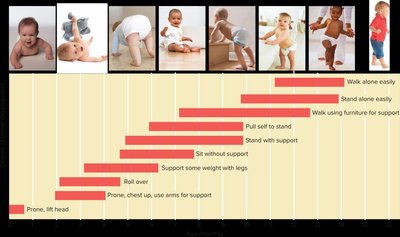
Motor development in infancy involves the emergence of reflexes and the progression from simple to complex movements:
Reflexes: Automatic responses to stimuli (e.g., rooting, sucking).
Gross Motor Skills: Large muscle activities such as crawling and walking.
Fine Motor Skills: Small muscle activities such as grasping objects.
Sticky Mittens Experiment: Early simulated reaching experiences can enhance infants' object exploration skills.
Infancy & Childhood: Cognitive and Emotional Development
Piaget’s Theory of Cognitive Development
Jean Piaget proposed that children move through four stages of cognitive development, each characterized by different ways of thinking and understanding the world.
Assimilation: Incorporating new information into existing schemas.
Accommodation: Modifying schemas based on new experiences.
Sensorimotor Stage (0-2 years)
Infants learn about the world through sensory and motor experiences.
Object Permanence: Understanding that objects continue to exist even when out of sight.
Preoperational Stage (2-7 years)
Development of language, symbolic thinking, and pretend play.
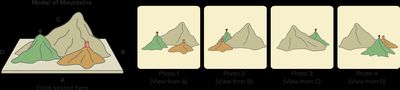
Egocentrism: Difficulty in seeing things from another's perspective.
Conservation: Understanding that quantity remains the same despite changes in shape or appearance (not yet mastered).
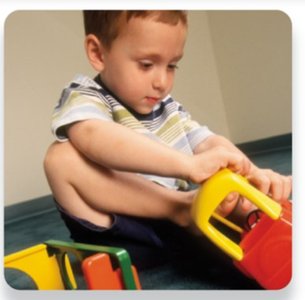
Children may make scale errors (misjudging the size of objects in relation to themselves).

Concrete Operational Stage (7-11 years)
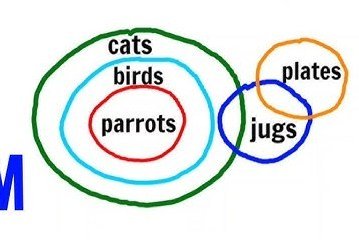
Children develop logical thinking and can manipulate numbers and classify objects.
Transitivity: Understanding logical relationships (e.g., if A > B and B > C, then A > C).
Seriation: Ability to order objects by a property, such as size or number.

Formal Operational Stage (11 years and onward)
Development of abstract reasoning and hypothetical thinking.
Ability to solve logical problems and think about possibilities.
Attachment
Attachment refers to the close emotional bond that develops between an infant and their caregiver. It is crucial for social and emotional development.
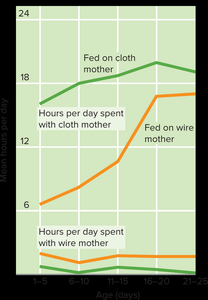
Harlow’s Monkeys: Demonstrated the importance of comfort and security in attachment, not just food.
Ainsworth’s Strange Situation: Identified different attachment styles based on infants' reactions to separation and reunion with caregivers.
Attachment Style | Characteristics |
|---|---|
Secure | Uses caregiver as a secure base, distressed when they leave, happy upon return |
Insecure Avoidant | Little engagement with caregiver, indifferent to departure and return |
Insecure Anxious/Ambivalent | Clingy, distressed by separation, resistant to comfort upon return |
Disorganized | Dazed, confused, fearful, inconsistent behavior |

Attachment Styles in Adulthood
Secure: Comfortable with intimacy and autonomy in relationships.
Avoidant: Hesitant to form close relationships, may distance themselves.
Anxious: Seek closeness, may be overly dependent, less trusting.
Disorganized: Desire closeness but also fear intimacy, inconsistent behavior.
Attachment & Parenting
Attachment Behavioral System: Drives infants to seek proximity to caregivers for safety and security.
Caregiving Behavioral System: Drives caregivers to respond to infants' needs.
Inductive Discipline: Explaining the consequences of a child's actions to foster empathy and moral development.
Raising kind, moral children involves helping them feel loved and secure, not just teaching right from wrong.
Additional info: Research suggests that early attachment patterns can influence emotional regulation and relationship styles into adulthood.
