 Back
BackMaslow’s Hierarchy of Needs: Motivation and Human Development
Study Guide - Smart Notes
 Tailored notes based on your materials, expanded with key definitions, examples, and context.
Maslow’s Hierarchy of Needs
Introduction to Maslow’s Theory
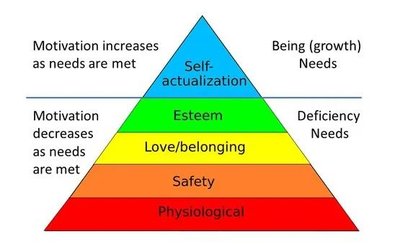
Abraham Maslow was a pioneering psychologist whose work in humanistic psychology led to the development of the hierarchy of needs in 1943. This theory is foundational in understanding human motivation and behavior, positing that people are driven by a series of needs arranged in a hierarchical order. The hierarchy is often depicted as a pyramid, with basic needs at the bottom and higher-level needs at the top.
Structure of the Hierarchy
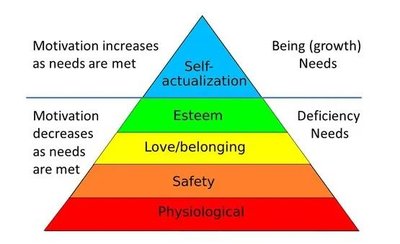
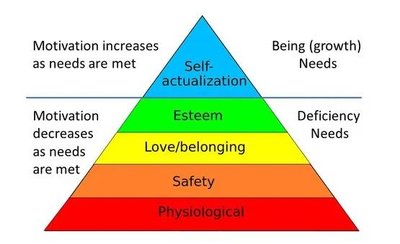
Maslow's hierarchy consists of five tiers, each representing a category of needs. These are:
Physiological Needs
Safety Needs
Love and Belonging Needs
Esteem Needs
Self-Actualization Needs
The hierarchy is divided into deficiency needs (the first four levels) and growth needs (the top level). Deficiency needs arise from deprivation and motivate behavior until they are satisfied, while growth needs relate to personal development and fulfillment.
Deficiency Needs
Physiological Needs
These are the most basic requirements for human survival, including air, food, water, shelter, clothing, warmth, and sleep. If these needs are not met, the human body cannot function optimally, and all other needs become secondary.
Examples: Hunger, thirst, sleep, shelter
Application: Emergency relief efforts focus on physiological needs first.
Safety Needs
Once physiological needs are satisfied, individuals seek safety and security. This includes physical safety, emotional security, financial stability, health, and protection from harm. Safety needs are often fulfilled by family, society, and institutions such as police, schools, and medical care.
Examples: Safe housing, stable employment, health insurance, law and order
Application: Social policies and institutions aim to provide safety and security.
Love and Belonging Needs
The third level involves social needs, such as feelings of belongingness, interpersonal relationships, and being part of a group. Humans have an emotional need for connection, trust, acceptance, and love.
Examples: Friendship, intimacy, family, community, receiving and giving affection
Application: Group therapy and social support networks address belongingness needs.
Esteem Needs
Esteem needs are divided into two categories: self-esteem (dignity, achievement, mastery, independence) and the desire for respect from others (status, prestige). These needs are crucial for children and adolescents, leading to real self-esteem or dignity.
Examples: Academic achievement, professional recognition, independence
Application: Educational and workplace environments foster esteem through awards and recognition.
Growth Needs
Self-Actualization Needs
Self-actualization is the highest level in Maslow's hierarchy, referring to the realization of a person's potential and self-fulfillment. It is the desire to become everything one is capable of becoming. This need is highly individualized and may manifest in various forms, such as creativity, academic achievement, or ideal parenting.
Examples: Artistic expression, innovation, personal growth, leadership
Application: Counseling and coaching often focus on self-actualization goals.

Summary of Maslow’s Hierarchy
Human beings are motivated by a hierarchy of needs.
Needs are organized in a hierarchy, with basic needs met before higher needs.
Most human behavior is multi-motivated, influenced by more than one basic need simultaneously.
Deficiency vs. Growth Needs Table
Type of Need | Levels | Motivation | Examples |
|---|---|---|---|
Deficiency Needs | Physiological, Safety, Love/Belonging, Esteem | Arise from deprivation; motivate behavior until satisfied | Food, shelter, security, friendship, achievement |
Growth Needs | Self-Actualization | Desire for personal growth and fulfillment | Creativity, personal development, leadership |
Reflection and Application
Maslow’s Hierarchy remains relevant today in understanding motivation, mental health, and personal development.
Application: The theory can be used to assess needs in educational, social, and career contexts, helping individuals prioritize and achieve their goals.
Key Terms and Definitions
Self-Actualization: The realization of one's full potential and capabilities.
Deficiency Needs: Basic needs that arise from deprivation and must be met for well-being.
Growth Needs: Needs related to personal development and fulfillment.
Esteem: The need for self-respect and respect from others.
Belongingness: The emotional need for interpersonal relationships and group membership.
Formula for Motivation (Additional info)
Maslow’s theory does not use a strict mathematical formula, but motivation can be conceptually represented as:
Where motivation increases as deprivation of a need increases, and decreases as the need is satisfied.
Additional info: This formula is a conceptual representation and not used in Maslow’s original work.
