 Back
BackMemory: Foundations, Processes, and Errors in Human Memory
Study Guide - Smart Notes
 Tailored notes based on your materials, expanded with key definitions, examples, and context.
Memory: Foundations, Processes, and Errors
Introduction to Memory
Memory is the process by which we encode, store, and retrieve information. Unlike a static recording device, memory is dynamic and reconstructive, often adapting to new information and sometimes prone to error. Our brains actively fill in gaps to make sense of the world, which can lead to both accurate and inaccurate recollections.

Three-Stage Model of Memory
The three-stage model describes how information moves through different types of memory, each with distinct span and duration. Information must pass through all stages to be remembered.
Sensory Memory: Brief storage of sensory events (sights, sounds, tastes).
Short-Term Memory (STM): Temporary storage, limited capacity.
Long-Term Memory (LTM): Continuous, potentially lifelong storage.
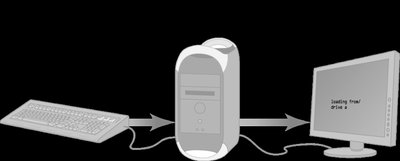
Sensory Memory
Sensory memory holds information from each sense for a very brief period. Iconic memory (visual) lasts less than one second, while echoic memory (auditory) lasts two to three seconds. Unless transferred to other memory types, sensory information is quickly lost, though it is stored with high precision.

Short-Term Memory (STM) and Chunking
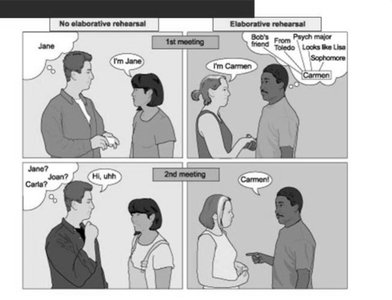
STM retains information for up to 30 seconds unless rehearsal is used. Its capacity is limited to about 7 ± 2 items. Chunking, or grouping information into meaningful units, extends STM capacity. Rehearsal helps transfer information from STM to LTM.
Maintenance Rehearsal: Simple repetition of information.
Elaborative Rehearsal: Organizing and linking information meaningfully, which is more effective for long-term retention.
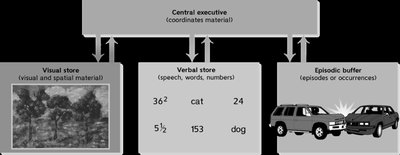
Working Memory
Working memory is an active, temporary store that manipulates and rehearses information. It includes a central executive processor responsible for reasoning and decision-making, functioning as a mental whiteboard.
Long-Term Memory (LTM)
LTM is a continuous storage system with no known capacity limit, lasting from decades to a lifetime. Evidence from amnesia cases (anterograde and retrograde) supports the distinction between STM and LTM.

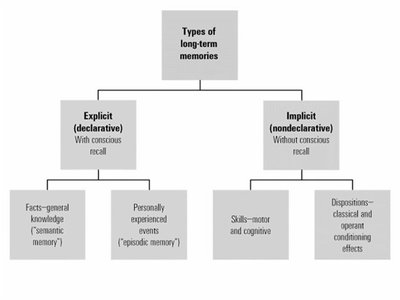
Types of Long-Term Memory
LTM is divided into declarative (explicit) and non-declarative (implicit) memory:
Declarative (Explicit) Memory: Conscious recollection of facts and events.
Semantic Memory: General knowledge (e.g., facts).
Episodic Memory: Personal experiences and events.
Non-Declarative (Implicit) Memory: Unconscious memory affecting behavior.
Procedural Memory: Skills and tasks (e.g., riding a bike).
Priming: Activation of existing information to facilitate new learning.
The Serial Position Effect
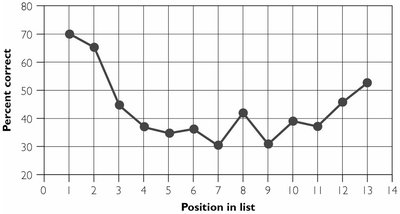
The serial position effect describes how the position of information in a list affects recall. The primacy effect refers to better recall for items at the beginning, while the recency effect refers to better recall for items at the end. Unique or odd items are remembered regardless of position.
Case Study: Henry Molaison (HM)
HM had his hippocampus removed to treat seizures, resulting in an inability to form new memories (anterograde amnesia) and retrograde amnesia for events before surgery. He could learn new skills (implicit memory) but not remember explicit events, illustrating the distinction between memory types.

Neuroscience of Memory
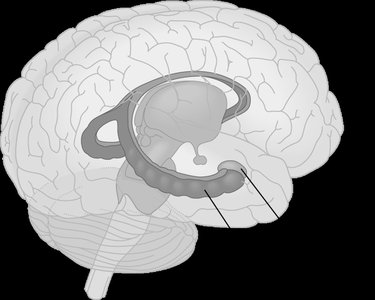
Memory traces are distributed throughout the brain. The hippocampus is crucial for memory consolidation and encoding declarative memories, while the amygdala is involved in emotional memories. Long-term potentiation (LTP) describes how neural pathways become more easily activated during learning, with synapses strengthening and dendrites branching out.
Why Do We Forget? Encoding Failures
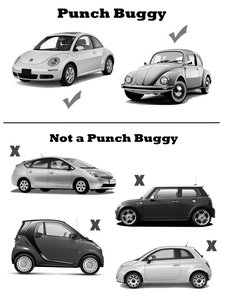
Encoding failures occur when information is not attended to or processed deeply enough. Most events are never encoded. The self-reference effect shows better memory for information related to oneself. Stress can reduce the accuracy of memory, especially in eyewitness situations, and can also focus attention on specific details.



Encoding Failures: Own Age Bias and Cross-Race Effect
People are more accurate at identifying individuals of their own age group (own age bias) and race (cross-race effect), which can impact eyewitness identification.

Why Do We Forget? Retrieval Failure
Retrieval failure occurs when information fades (decay) or is lost due to interference. Proactive interference happens when earlier information interferes with new learning, while retroactive interference occurs when new information overshadows older memories.
Amnesia
Amnesia is the loss of long-term memory due to disease, trauma, or psychological factors. Anterograde amnesia is the inability to form new memories after trauma, often affecting the hippocampus. Retrograde amnesia is the loss of memories prior to trauma. Case studies, such as Clive Wearing, demonstrate the distinction between declarative and non-declarative memory.
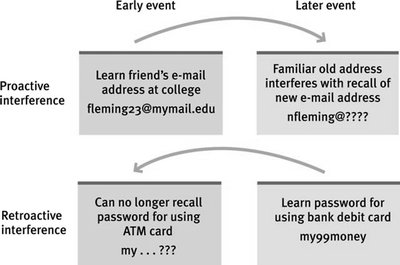

Retrieving Memories
Retrieval is the process of accessing stored information. Recall requires retrieving information without cues, while recognition involves identifying previously learned information when presented with cues.
Tip-of-the-Tongue Phenomenon
This occurs when we are sure we know information but cannot retrieve it. Related cues can sometimes help access the memory.

Levels of Processing Theory
The depth of processing during encoding affects memory retention. Shallow processing focuses on physical aspects, while deep processing involves analyzing meaning and relating new information to existing knowledge.
Encoding Specificity
Memory retrieval is more effective when the context matches the conditions during encoding. Context-dependent and state-dependent learning illustrate this principle.
Flashbulb Memories
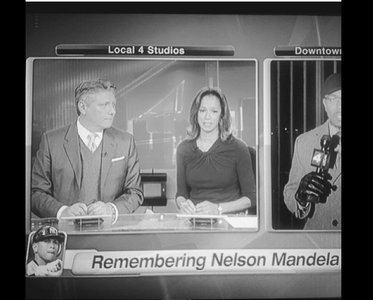
Flashbulb memories are vivid recollections of atypical, emotionally charged events. They are easily retrieved but not necessarily accurate, often serving as generational reference points.

Memory is Reconstructive
Memories change over time and are influenced by cognitive structures (schemas, scripts) and post-event information. This has important implications for legal settings, such as eyewitness testimony.

Suggestibility and False Memories
Suggestibility refers to the creation of false memories due to misinformation from external sources. The misinformation effect occurs when post-event information alters the original memory. Laboratory studies have shown that false memories can be implanted, even for mildly traumatic events.
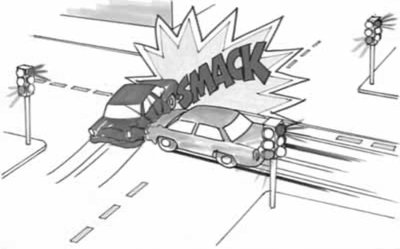
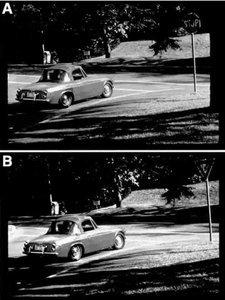



Eyewitness Misidentification
Eyewitness misidentification is the leading cause of wrongful convictions. Line-up procedures involve witnesses identifying suspects from a group, but memory errors and suggestibility can lead to mistakes.

Type of Memory | Definition | Example |
|---|---|---|
Explicit (Declarative) | Conscious recall of facts/events | Remembering your first day at university |
Implicit (Non-declarative) | Unconscious memory affecting behavior | Riding a bike, priming |
Semantic | General knowledge | Knowing the capital of Canada |
Episodic | Personal experiences | Recalling a birthday party |
Procedural | Skills and tasks | Tying your shoes |
Additional info: Academic context was added to clarify distinctions between memory types, neuroscience, and implications for legal settings.
