 Back
BackMilgram's Study of Obedience: Social Psychology Mini-Textbook Notes
Study Guide - Smart Notes
 Tailored notes based on your materials, expanded with key definitions, examples, and context.
Social Psychology: Obedience and the Milgram Experiment
Obedience: Definition and Social Context
Obedience is a fundamental form of social influence, where individuals act in response to direct orders from a figure with perceived authority. This concept is crucial for understanding how societies function and why people may follow instructions even when they conflict with personal morals.
Obedience: Acting in response to a direct order from an authority figure.
Authority Figures: Individuals whose orders are often followed without question (e.g., police, teachers, military personnel).
Social Necessity: Obedience is necessary for societal order, but can also lead to destructive outcomes.

Historical Context: Obedience and Destructive Orders
Milgram was motivated by historical events, particularly the Holocaust, where millions were killed as a result of obedience to authority. He sought to understand how ordinary people could commit harmful acts under orders.
Destructive Obedience: Following orders despite knowing the negative consequences.
Nazi Germany: Many individuals claimed they were "just following orders" during the Holocaust.


Key Figures and Theoretical Perspectives
Adolf Eichmann, a Nazi official, oversaw mass killings and defended his actions by claiming obedience to orders. Political theorist Hannah Arendt observed Eichmann's trial and noted the "banality of evil," suggesting that ordinary people can commit atrocities through obedience.
Adolf Eichmann: Claimed to be "just following orders" during the Holocaust.
Hannah Arendt: Argued that evil acts can be committed by normal individuals through obedience.


Aims of Milgram's Study
Milgram sought to test the "Germans are Different" hypothesis, which posited that Germans were more obedient due to an authoritarian personality shaped by harsh upbringing. He aimed to investigate whether ordinary people would obey authority figures even when instructed to harm others.
Authoritarian Personality: A personality type characterized by obedience to authority, theorized to result from strict upbringing.
Research Question: How much obedience would occur when an authority figure instructed individuals to harm another person?


Participants and Sampling
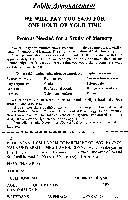
The study involved 40 male volunteers from the United States, recruited via newspaper advertisements. Participants believed they were part of a study on learning and memory.
Sample: 40 American males.
Recruitment: Newspaper advertisements.
Methodology and Procedures
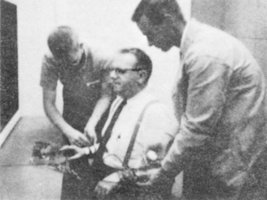
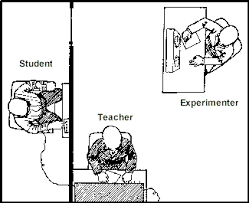
Participants were assigned the role of "teacher" and instructed to administer electric shocks to a "learner" (an actor) for incorrect answers. Shock levels ranged from 15 to 450 volts. The experimenter, as the authority figure, prompted participants to continue.
Shock Machine: Designed to appear genuine, with increasing voltage levels.
Authority Prompts: "Please continue." "The experiment requires you to continue."
Controlled Observation: The study is best categorized as a controlled observation in a laboratory setting.

Key Findings
Milgram found that 65% of participants obeyed the experimenter to the maximum 450 volts, and 100% continued to at least 300 volts. Many participants showed signs of distress but continued due to the authority figure's instructions.
Obedience Rate: 65% to maximum voltage, 100% to 300 volts.
Participant Distress: Sweating, trembling, nervous laughter, protests.
Conclusion: Ordinary people can obey authority figures even when actions conflict with personal beliefs.

Contribution to Psychology
Milgram's study demonstrated the power of authority and situational factors in influencing behavior. It introduced key concepts and has practical applications in understanding obedience in various contexts.
Legitimate Authority: People obey those perceived as having power or expertise.
Agentic State: Individuals may transfer responsibility for their actions to an authority figure.
Applications: Military, workplace, group behavior, leadership.
Evaluation: Strengths and Weaknesses
Milgram's study is notable for its methodological rigor but has been criticized for ethical and validity concerns.
Strengths: Controlled environment, clear demonstration of obedience.
Weaknesses: Ethical issues (psychological distress, deception, right to withdraw), lack of ecological validity, sample limitations (only American males).


Criticisms and Limitations
Major criticisms include ethical concerns, artificial laboratory setting, and limited generalizability due to sample characteristics.
Ethical Issues: Psychological distress, deception, pressure to continue.
Ecological Validity: Laboratory setting may not reflect real-life obedience.
Sample Limitations: Findings may not generalize to females, other cultures, or age groups.
Summary Table: Strengths and Weaknesses of Milgram's Study
Aspect | Strength | Weakness |
|---|---|---|
Methodology | Controlled observation, clear procedures | No true IV/DV, artificial setting |
Sampling | Volunteer recruitment | Limited to American males |
Ethics | Important findings | Psychological distress, deception |
Validity | Internal validity | Low ecological validity |
Methodology: Categorization
Milgram's study is often referred to as a laboratory experiment, but it lacks a clear independent and dependent variable. The best categorization is a controlled observation in a laboratory setting.
Procedures: Convincing the Participants
The experiment was conducted at Yale University, with procedures designed to convince participants of the authenticity of the setup. Roles were assigned to appear random, and the shock machine was made to look genuine. Participants were shown the learner being strapped into a chair and given a sample shock to enhance credibility.
Purpose: To ensure participants believed the situation was real and their actions had consequences.
Convincing Setup: Increased the validity of the findings by reducing suspicion.
Findings: Pre-Experiment Predictions
Before the experiment, Milgram consulted psychology majors and colleagues, who estimated that only 0-3% of participants would administer the full 450 volts. The actual results were much higher, demonstrating the unexpected power of authority.
Estimated Obedience: 0-3% predicted, 65% actual.
Additional info: The study is foundational in social psychology, illustrating the mechanisms of obedience and the influence of authority on behavior. It has informed ethical guidelines for psychological research and remains a key example in discussions of social influence and moral decision-making.
