 Back
BackMotivation & Emotion: Key Concepts in Psychology
Study Guide - Smart Notes
 Tailored notes based on your materials, expanded with key definitions, examples, and context.
Motivation & Emotion
Introduction to Motivation
Motivation refers to the physiological and psychological processes that initiate and direct behavior towards specific goals. It is a central concept in psychology, explaining why organisms act and how internal and external factors influence their actions.
Motivation: Drives behavior towards goals, influenced by needs, desires, and incentives.
Homeostasis: The body's process of maintaining stable internal conditions (e.g., temperature, hunger).
Drives & Motives: Biological drives (e.g., hunger, thirst) and psychological motives (e.g., achievement) push behavior.
Allostasis: Motivation shaped by current needs and anticipation of future needs, especially under stress.
Hunger & Eating
Biological Basis of Hunger
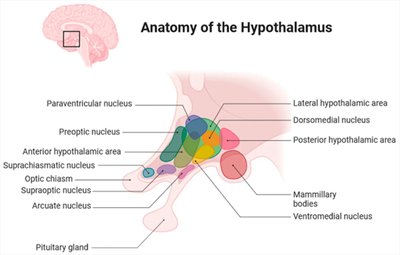
Hunger is regulated by complex interactions within the brain, particularly the hypothalamus, which integrates signals about energy needs and satiety.
Hypothalamus: Key brain region controlling hunger and satiety.
Lateral hypothalamic area: Stimulates eating ('on' switch).
Ventromedial hypothalamic area: Inhibits eating ('off' switch).
Paraventricular nucleus: Modulates activity of the lateral hypothalamus.
Satiation & Cholecystokinin (CCK): CCK is a hormone that signals fullness and reduces food intake.
Unit bias: Tendency to consume a whole portion regardless of its size.
Social influences: Social facilitation, impression management, and modeling affect eating behavior.
Eating Disorders
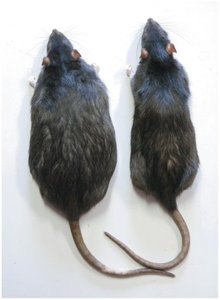
Eating disorders are serious psychological conditions characterized by abnormal eating habits and distorted body image.
Anorexia nervosa: Pursuit of thinness through starvation, often fatal. Criteria include weight < 85% of normal, fear of gaining weight, distorted body image, and amenorrhea.
Bulimia nervosa: Cycles of binge eating and purging (at least twice a week for 3 months). Most (~70%) recover. Criteria include eating large amounts in a short time and lack of control over eating.
Sex
Sexual Motivation and Influences
Sexual motivation is driven by biological, psychological, and social factors. Libido refers to the motivation for sexual activity and pleasure.
Evolutionary influences: Intrasexual (competition within a sex) and intersexual (mate choice) selection shape sexual behavior.
Desirable traits: Traits valued in potential mates vary by culture and context.
Socioeconomic status (SES): Influences willingness to enter relationships.
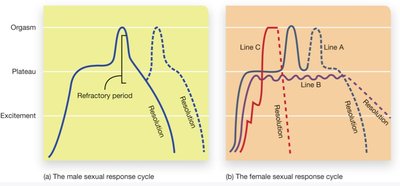
Sexual response cycle: Involves physiological changes regulated by the hypothalamus, pituitary gland, and oxytocin.
Sexual Orientation & Transgender Individuals
Sexual orientation: Consistent preference for sexual relations with opposite, same, or either sex.
Biological factors: Possible links to hypothalamic structure (e.g., INAH3), prenatal testosterone, and genetics.
Transgender: Individuals whose gender identity does not match their biological sex.
Social & Achievement Motivation
The Need to Belong
Humans have a fundamental need to form and maintain social relationships, which impacts mental and physical health.
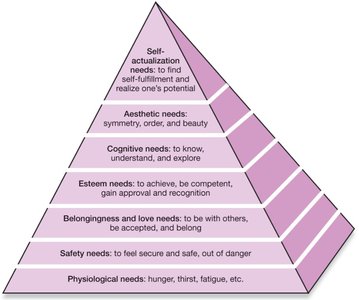
Maslow's hierarchy of needs: Suggests some needs (e.g., belonging) are more fundamental than others.
Affiliation motivation: Desire to maintain relationships involving warmth, affection, and mutual concern.
Health effects: Loneliness can negatively impact physical health, such as increasing risk for heart attacks.
Achievement Motivation
Achievement motivation is the drive to perform at high levels and accomplish significant goals.
Approach goals: Pursuit of enjoyable or pleasant incentives.
Avoidance goals: Efforts to avoid unpleasant outcomes.
Self-determination theory: Universal needs include relatedness, autonomy, and competence.
Self-efficacy: Confidence in one's ability to plan and execute actions to solve problems.
Sources of motivation: Extrinsic (performance-based) and intrinsic (mastery-based).
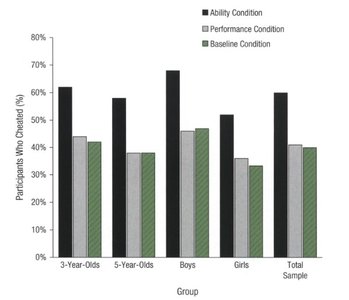
Praise and cheating: Overemphasis on ability can promote cheating (Zhao et al., 2017).
Emotion
Physiological Response
Emotions are complex behaviors involving subjective experience, neural activity, physical arousal, and observable expression.
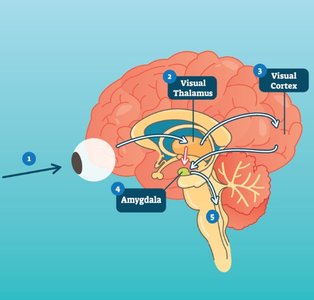
Amygdala: Central to processing emotional responses, especially fear.
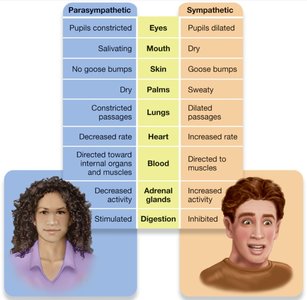
Autonomic Nervous System (ANS): Regulates physiological arousal during emotional experiences.
Emotional regulation: Involves frontal cortex (FC) in managing emotional responses.
Theories of Emotion
Several theories explain the relationship between physiological responses and emotional experiences.
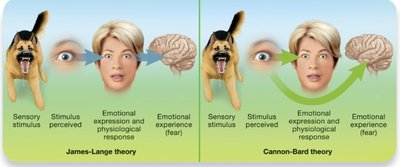
James-Lange theory: Physiological arousal precedes emotional experience.
Cannon-Bard theory: Emotional experience and physiological arousal occur simultaneously.
Facial feedback hypothesis: Facial expressions can influence emotional experience.
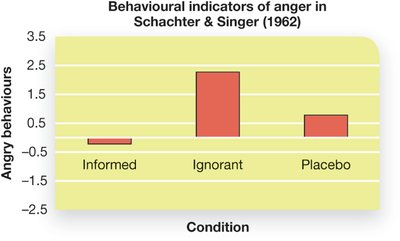
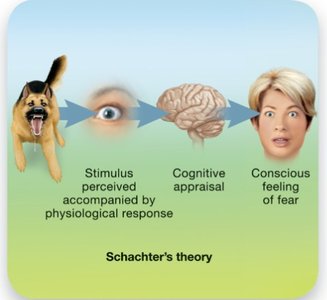
Two-factor theory (Schachter & Singer): Emotion results from physiological arousal and cognitive appraisal. Experimental groups include informed, ignorant, misinformed, and control.
Summary Table: Theories of Emotion
Theory | Main Idea | Key Evidence |
|---|---|---|
James-Lange | Physiology precedes emotion | Body reactions create emotional experience |
Cannon-Bard | Emotion and physiology simultaneous | Brain processes both at once |
Two-factor (Schachter & Singer) | Emotion = arousal + cognitive label | Experimental manipulation of arousal and context |
References
Zhao, L., Heyman, G., Chen, L., & Lee, K. (2017). Praising young children for being smart promotes cheating. Psychological Science, 28(12), 1868–1870.
