 Back
BackMotivation and Emotion: Psychology Study Guide
Study Guide - Smart Notes
 Tailored notes based on your materials, expanded with key definitions, examples, and context.
Motivation and Emotion
Introduction to Motivation
Motivation refers to the factors that direct, guide, and energize the behavior of humans and other organisms. It encompasses biological, cognitive, and social aspects, and is essential for understanding why individuals act in certain ways.
Motivation: The internal and external factors that initiate, sustain, and direct behavior.
Two orientations: Energizing (passive) and Selecting (active).
Instinct Approaches: Born to be Motivated
Instinct approaches propose that inborn patterns of behavior, known as instincts, are biologically determined and essential for survival.
Instincts: Unlearned, innate behaviors that are crucial for survival.
Examples: Eating, drinking.
Criticism: Lack of agreement on primary instincts; cannot explain complex behaviors (e.g., fasting, psychological disorders).
Drive-Reduction Approaches: Satisfying Our Needs
Drive-reduction theory suggests that a lack of basic biological needs produces a drive, motivating an organism to satisfy that need.
Drive: Internal state of tension that motivates behavior to fulfill a need.
Primary drives: Biological needs (e.g., hunger, thirst).
Secondary drives: Learned needs (e.g., money, achievement).

Homeostasis
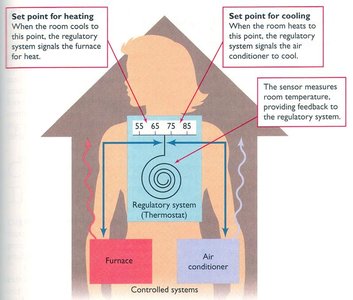
Homeostasis is the body's tendency to maintain a steady internal state, underlying primary drives and using feedback loops.
Examples: Regulation of food, water, body temperature, and sleep.
Criticism of Drive-Reduction Theory
Biological needs alone cannot explain behaviors aimed at increasing excitement or arousal.
Arousal Theory: Beyond Drive Reduction
Arousal theory posits that people seek an optimal level of arousal and try to maintain certain levels of stimulation.
Individuals vary in their optimal arousal levels.
Sensation Seeking Scale: Measures individual differences in arousal preference.
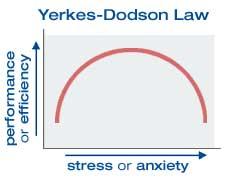

Yerkes-Dodson Law: Performance is optimal at moderate levels of arousal; too little or too much arousal impairs performance.
Incentive Approaches: Motivation’s Pull
Incentive theory suggests that motivation stems from the desire to obtain valued external goals or incentives. Internal drives and external incentives work together to push and pull behavior.
Example: Hunger (drive) pushes you to eat; good taste of food (incentive) pulls you to eat.

Cognitive Approaches: The Thoughts Behind Motivation
Cognitive approaches propose that motivation is a product of thoughts, expectations, and goals.
Intrinsic motivation: Motivation from within, driven by interest or enjoyment.
Extrinsic motivation: Motivation from external rewards (e.g., money, praise).
Intrinsic motivation leads to greater perseverance and higher quality work.

Maslow’s Hierarchy of Needs: Ordering Motivational Needs
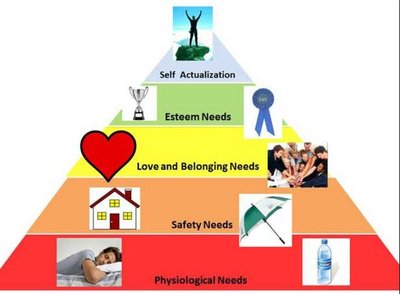
Maslow’s hierarchy organizes human needs in a pyramid, with basic needs at the bottom and self-actualization at the top.
Self-actualization: Realizing one’s highest potential.
Hierarchy highlights the complexity of human needs and the importance of fulfilling basic needs before higher-order needs.
Criticism: Not empirically validated; cultural and temporal variations in need importance.
Self-Determination Theory
Deci and Ryan’s self-determination theory identifies three basic psychological needs:
Competence (agency)
Autonomy (perception of control)
Relatedness (emotional bonds)
Biological Basis of Hunger
Hunger involves not only the stomach but also the brain, particularly the hypothalamus.
Lateral hypothalamus: Stimulates hunger.
Ventromedial hypothalamus: Stimulates feelings of fullness.
Weight set point: The level of weight the body strives to maintain.

Eating Disorders
Anorexia nervosa: Refusal to eat, denial of abnormal behavior and appearance.
Bulimia: Binge eating followed by purging.


Social and Psychological Needs for Eating
Eating is influenced by social, cultural, and psychological factors, not just biological needs.
Examples: Eating when stressed, cultural norms about food.

Achievement, Affiliation, and Power Motivation
Need for Achievement
Stable, learned characteristic where satisfaction is obtained by striving for and achieving goals.
Measured by Thematic Apperception Tests (TAT).
Need for Affiliation
Interest in establishing and maintaining relationships.
High affiliation needs lead to sensitivity in interpersonal relationships.
Need for Power
Desire to seek control or influence over others.
Gender differences in display: Males (aggression, competition), Females (nurturing, concern).
Professions: Management, politics.
Emotion
Understanding Emotional Experiences
Emotions are feelings with both physiological and cognitive aspects, influencing behavior and preparing us for action.
Functions: Prepare for action, shape future behavior, help interact with others.
Basic emotions: Happiness, anger, fear, sadness, disgust, surprise.
Theories of Emotion
James-Lange Theory
Emotional experience is a reaction to bodily events caused by external situations.
Drawbacks: Visceral changes must occur quickly; physiological arousal does not always produce emotion.
Cannon-Bard Theory
Physiological arousal and emotional experience are produced simultaneously.
Thalamus sends signals to autonomic nervous system and cerebral cortex.
Drawbacks: Brain activity is more complex than suggested.
Schachter-Singer Theory
Emotions are determined by nonspecific physiological arousal and its interpretation based on environmental cues.
Supports cognitive view of emotions.
Drawbacks: Arousal seems more specific than theory suggests.
Contemporary Neuroscience Perspectives
Neural pathways connect the amygdala, visual cortex, and hippocampus.
Emotions are complex, involving both biological and cognitive aspects.
Development of Emotions
Basic emotions: Universal feelings present early in life.
Self-conscious emotions: Require self-recognition and evaluation (e.g., embarrassment, pride, shame, guilt, envy).
Emotion regulation: Modulating and controlling emotions.
Social Referencing
Using caregivers as cues for how to feel or act in unfamiliar situations.
Develops into selective social referencing.
Facial Expressions and Decoding Emotion
Decoding facial expressions can be complicated due to affect blends, masking, and cultural differences.
Affect blends: Different emotions shown in different parts of the face.
Display rules: Cultural norms dictating emotional expression.
Examples: Japanese women hide smiles, Western women encouraged to smile; Turkish men discouraged from showing grief.
Summary Table: Approaches to Motivation
Approach | Main Idea | Example |
|---|---|---|
Instinct | Inborn behaviors essential for survival | Eating, drinking |
Drive-Reduction | Biological needs produce drives | Hunger motivates eating |
Arousal | Seek optimal stimulation | Bungee jumping |
Incentive | External rewards direct behavior | Working for money |
Cognitive | Thoughts, goals, expectations | Studying for achievement |
Hierarchy of Needs | Needs form a hierarchy | Maslow's pyramid |
Summary Table: Theories of Emotion
Theory | Main Idea | Drawbacks |
|---|---|---|
James-Lange | Emotion follows bodily changes | Visceral changes must be quick; limited sensations |
Cannon-Bard | Emotion and arousal occur simultaneously | Brain activity is more complex |
Schachter-Singer | Emotion = arousal + interpretation | Arousal is more specific |
Key Terms
Motivation
Instinct
Drive
Homeostasis
Arousal
Incentive
Intrinsic/Extrinsic Motivation
Maslow’s Hierarchy
Self-actualization
Hypothalamus
Achievement, Affiliation, Power Motivation
Emotion
James-Lange, Cannon-Bard, Schachter-Singer Theories
Display Rules
Additional info: Academic context and examples were expanded for clarity and completeness. Tables were inferred and constructed to summarize main approaches and theories. Images were included only when directly relevant to the explanation.
